My photo
This is my photographer’s blog, for your consideration. I post some of my favorite shots here, usually along with some comments about how the photo was taken or post-processed. (Occasionally I have the vain thought that someone might like to read about that.)

If you like what you see here, feel free to check out my Flickr site and YouTube channel.

Thursday, February 23, 2012

Collinear Planets

IMG_5339_rcsprs

Jupiter and Venus are now the brightest objects in the sky. Until, that is, the crescent Moon makes an appearance, as happened this evening. The thing that made the scene expecially photogenic was the collinear arrangement -- three planetary bodies arrayed in a straight line. It was so gorgeous I couldn't resist a quick pre-dinner astrophotography session. The shot was one second at f/4, using ISO 400.

About a minute later, Luna snuggled under her blanket of horizon clouds and disappeared.

Tuesday, January 31, 2012

Hunting for the Nebula

IMG_5241_rcsp_sml

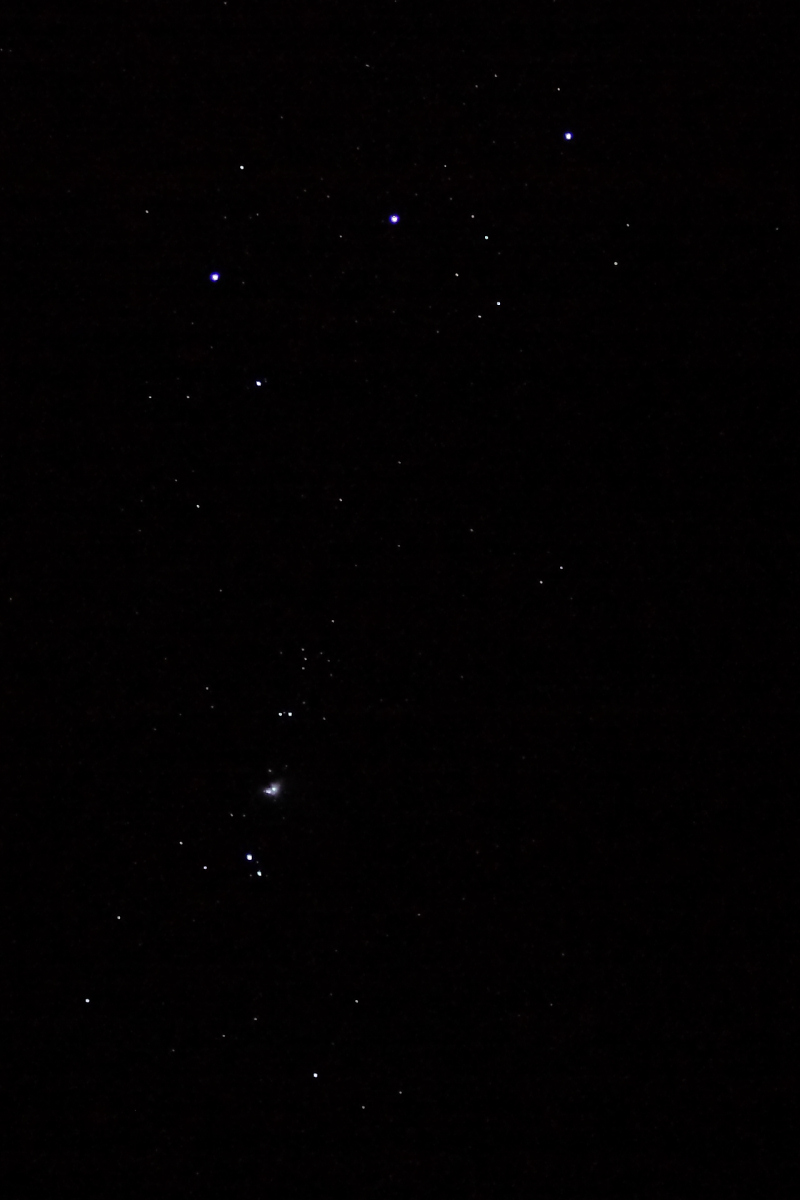
Here is the bottom half of the familiar winter constellation of Orion -- "The Hunter." This arrangement of stars is home to one of the most famous celestial objects outside the planets: the Orion Nebula. It's hard to see when you are just gazing up at the Orion constellation. But if you know where to look (the middle "star" of Orion's sword), you can see a faint fuzzy patch.

Thanks to modern digital camera sensors, it's possible to gather enough light in two seconds at f/4 with ISO 1600 that the nebula now pops out of the constellation's mugshot above. Here is a close-up:

IMG_5241_rcsp_zoom

Of course, fancy star-tracking equipment can generate much nicer views of the Orion Nebula. But I'm happy that I was able to capture what I did, using a regular DSLR, a zoom lens set at 70mm, and a sturdy tripod.

It also helped to have a super-dark moonless sky at Black Butte in Central Oregon, where Kathy and I spent last weekend. :-)

Thursday, November 10, 2011

Two Celestial Bodies; One Ring

IMG_3760_hdr_halo_spcp_sml

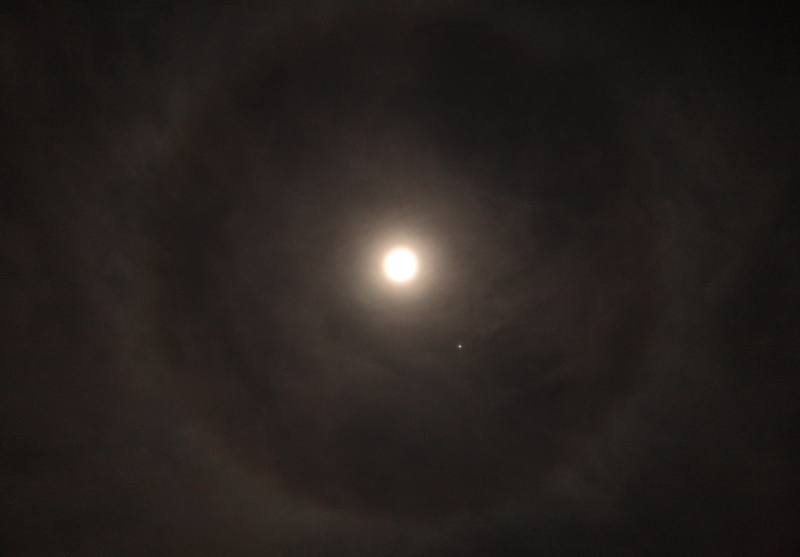
Here is something you don't see every day: a Moon ring encompassing the planet Jupiter. (Click on the image for a bigger view.) Moon rings, also called "winter halos," are a refraction of the moon's light in cloud-hosted ice particles. Last night, Jupiter was serendipitously close to the Moon in the sky, well inside the latter's winter halo.

Speaking of rings and Jupiter, the solar system's largest planet actually does have a faint ring, akin to the vast rings of Saturn. It was discovered in 1979 from Voyager space probe images.

Unfortunately, we cannot see Jupiter's ring from earth, so we will have to be content with the Jovian planet sharing our Moon's icy halo in the sky.

Tuesday, August 9, 2011

Galactic Forest Fire

IMG_3085_rcsp_sml

A few miles away from Sunriver, the Central Oregon sky gets very dark at night -- at least it did last Wednesday after the crescent Moon had set. A one-minute exposure at ISO 1600 and f/4 captured the scene. Overhead, stars of the Milky Way blazed a path of light arching upward, reminiscent of fire engulfing the nearby tree. But instead of flames and smoke, the "fire" was the cold glare of a trillion distant stars in our galaxy. Its center is partially hidden by massive dust clouds between our Milky Way suburb and the galaxy's crowded "downtown."

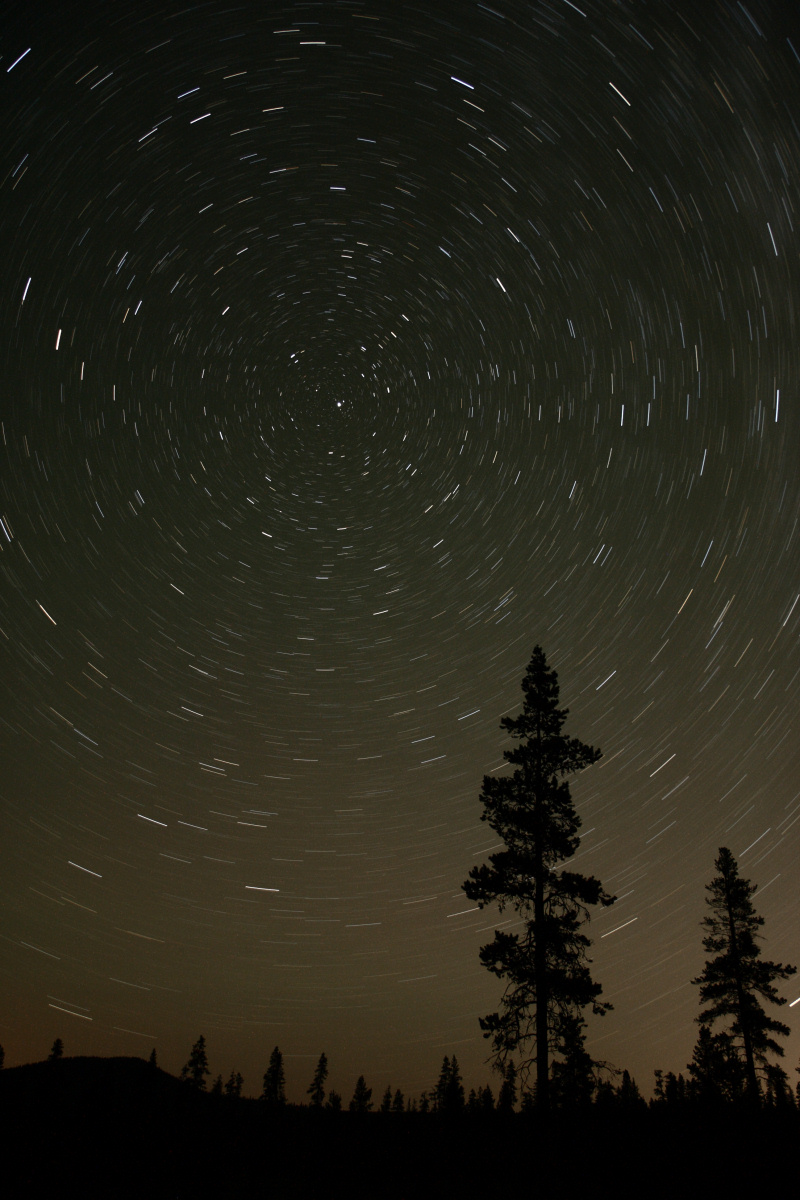
In another direction that same evening, the stars performed a dance above this tree (click for a bigger version of the sixteen-minute, ISO 200, f/4 image):

IMG_3091_rcsp_sml

In perfect circles, their dance took them around the North Star and its attendants:

IMG_3091_rcsp_zoom1_sp_sml

Well, almost perfect. You'll notice that they were slightly off-center from the apparent focus of their dance, since the North Star is not exactly in line with Earth's axis. However, it's close enough for most uses of the word "North."

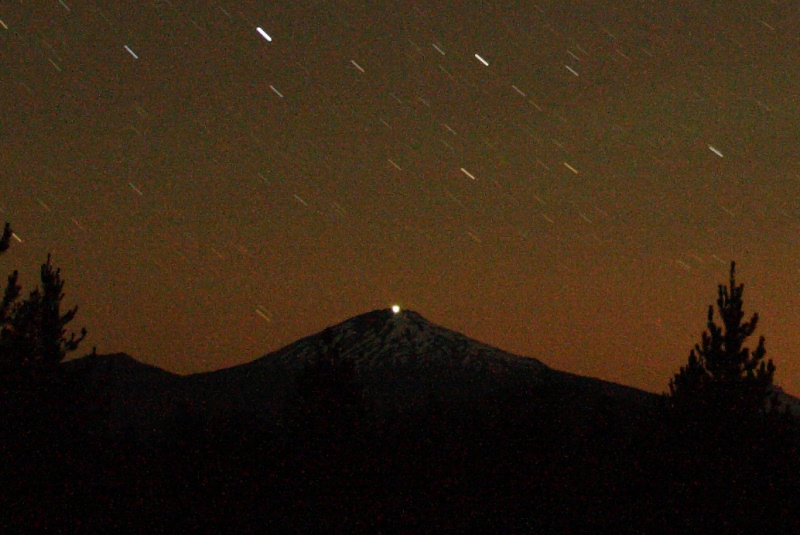
Near the North Star, the Big Dipper presided over Mount Bachelor, both of them framed by the faint reddish glow remaining from the sunset hours before:

IMG_3093_rcsp_sml

A closer look at the "star" just above the mountain shows it was not a celestial object. Apparently, we humans felt compelled to decorate the beautiful peak with its own nighttime beacon:

IMG_3093_rcsp_zoom2_sml

The snow adorning the mountain was quite visible during the day, but at night the starlit scene required a two-minute time exposure at ISO 1600, f/4 (click for a bigger image).

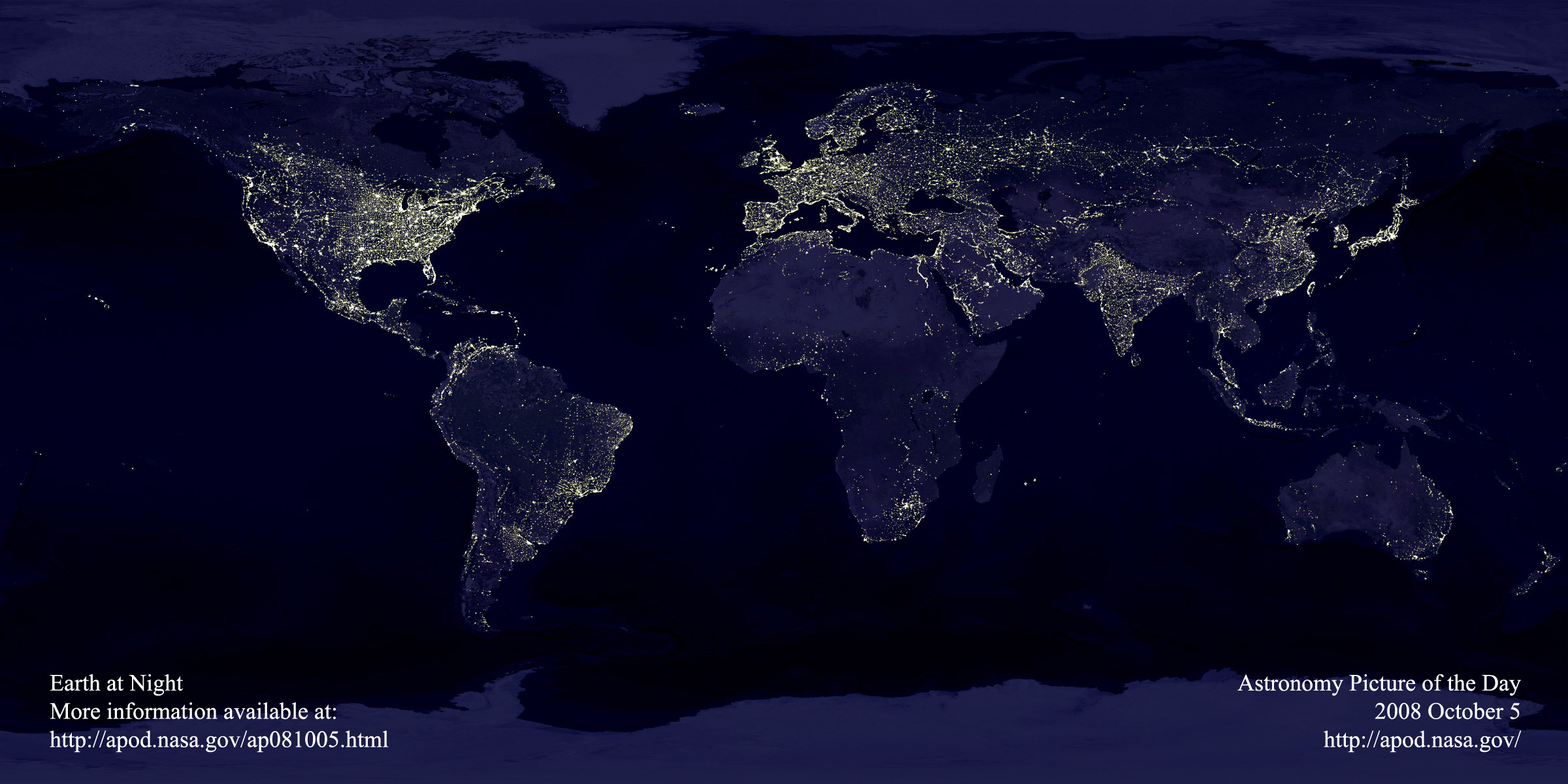
None of these shots would have been possible in a location with city lights sprayed up into the air. Unfortunately, dark skies are getting harder to find in the United States, especially on the East Coast. This night-time satellite view shows the situation quite vividly. I'm glad we live in a place like Oregon, where there are still many places to "see" darkness! :-)

Wednesday, April 20, 2011

Heron' There

IMG_0944_cpcfcp2_sml

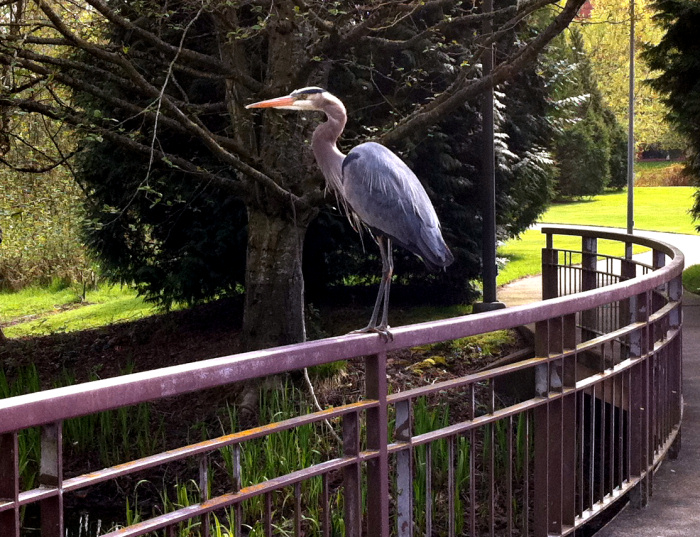
One disadvantage of having a boss whose office is in a different building is that you have to walk five minutes to get to his location for staff meetings. But when you work for a company that has a pond in the middle of its campus, you sometimes encounter amazing wildlife along the way.

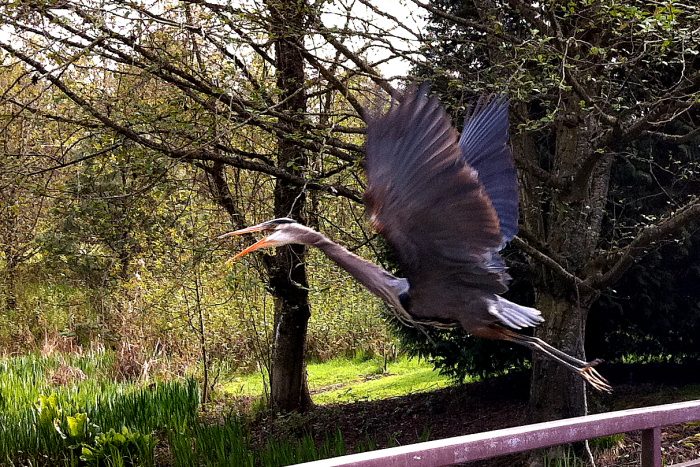
In this case, it was Blue Heron perched on the handrail of a picturesque walkway. Unfortunately, I did not have my DSLR with me, but I did have my handy iPhone. As I watched, he (she?) became distracted by a nearby goose call, and sprang away from the railing.

IMG_0945_cpcfshcp_sml

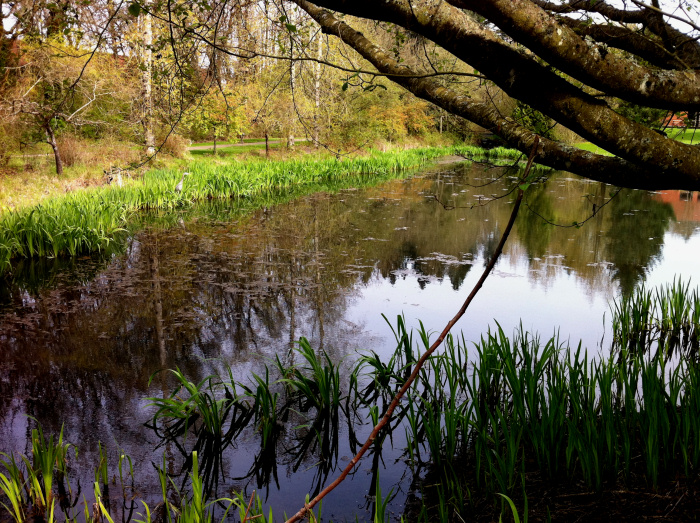
His/her destination was the pond grasses to the left in this photo:

IMG_0947_cf_sml

Every once in awhile, I'm just blown away at the privilege of working amid such incredible surroundings! :-)

Saturday, April 16, 2011

Half Moon, Halfway There

composite_05_06_cfshedcpsp_sml

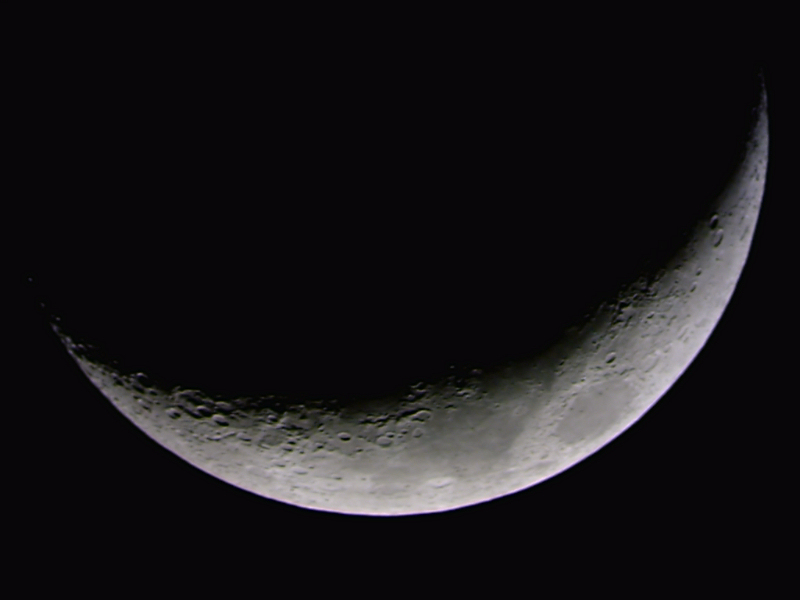
For the second attempt at astrophotography through my telescope, I shot 600 photos of the Moon in two pieces (1024x768 each), taken at 15fps using my new Orion imaging camera. When I first viewed the resulting photo streams as videos, I figured it was a failed attempt. Most of the time, the images are blurry, and air turbulence causes them to undulate and wave:

http://youtu.be/_an5BVe-Vlg?hd=1

But every once in awhile, there is a brief moment of image clarity. When I submitted the collection of photos to Registax, the software found that there are, in fact, 3 sharp frames in the lower half of the composite, and 7 sharp frames in the top half. I guess that 10 out of 600 total frames isn't bad, right? (I used Microsoft ICE to stitch the two halves together, for the whole Moon image.) Here is a full-res portion from the top half:

composite_05_06_cfshedcpsp_zoom1

I figure I'm about halfway there; I'm still learning and adapting technique. For example, I think I would get a higher yield if the telescope is allowed to cool longer in the frigid Oregon "spring" air. Also, my equatorial telescope mount, although better than what I've had in the past, is not exactly high-end -- but I think maybe I can stabilize it better.

Even so, much to my surprise after viewing the blurry video, this turned out to be my best Moon image so far. And, there is much room for improvement despite having very modest equipment. If anyone cares, I'll be posting results from my continuing astrophotographic journey. :-)

Saturday, April 9, 2011

First Light

moon_first_light_orion_imager_sml2

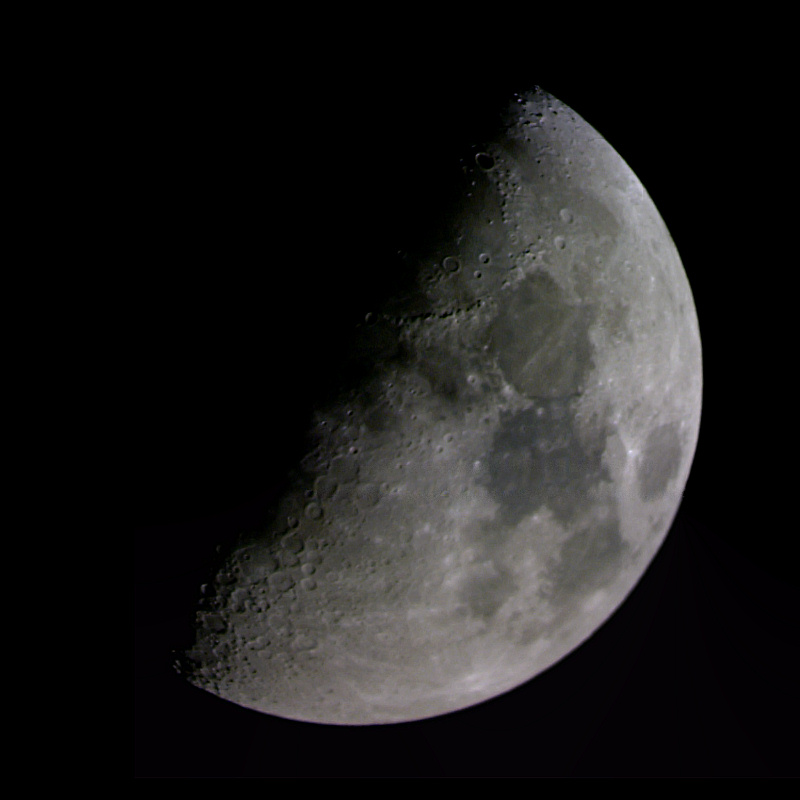
If you hang around with anyone who does astrophotography, you'll recognize the term "First Light." This is an affectionate name for the image of the first "real" subject photographed with a new piece of equipment, after testing and calibration. The Moon photo above is the "First Light" image taken with my new telescopic camera -- for my birthday, Kathy gave me a telescope eyepiece imager.

This solves a problem I have been struggling with, i.e. how to connect my camera to the telescope. There are two options: 1) Placing the camera, sans lens, at the telescope's prime focus; 2) Placing the camera, with a normal lens, pointing into a regular telescope eyepiece. Unfortunately, #1 creates a small image with my telescope (not much better that what I could get with a regular telephoto); #2 requires near-perfect alignment, has vignetting, and focusing is very problematic. Both methods make it very difficult to aim the telescope since the camera is in the way, hindering normal eyepiece viewing.

Over the years, serious hobby astrophotographers have solved these problems with custom cameras designed for telescopes, connected to a computer via a data cable. Recently, quality telescope imagers have come down in price for mere mortal astrophotographers like me. Well, "quality" is relative of course. For $100, you can get a 1024 x 768 resolution sensor in a 5mm eyepiece, resulting in a magnification (for my telescope) of 100x or 200x -- enough to get me started on imaging objects in the solar system -- starting with the Moon.

First Light images are often lower quality than the eventual results from the new device. For example, the first Hubble Space Telescope images revealed a manufacturing flaw which eventually required a Shuttle mission to apply the telescopic equivalent of eyeglasses.

In my case also, the images will get better over time. For example, a night with a more stable atmosphere will help (better "seeing"), as will getting the hang of focusing using a computer screen. With my barlow lens, I'll be able to effectively double the resolution by getting in closer. Also, I need to experiment more with the imager controls, e.g. constrast, brightness, and gain. Then there is the post-processing -- learning the Registax interface better in order to best find the "good" frames and tweak the many stacking and wavelet parameters.

But for now, I can sit back and enjoy this inaugural photograph of Earth's closest neighbor, taken through my own telescope. :-)