My photo
This is my photographer’s blog, for your consideration. I post some of my favorite shots here, usually along with some comments about how the photo was taken or post-processed. (Occasionally I have the vain thought that someone might like to read about that.)

If you like what you see here, feel free to check out my Flickr site and YouTube channel.

Wednesday, June 13, 2012

Venus Transit Bookends

IMG_7021_rc_sml

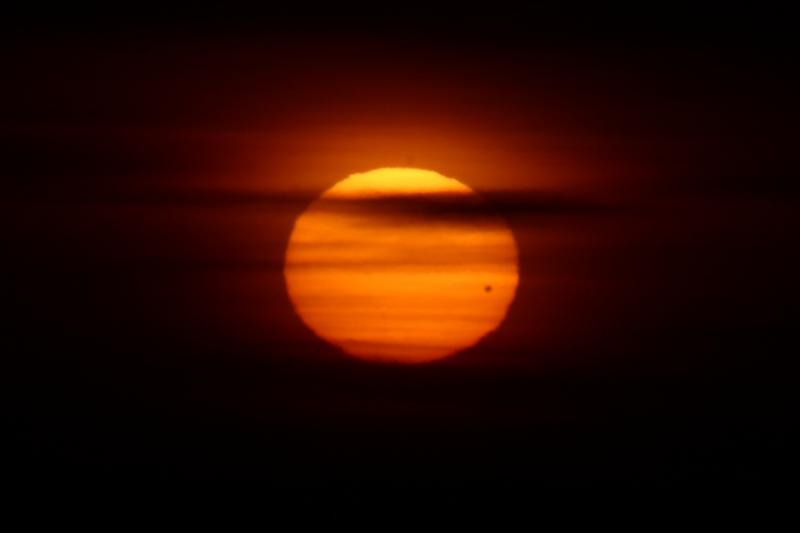
There are hundreds -- maybe thousands -- of Venus Transit photos blanketing the web right now.  Many of them look almost exactly the same, showing the Sun with the black disk of Venus amid a pattern of sunspots that will be long-remembered.  (See the previous blog posting for my contribution to this same-ness.)  But when clouds and foreground are added, suddenly everyone's photo is different.  The photo above is one of my contributions to this variety -- as the Sun dipped lower in the sky, there were some clouds to add interesting pixels to the image.

From San Francisco, the Transit started at 3:06 pm and continued until the Sun dipped below the horizon at 8:44 pm with the transit still in progress.  The next two photos represent the bookends of my experience -- the Venusian ingress on the front end and a picturesque sunset on the back end.

IMG_6748_rcrsrssh

IMG_7035_rc_sml

You may have noticed that in the last photo above, the image of Venus has been elongated vertically.  Of course, this is due to the distortion of the Sun's setting image as its light rays slog through layer upon layer of atmosphere at the tail end of its 93 million mile journey to my camera lens.

Throughout the transit, there were also various non-Venus scenes that presented themselves near my San Francisco Cliff House location.  To see all 9 images, see my associated Flickr set (slideshow).

All in all, June 5, 2012 was a very memorable day!  :-)

Thursday, June 7, 2012

Dark Venus

IMG_6850_rc_sml2

Tuesday I was in San Francisco gazing at the Sun through solar-filtered binoculars -- then it happened. The planet Venus crossed in front of our star.

For almost seven hours, the brightest planet in the sky went dark -- a jet-black disk against the bright Sun. This was the last time it will do so until December of 2117. Persons born today must live to 105 if they plan to view the next Venus Transit.

Altogether, I shot about 450 pictures of the event; my first -- and last -- attempt at Venus Transit photography. In the coming days and/or weeks, I'll share some more of the photos. But for now, the image that is burned in my mind is the one above: Dark Venus gliding in front of the Bright Star.

Monday, May 21, 2012

Crescent Sun

IMG_6438_rc_sml

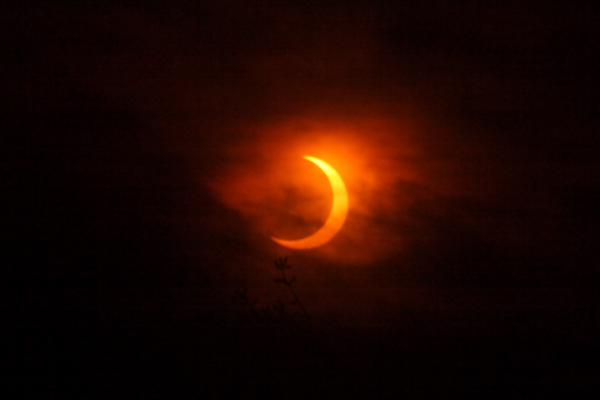
On Sunday in Eugene, we were treated to a partial solar eclipse where 85% of the Sun's disk was covered by the Moon gliding in front of it. Of course this is Oregon, and our clouds decided they wanted a piece of the action too.  In many parts of the state (e.g. Portland), the event was invisible except for a few glimpses of the Sun through thick clouds.  Fortunately, the Eugene clouds were thin enough to reveal the Crescent Sun throughout much of the eclipse.

At 6:23pm, the coverage reached its peak of 85.4%.  Here is what it looked like, exposed for the crescent through some non-picturesque clouds:

IMG_6381_rc_sml

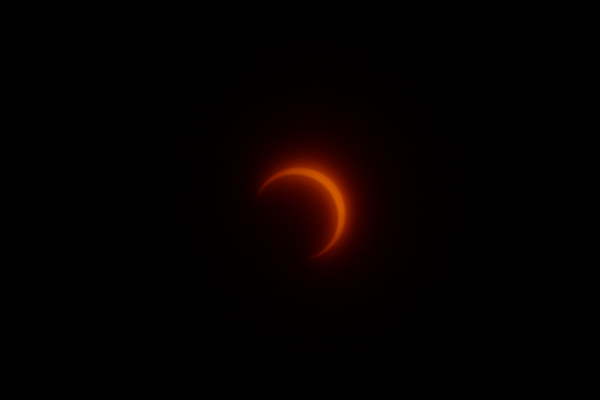
Unless you were hiding from news outlets in the days leading up to Sunday's eclipse, you know this was an annular type, which means the Moon is too far away to completely cover the Sun -- but still tries its best anyway. The result is a "ring of fire" during the few minutes that the Moon's disk appears completely inside the Sun's disk. Unfortunately for my photographic ambitions, I was not in the path of annularity this time -- but as you can see, it was fairly close.

On August 21, 2017, we will get a total solar eclipse, revealing the beautifully delicate solar corona.  The west-to-east path of totality will include McMinnville in the north to Alsea in the south.  I viewed the previous total eclipse that graced the contiguous United States in 1979, and I can assure you it will be worth your effort to see the next one in 2017 .  :-)

Friday, April 6, 2012

Venus Says Goodbye to Sisters

IMG_5855_rcsp_sml

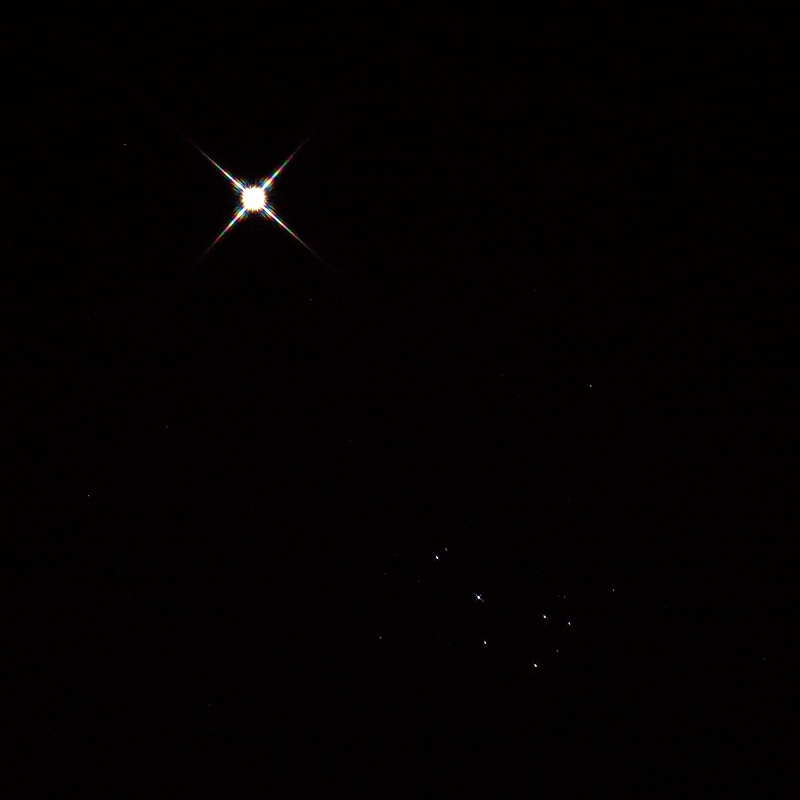
The Oregon clouds finally cleared and I was able to capture Venus and the Pleiades in the same shot. Of course, photographers who were graced with clear skies earlier this week obtained much better photos, since Venus glided right through the famous star group also called the "Seven Sisters."

Oh well; it was still a gorgeous view tonight, even as Lady Venus said goodbye to the Sisters. :-)

Saturday, March 24, 2012

March of the Snowflakes

IMG_5640_sml

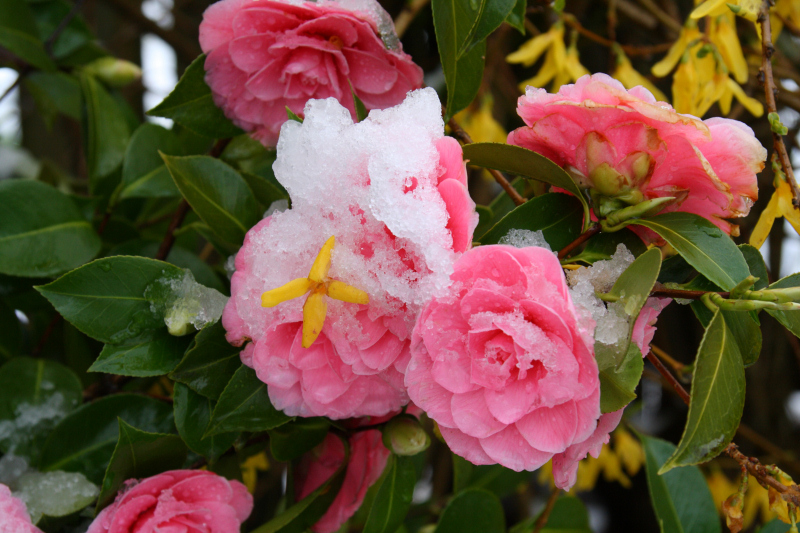
Last Thursday, we had a surprise March snowstorm in the "banana belt" of Tualatin. Certainly, these winter camellia blossoms did not expect it.

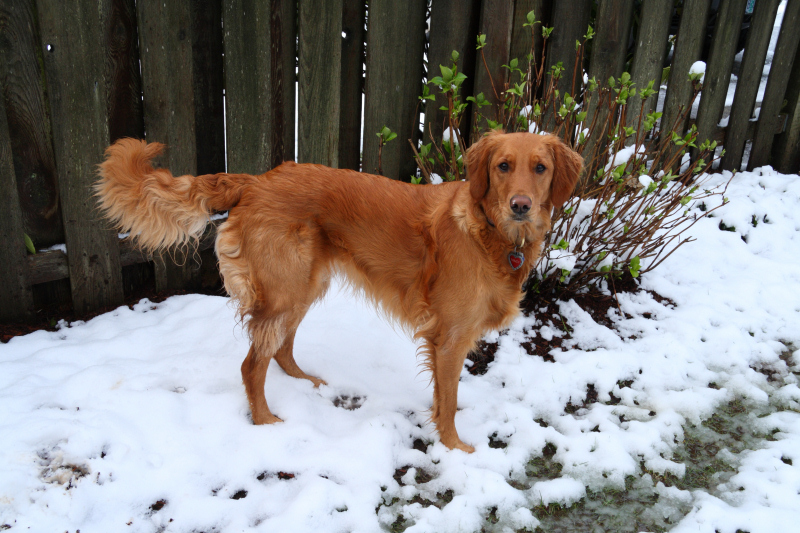
Maisy, on the other hand, took it well in stride:

IMG_5654_sml

Two days later, it was a balmy spring day. The only tangible memory of snow was photographs, an occasional not-yet-fully-melted snowman, and some trees damaged by the heavy wet snow which combined gravitational forces with spring blossoms.

All in all, March is living up to its reputation as a month of unsettled weather. And, it only has a few days left to go "out like a lamb." :-)

Saturday, March 17, 2012

Jupiter and Venus, Shoulder-to-Shoulder

IMG_5595_stack_planets_01_cped2_sml

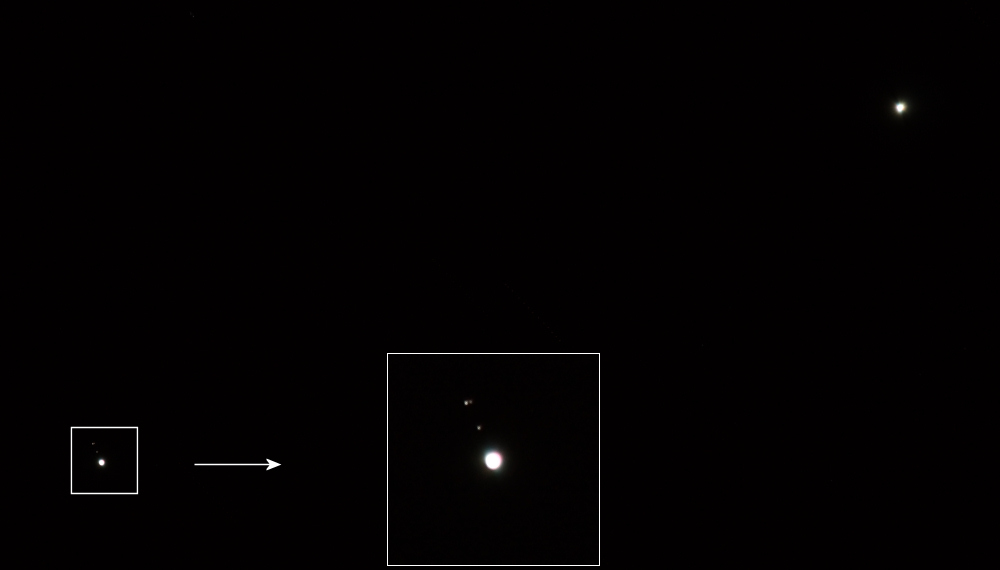
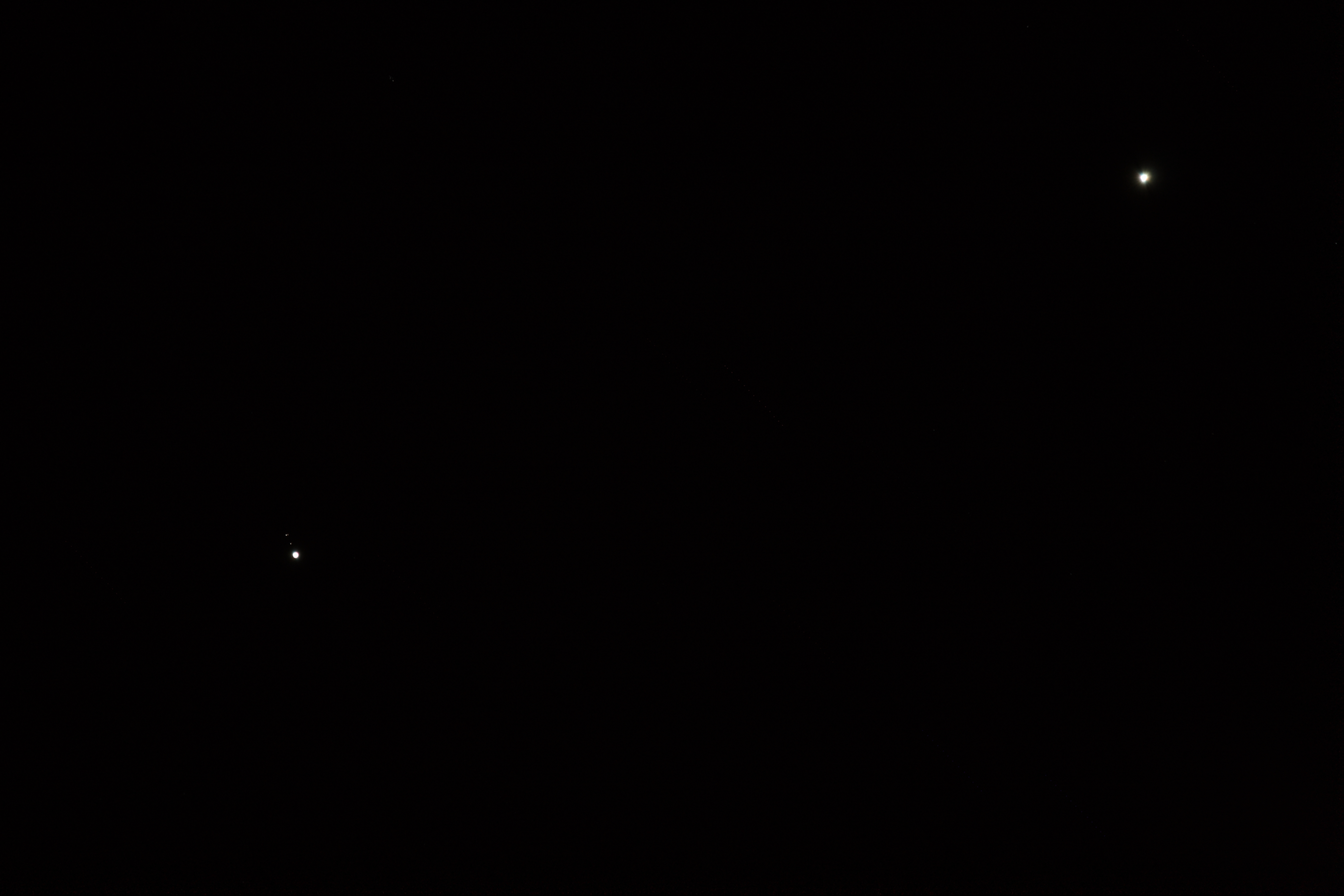
Two bright dots in the sky, very close to each other. Perhaps you saw the Jupiter and Venus Show after sunset last week (Tuesday for this shot). Maybe you even trained your binoculars on the conjunction, and observed that both planets could fit into the same field of view. If your binoculars were on a tripod, or you had one of the fancy new Image Stabilized models, you would have seen three or four tiny pinpricks of light next to Jupiter. Of course, those were moons of Jupiter.

IMG_5595_stack_planets_01_closeup

What was fun about this scene was seeing five planetary bodies in the same view (click on the image for a bigger view; click here for full-resolution):

IMG_5595_stack_planets_01_cp_sml

FWIW, the 13-frame stack was shot at 0.5 seconds, f/5.6, 300mm (480mm equivalent), ISO 800. Stacking was done using Registax v5 with three alignment points.

In this 2010 posting, I showed a scene with Jupiter and its moons, our Moon, and Uranus off to the side. That one was admittedly more picturesque. But today's blog entry is about the two brightest planets getting so close in the sky that they were posing for a side-by-side photo. On Thursday, March 15 the planets were even closer, but the Oregon cloudscape denied me the privilege of seeing it. In May, the two planets are scheduled for another shoulder-to-shoulder photo-op; maybe then. :-)

Update, 26-Sep-2014: Click here for my posting two years later when Venus and Jupiter finally posed close enough for a shot that nicely shows the two planets with Jupiter's moons.

Thursday, February 23, 2012

Collinear Planets

IMG_5339_rcsprs

Jupiter and Venus are now the brightest objects in the sky. Until, that is, the crescent Moon makes an appearance, as happened this evening. The thing that made the scene expecially photogenic was the collinear arrangement -- three planetary bodies arrayed in a straight line. It was so gorgeous I couldn't resist a quick pre-dinner astrophotography session. The shot was one second at f/4, using ISO 400.

About a minute later, Luna snuggled under her blanket of horizon clouds and disappeared.