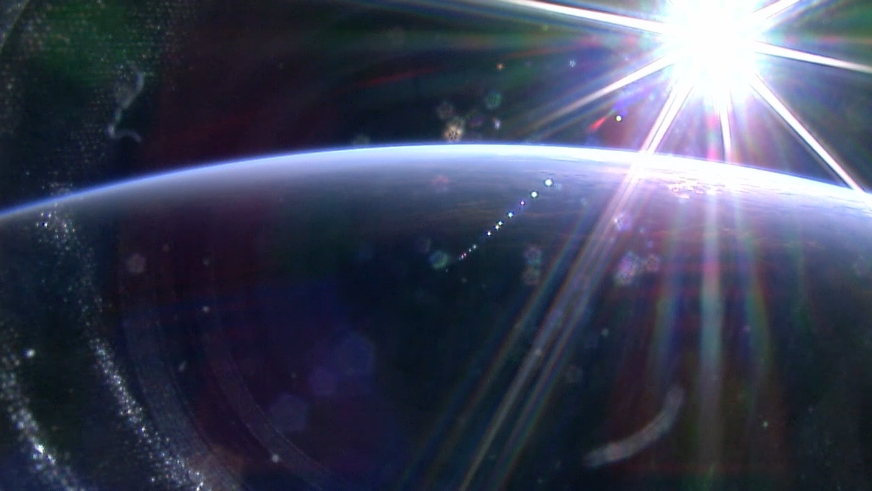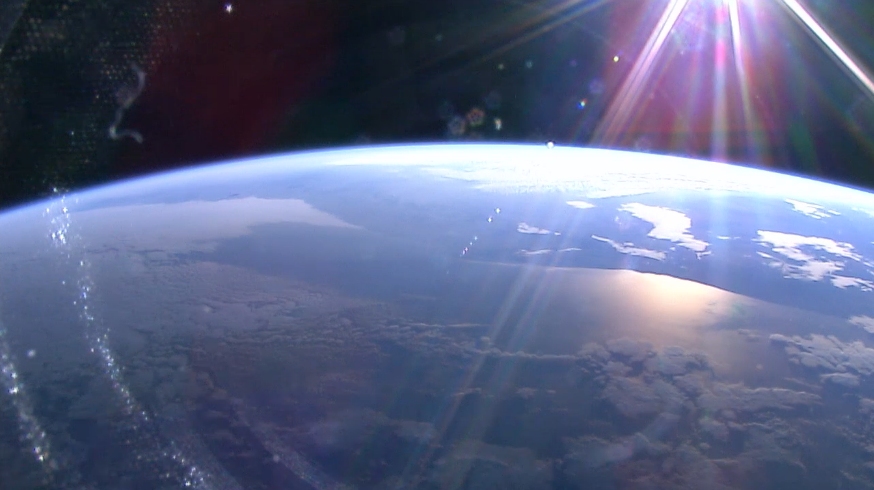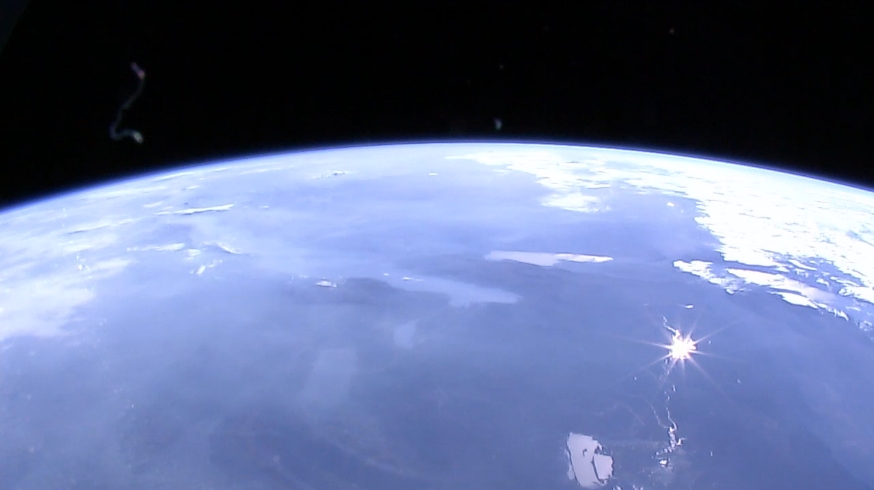
My photo
This is my photographer’s blog, for your consideration. I post some of my favorite shots here, usually along with some comments about how the photo was taken or post-processed. (Occasionally I have the vain thought that someone might like to read about that.)

If you like what you see here, feel free to check out my Flickr site and YouTube channel.

Saturday, July 25, 2015

Planetary Conjunctions Aplenty

Photo by JHH

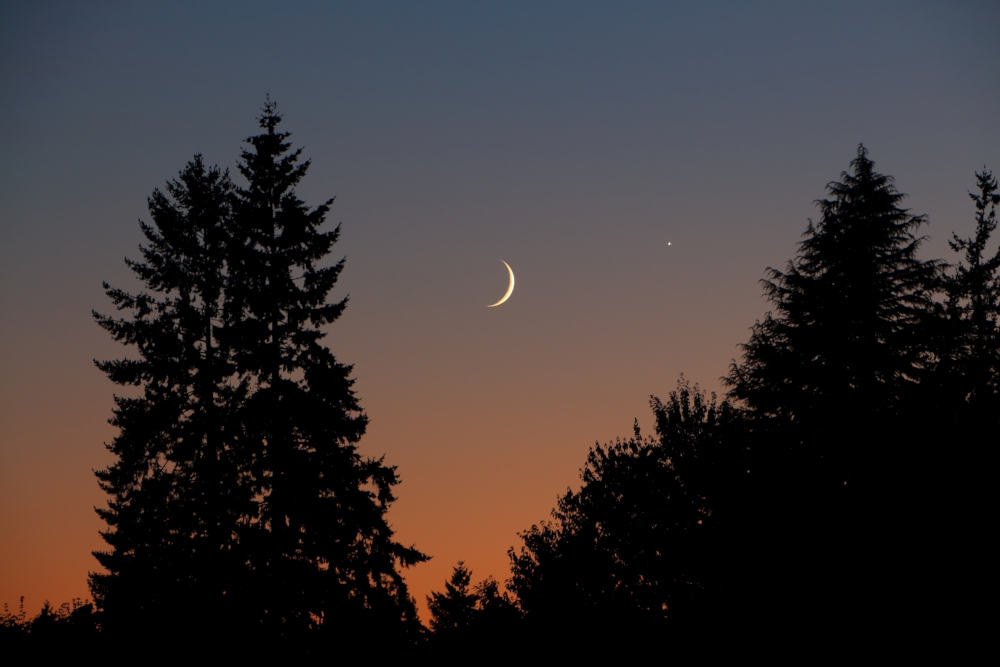
This year we have been treated to several conjunctions -- times of picturesque planetary sharing in the same section of sky. This photo shows a young Crescent Moon cozying up to Venus, which has been dominating the twilight western sky recently.

Here is a closer view of the pair, where some of the Moon's craters are visible. Also, one can see that the bright dot for Venus is slightly elongated, showing that it, too, is a crescent. (For more information on that phenomenon, see the Pre-Dawn Crescents blog entry.)
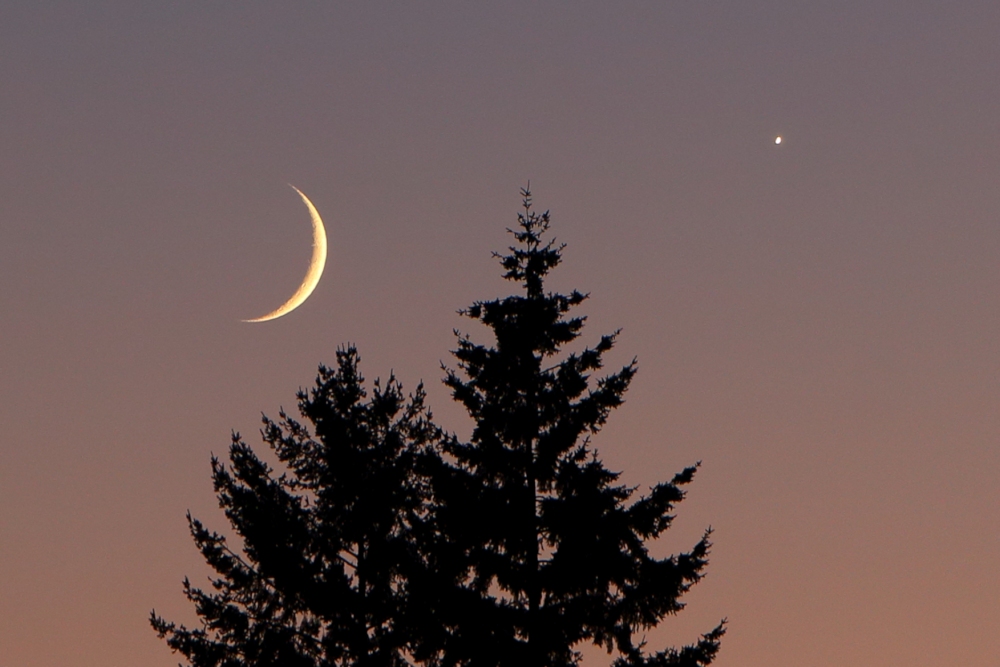
Photo by JHH

Around June 30, Venus and Jupiter had a very close encounter, being only 0.3° apart in the sky. One science writer explained the visual proximity by pointing out that one could hide both of them with a chopstick held at arm's length. (He was right; I tried it.) The house across the street from us provided a nice perspective of how very close the planets were in the sky.
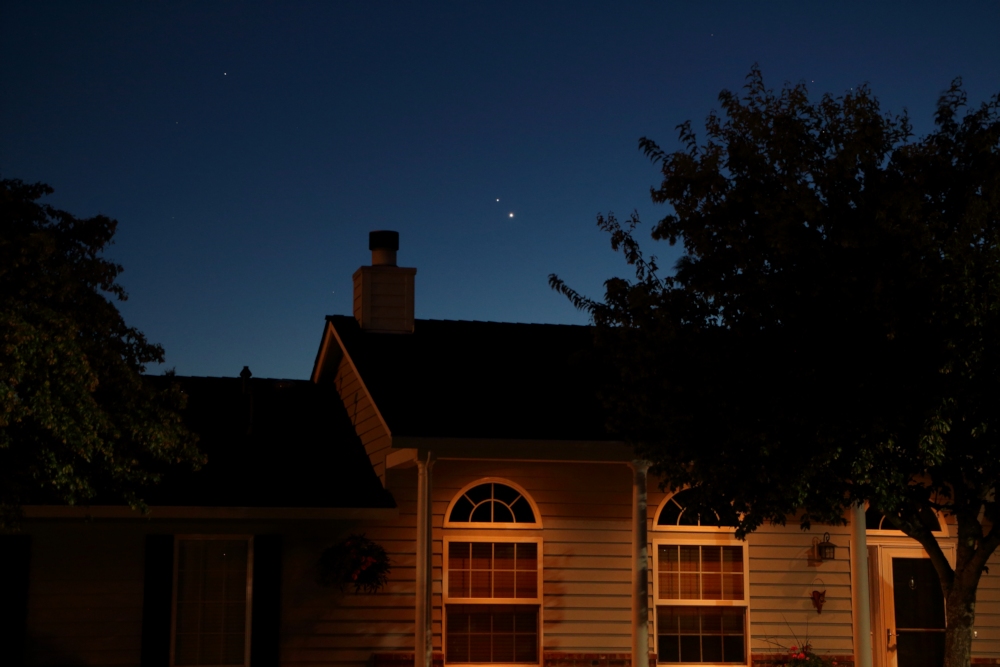
Photo by JHH

And not just the planets themselves. One of the most rewarding aspects of photographing a close-proximity Jupiter/Venus conjunction is getting a picture showing 6 planetary bodies in the same shot: the two planets plus four of Jupiter's moons:
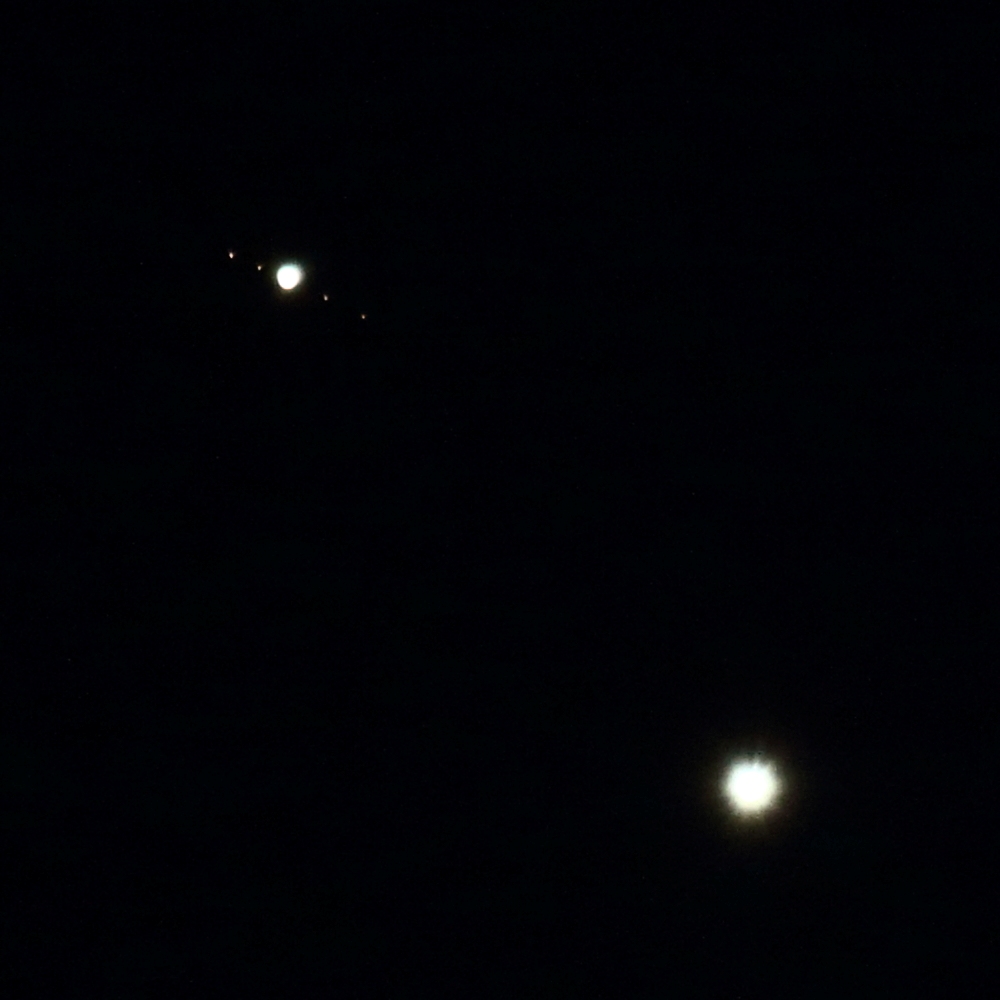
Photo by JHH

Here is a Venus-Mars-Uranus-Moon conjunction forming a nice triangle, although it's harder to see Uranus because the planet is rather dim from its vast distance well beyond the orbit of Saturn.
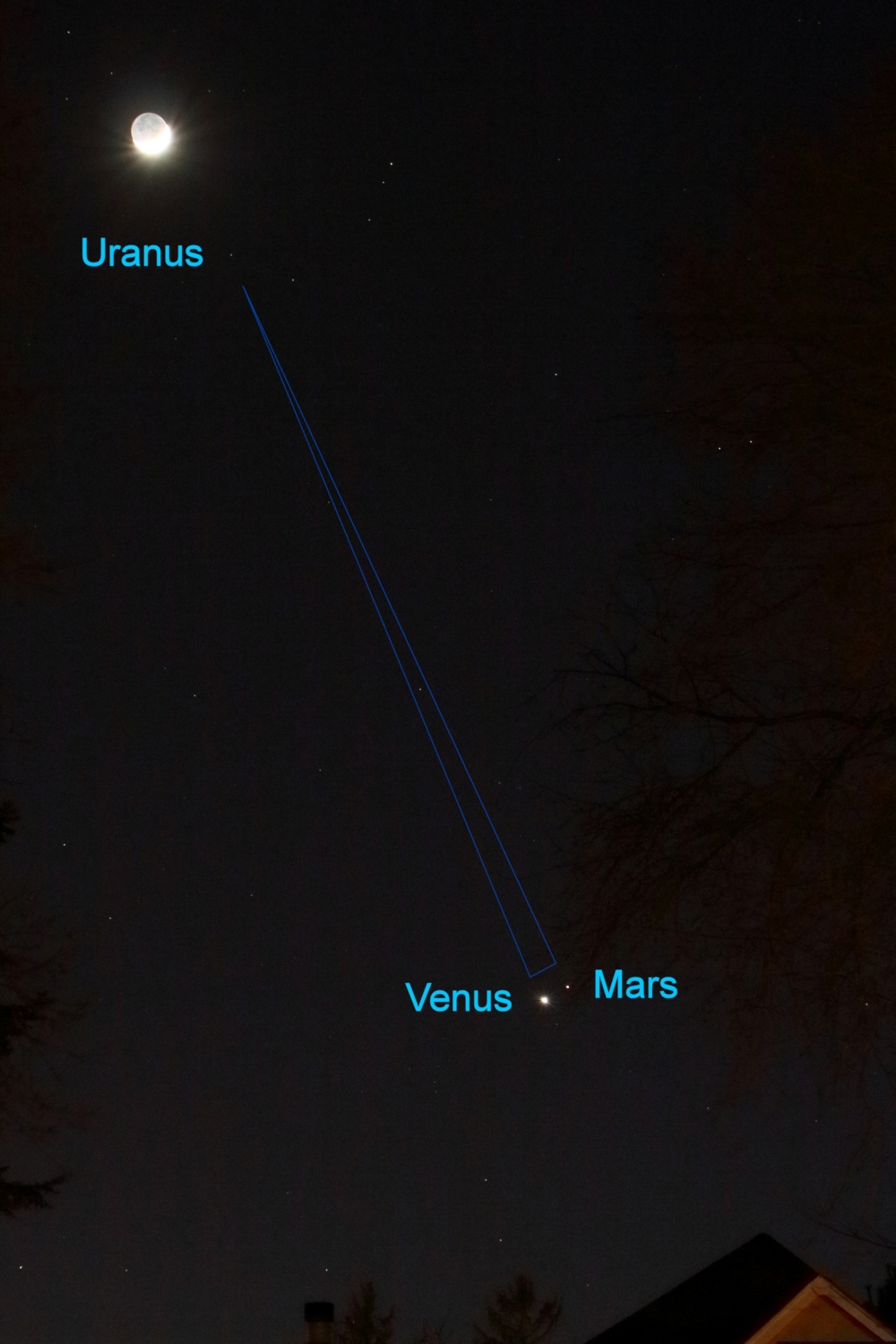
Photo by JHH

(Funny story: I didn't realize I was including Uranus in this shot until I later examined a sky chart for that day. When I pulled the photo file from my archives, sure enough -- there was Uranus, right where it was supposed to be.)
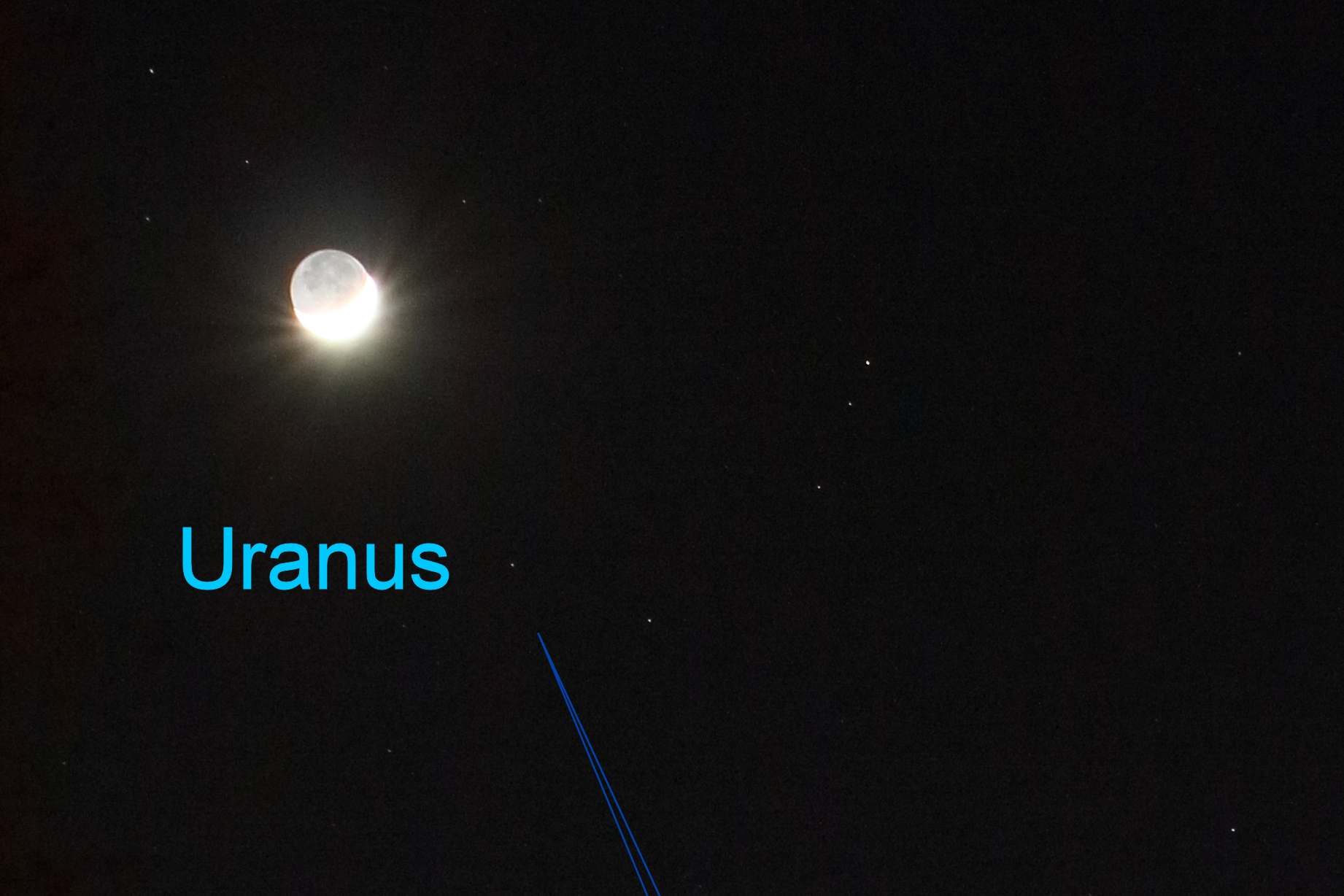
Photo by JHH

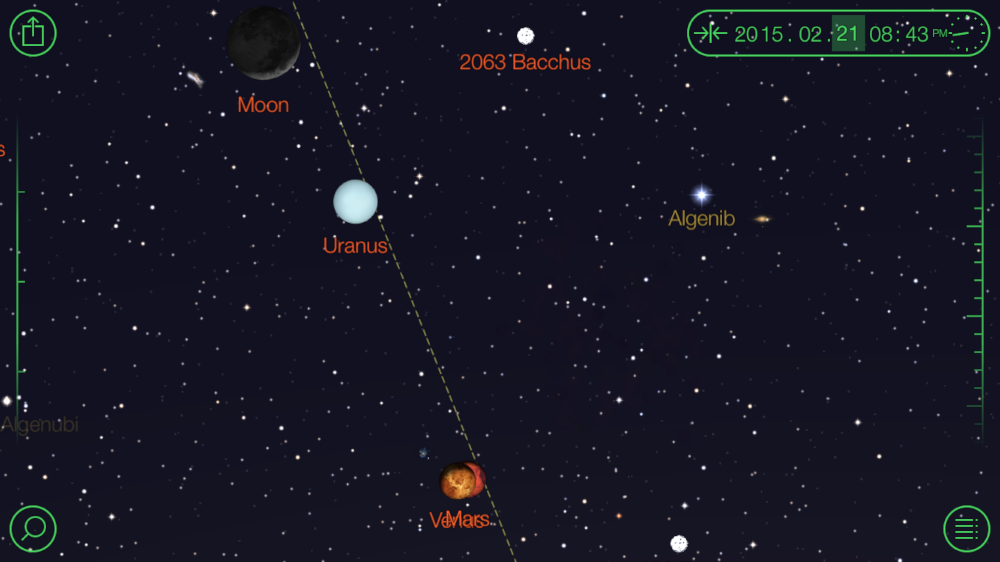
Have you ever wondered why there are so many planetary conjunctions? After all, there are only 8 major planets, and the sky is very big. How can there be so many visually-close encounters between the planets? The answer is the Ecliptic. When we look up into the night sky, there is an imaginary line called the Ecliptic, made visible below as a dashed line in the Star Walk app's view of the Venus-Mars-Uranus-Moon conjunction photo:
Imported image

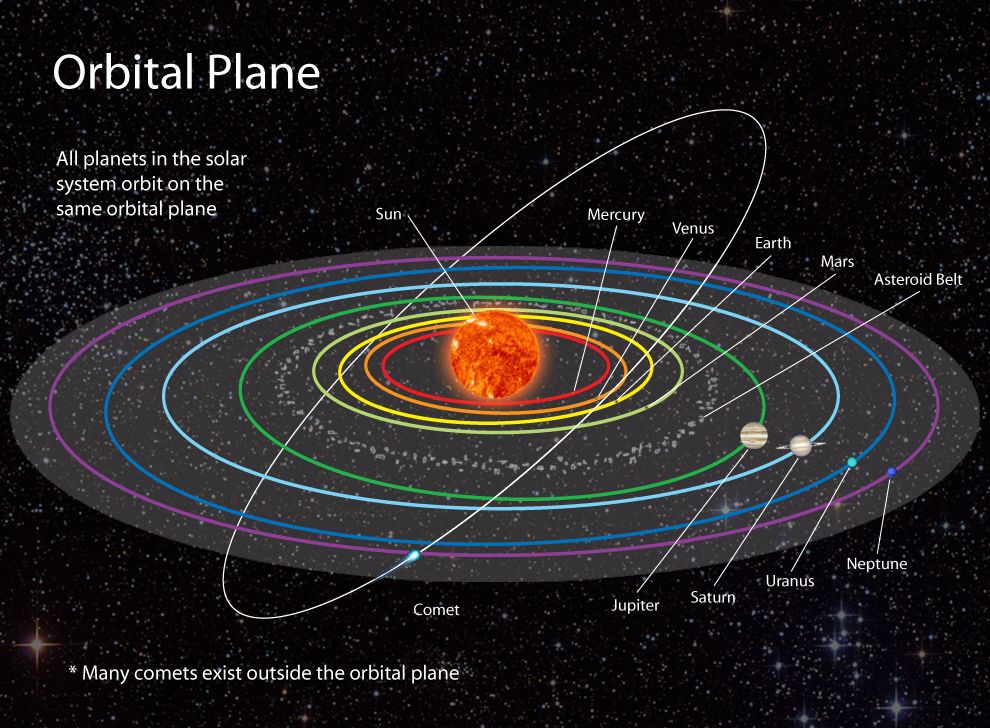
The planets and our Moon always tend to cluster near that line, thus providing plenty of opportunities for close encounters. The ancients could not figure out why this was the case; however they knew that for an eclipse to happen, the moon would have to be crossing the line -- hence the name, "Ecliptic." What is that magical line? It's really nothing more than the orbital plane of the solar system seen edge-wise.
Imported image
Source page: http://education.nationalgeographic.com/media/orbital-plane/
Image file: http://media.education.nationalgeographic.com/assets/photos/000/285/28546.jpg


We never get to see this oblique viewing angle ourselves, because we are stuck inside that virtual disk. So, as we gaze out at the other planets and the Sun, they are all essentially along a line -- the Ecliptic.

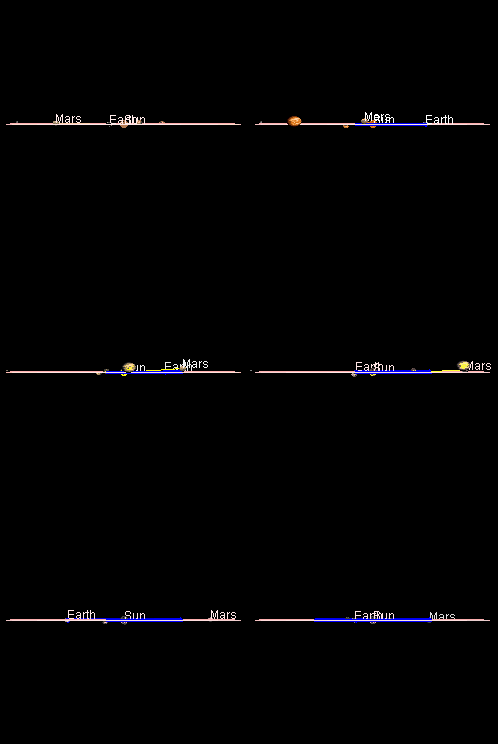
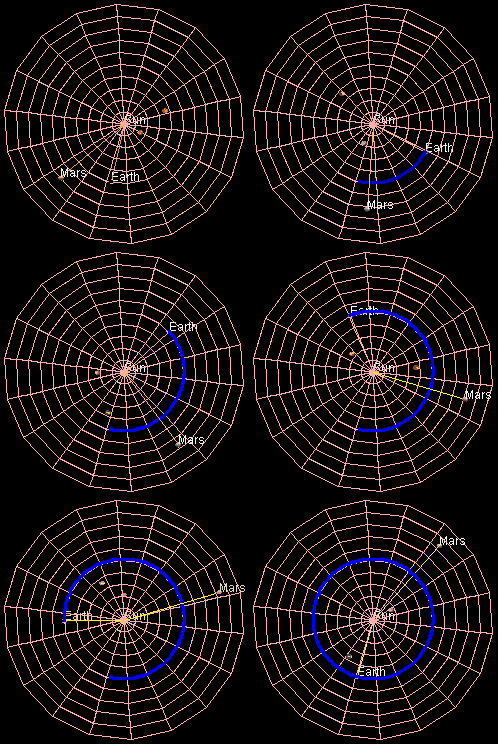
Of course, if every planetary orbit was on exactly the same plane, we would always see them perfectly aligned, like this:
Imported image

Imported image
Source page: https://en.wikipedia.org/wiki/Ecliptic
Image file #1: https://en.wikipedia.org/wiki/Ecliptic#/media/File:Ecliptic_plane_side_view.gif
Image file #2: https://en.wikipedia.org/wiki/Ecliptic#/media/File:Ecliptic_plane_top_view.gif


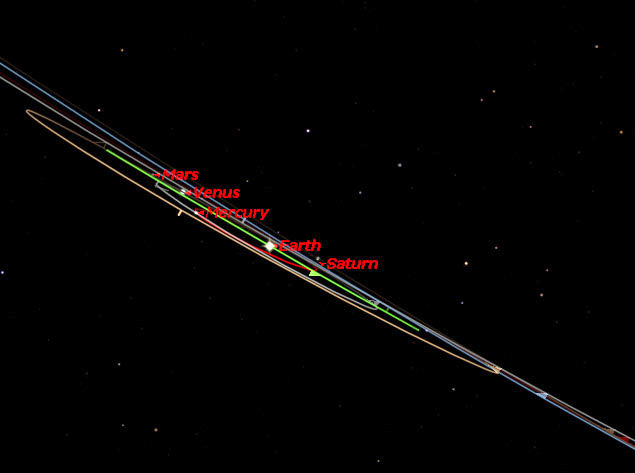
Instead, we see the planets above and below that line at different times since their orbits around the Sun are all inclined slightly differently than ours. Here is a view from a star chart program that shows it well. The green line is Earth's orbit; observe how the other planets' orbits are not quite aligned with ours.
Imported image
Source page: https://infinitewell.wordpress.com/tag/planetary-alignment/
Image file: https://infinitewell.files.wordpress.com/2008/09/orbital-plane-1.jpg


That allows for lovely patterns like this triangle of Venus, the Crescent Moon, and Mercury from the Tax Day Conjunction blog post:
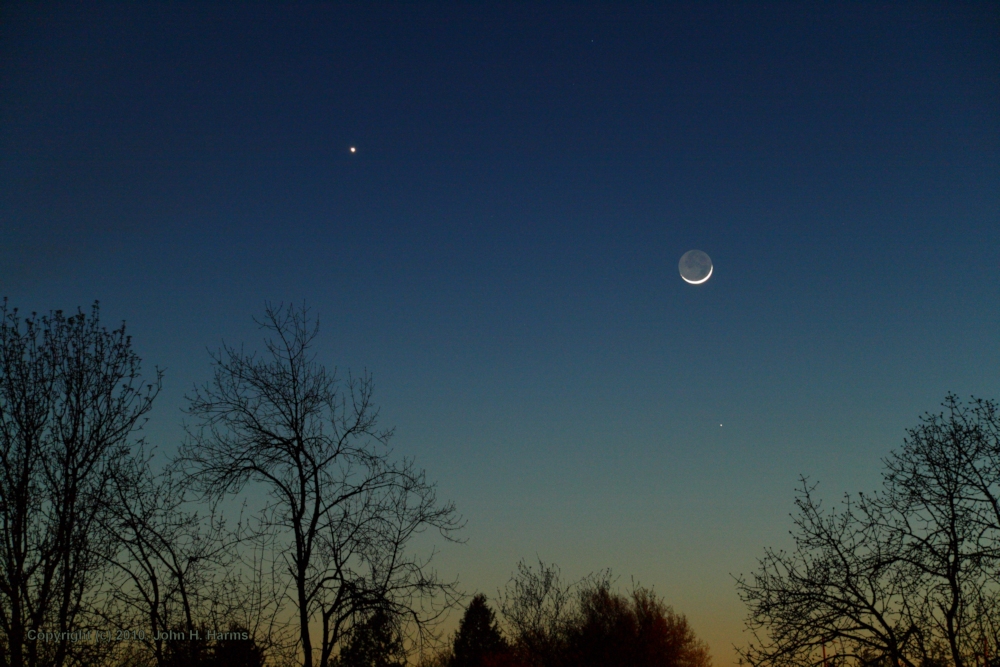
Photo by JHH

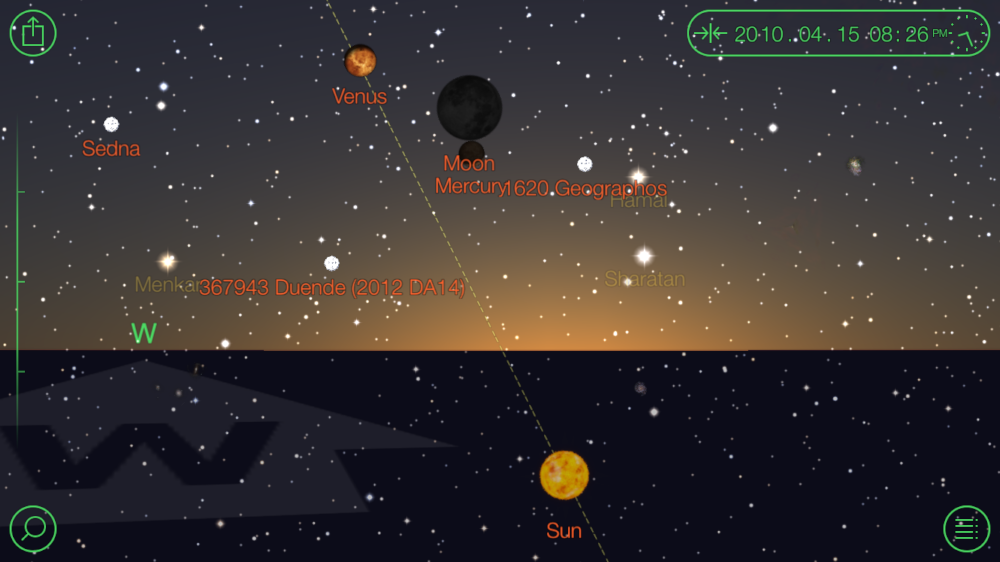
Here is where the Ecliptic was on that evening:
Imported image

So, there you have it; planetary movement in a nutshell. (Well, more like "...on a dinner plate.") Pardon me if you already knew everything about the Ecliptic and Solar System's orbital plane. But I often say, "Wow; I learn something new every day." For some of you, perhaps this was your day to have the planets' motions in the sky suddenly make more sense.

If you like these conjunction photos, I posted some more on Flickr (slideshow).

Saturday, February 21, 2015

Retractable Landing Gear 2

Photo by JHH

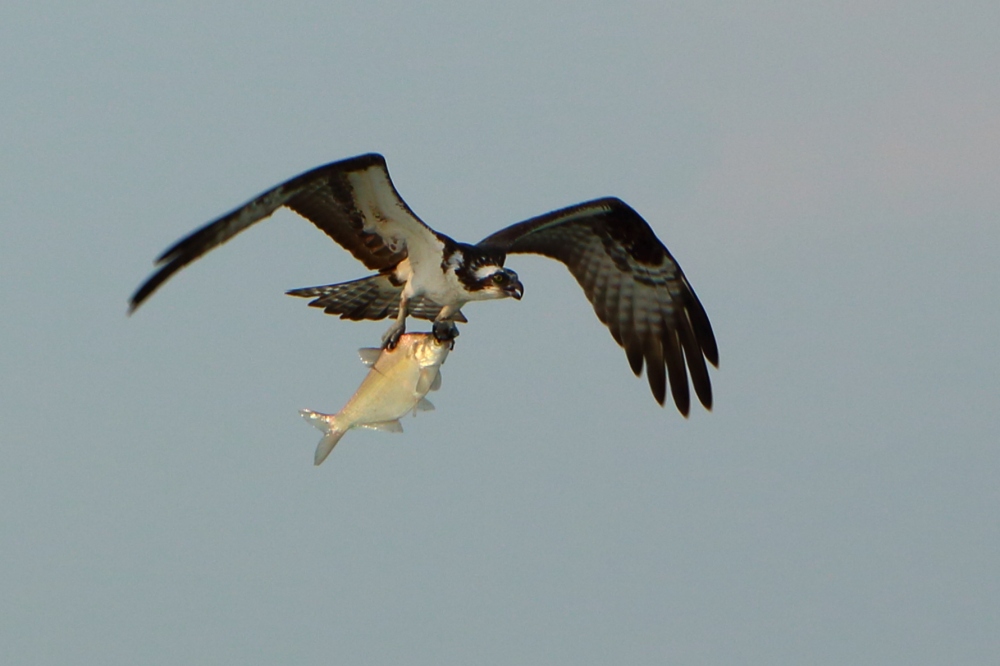
In my Retractable Landing Gear blog posting, we examined what large birds do with their feet after taking off.  The short answer was that they tuck their feet and legs closely under their bodies, making an aerodynamically smooth surface -- much like an airplane's landing gear folding inward.  But as you can see from the photo above, there are also other uses for those feet during flight.  This osprey at the Outer Banks in North Carolina last May was on his way home bringing a very fresh fish for dinner (still wriggling), gripped securely in his un-retracted talons.
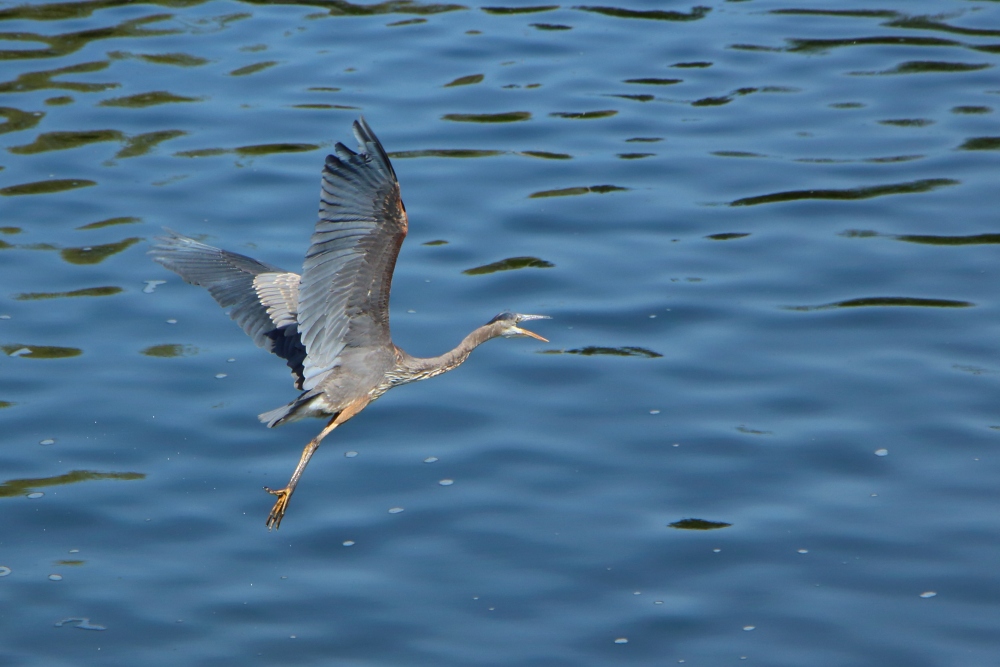
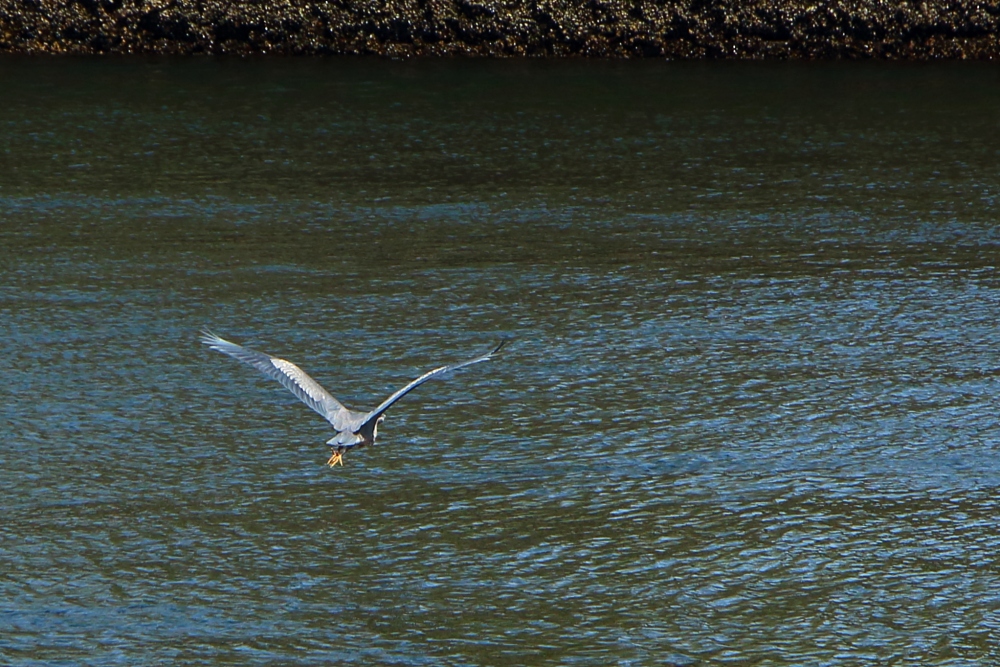
Sometimes a bird's legs are simply too long to tuck completely underneath.  This blue heron near the Ballard Locks in Seattle showed that situation last April:

Photo by JHH

Photo by JHH

Photo by JHH

Of course, landing gear is also useful for, well, landing. At the Crystal Springs Rhododendron Garden a number of years ago, this duck demonstrated a water landing for me by first flaring his wings, then using his webbed feet as water skis:

Photo by JHH

Photo by JHH

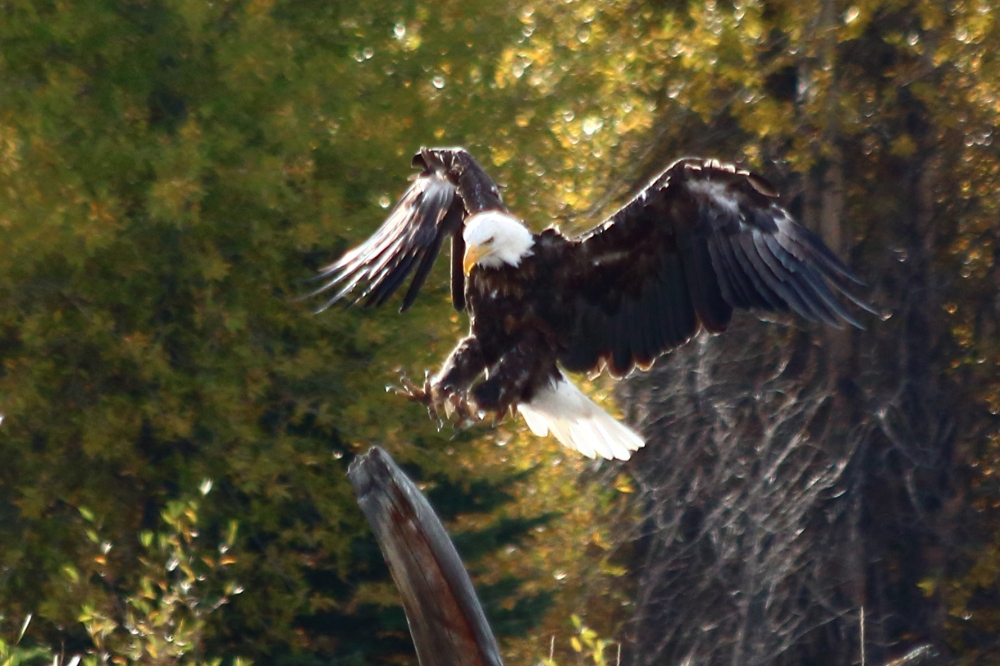
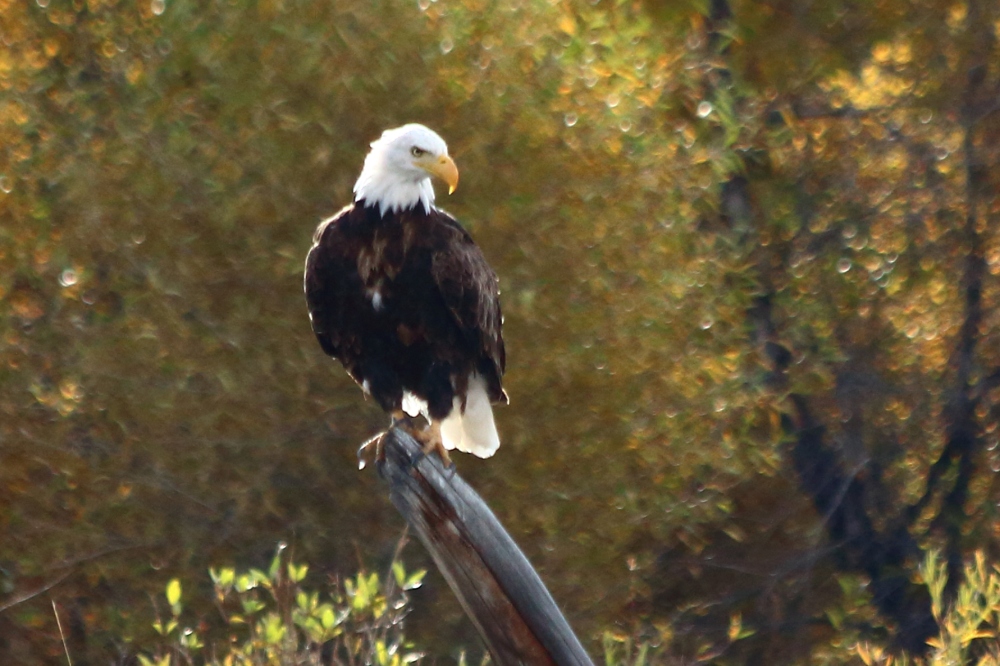
But my favorite demonstration of avian landing gear in action was this Bald Eagle in the Tetons near Jackson Hole in September:

Photo by JHH

Photo by JHH

Photo by JHH

The eagle's strong, sharp talons turned a dead tree root into a nice perch from which to survey his domain.

Wednesday, October 15, 2014

Tri-color Moon

IMG_3000_rc_sml

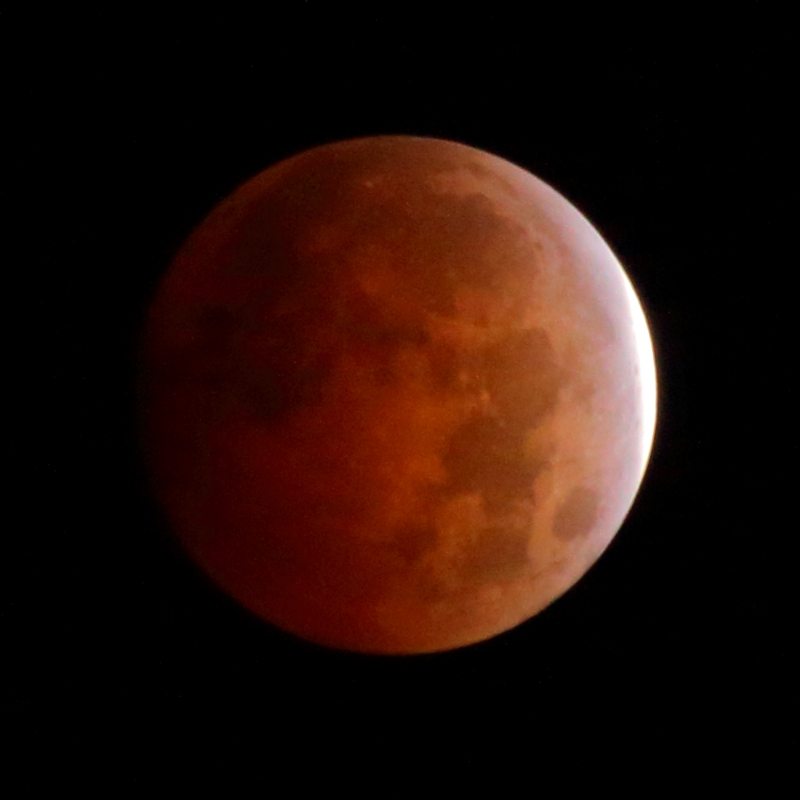
On October 8, much of the Earth was treated to a total lunar eclipse. I have photographed many lunar eclipses, and usually the pictures are nothing to write home about -- just the Moon, colorized. This time however, I noticed something I'd never seen before.  As you probably know, a lunar eclipse gets its reddish glow from every sunset on Earth simultaneously glowing around the rim of the eclipsing planet. But in this photo, between the edge of the Earth's shadow on the right and the characteristic red color on the left are two more colors: bluish-white and yellow. (I boosted the color saturation a bit so you can see it better.)

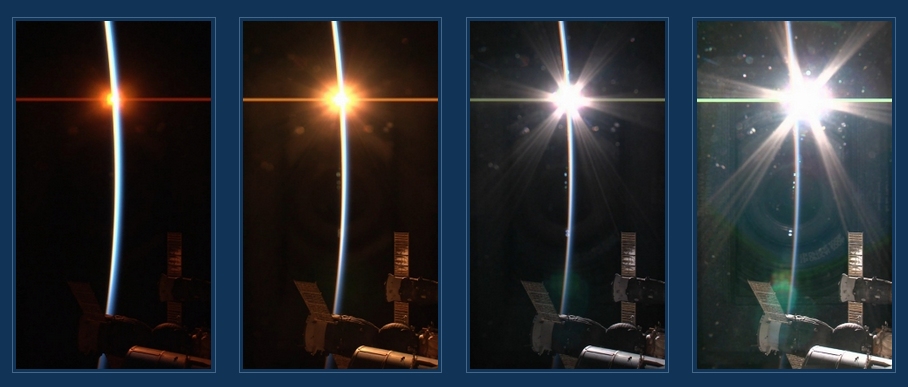
My first thought was, "Cool! A tri-color Moon." My second thought was, "Wait a minute, I've seen that same color sequence before -- from space!" In my Fifteen Sunsets Per Day blog posting, I show how the color of light changes as the Sun appears to descend through the layers of atmosphere, as seen from the International Space Station. First it's bluish-white, then yellow, then red. Here, I've tipped the blog entry's sequence sideways so you can match it to the colors on the eclipsed Moon photo beneath it:

IMG_3000_rc_sml

IMG_3000_rc_sml


I imagine that an astronaut standing on the Moon and looking toward Earth during the eclipse would observe the sunset colors change something like the ISS inhabitants can see fifteen times per day -- albeit much more slowly.

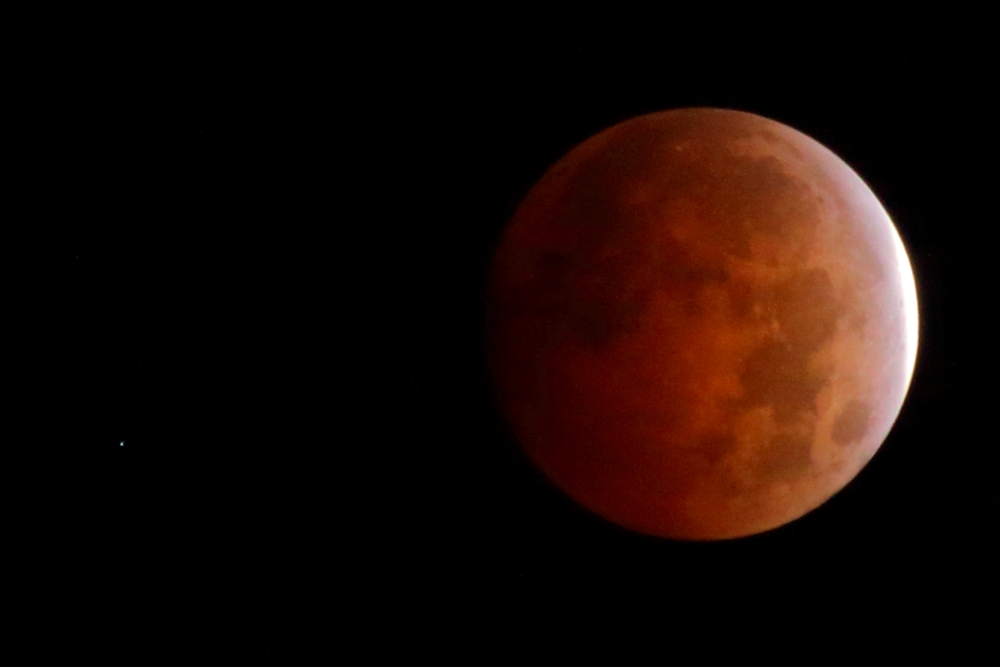
But wait, there's more! Off to the lower left was a bonus view: the planet Uranus, which would normally be lost in the glare of the Moon without a handy eclipse to "dimmify" the closer object:

IMG_3000_rc_sml

All in all, it was definitely worth getting up at 3:00 AM to see and photograph these cool celestial sights.

Friday, September 26, 2014

Living on the Edge

IMG_3000_rc_sml

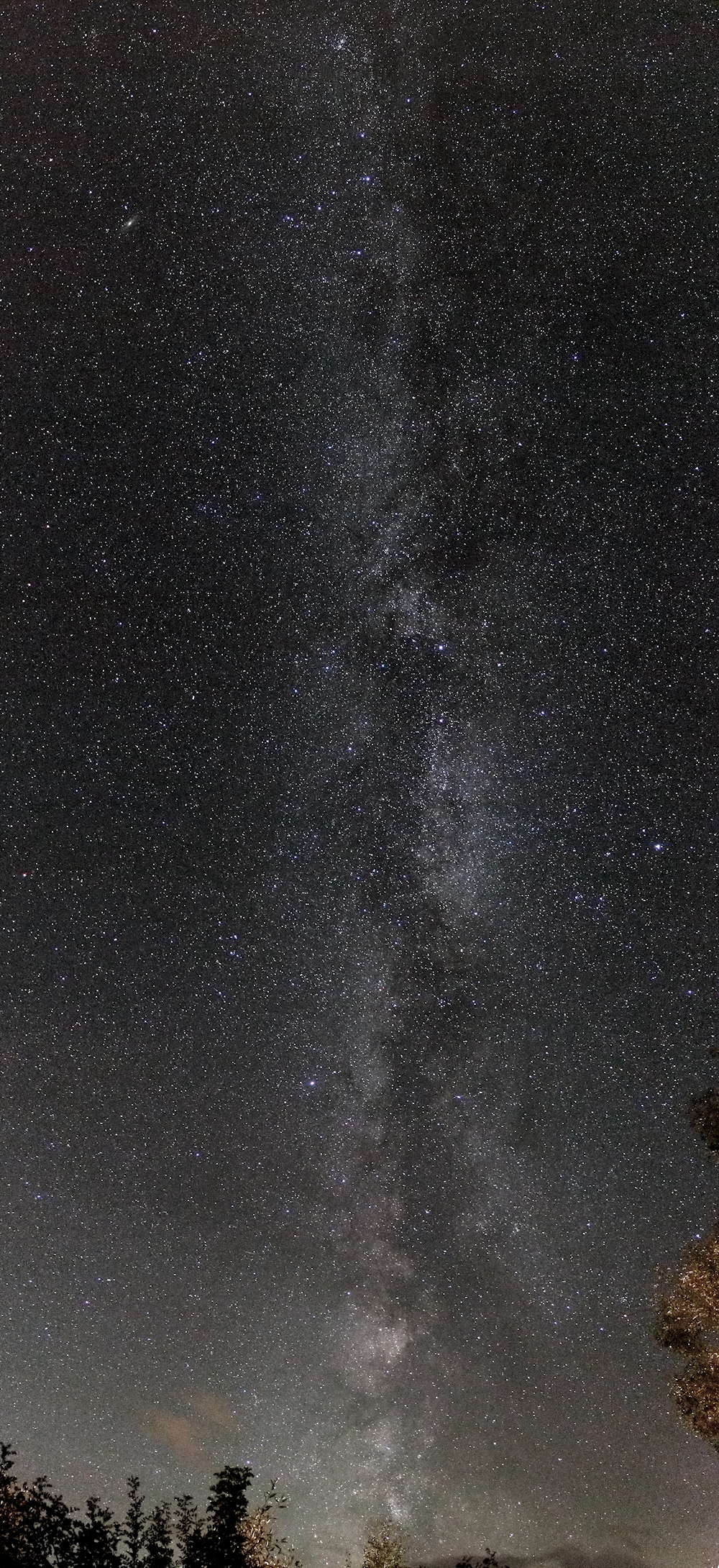
On a recent trip to Jackson, Wyoming, we were treated to a very dark sky thanks to low light pollution and lack of moonlight. It's awe-inspiring to see so many more points of light than are visible from my backyard in a Portland, Oregon suburb. Of course, the brightest collection of stars we can see in a dark sky is the Milky Way, captured above with a series of 15-second photos at f/3.5 and ISO 6400. (Bonus: If you click on the image and zoom in a bit, you can see the Andromeda Galaxy in the upper-left.)

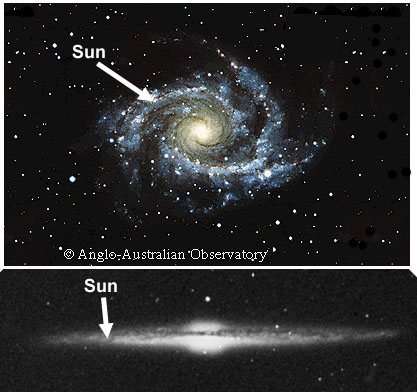
This view of the Milky Way stretches from horizon to horizon, and yet we still can't see the whole thing. To understand why, it helps to visualize of our position inside the Milky Way; we are "living on the edge" -- well, about 1/5 of the way from the edge of our disk-shaped galaxy.

Milky Way

(Image Source: http://stevekluge.com/geoscience/images/milkywaysun.jpg)

No matter where we look in the sky, the Milky Way is there. That famous archway in the sky glows brighter because the bulk of the galaxy's stars are toward its center. But essentially, every star we can see as a single point of light is still part of the Milky Way -- even if it's in the opposite direction from the galactic center.

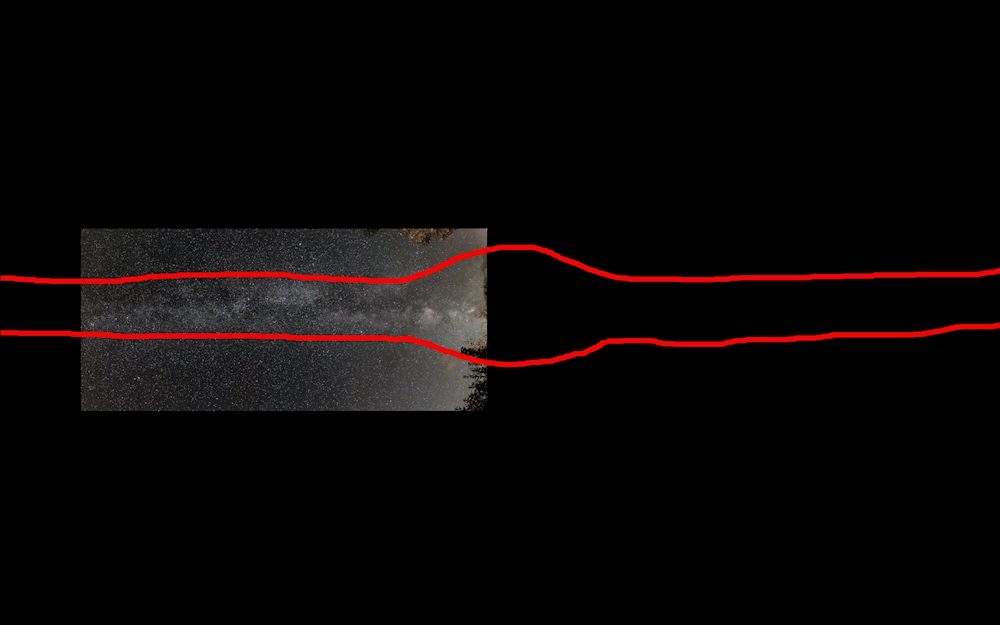
How could we arrange to see the whole thing, when it's all around us? You are already familiar with stitched panoramas. My Milky Way photo from Wyoming is a 17-shot stitched composite that crosses the whole sky. Let's tip it sideways and see how it fits into the galactic context:

IMG_3000_rc_sml

As you can see, it's only big enough to show part of the Milky Way.

To see all of our galaxy, I would need to take my camera to dark-sky locations on earth representing both the Northern and Southern Hemispheres, then combine all the photos -- about 300 of them -- to cover all portions of the earth's visible sky. And, to get a high-quality result, I'd need to stack 4 photos for each of the 300, for a total of 1,200 shots. The exposures would need to be about six minutes each, to gather enough light for a low-noise, high-resolution digital camera sensor. Last but not least, six minutes would ordinarily show star trails instead of stars. (The longest exposure you can do with a fixed camera at the necessary zoom level is about 15 seconds.) So, the camera would need to be placed on an equatorial mount with a clock drive to track the motion of the stars through the sky.

It would be a huge project, taking well over a year.

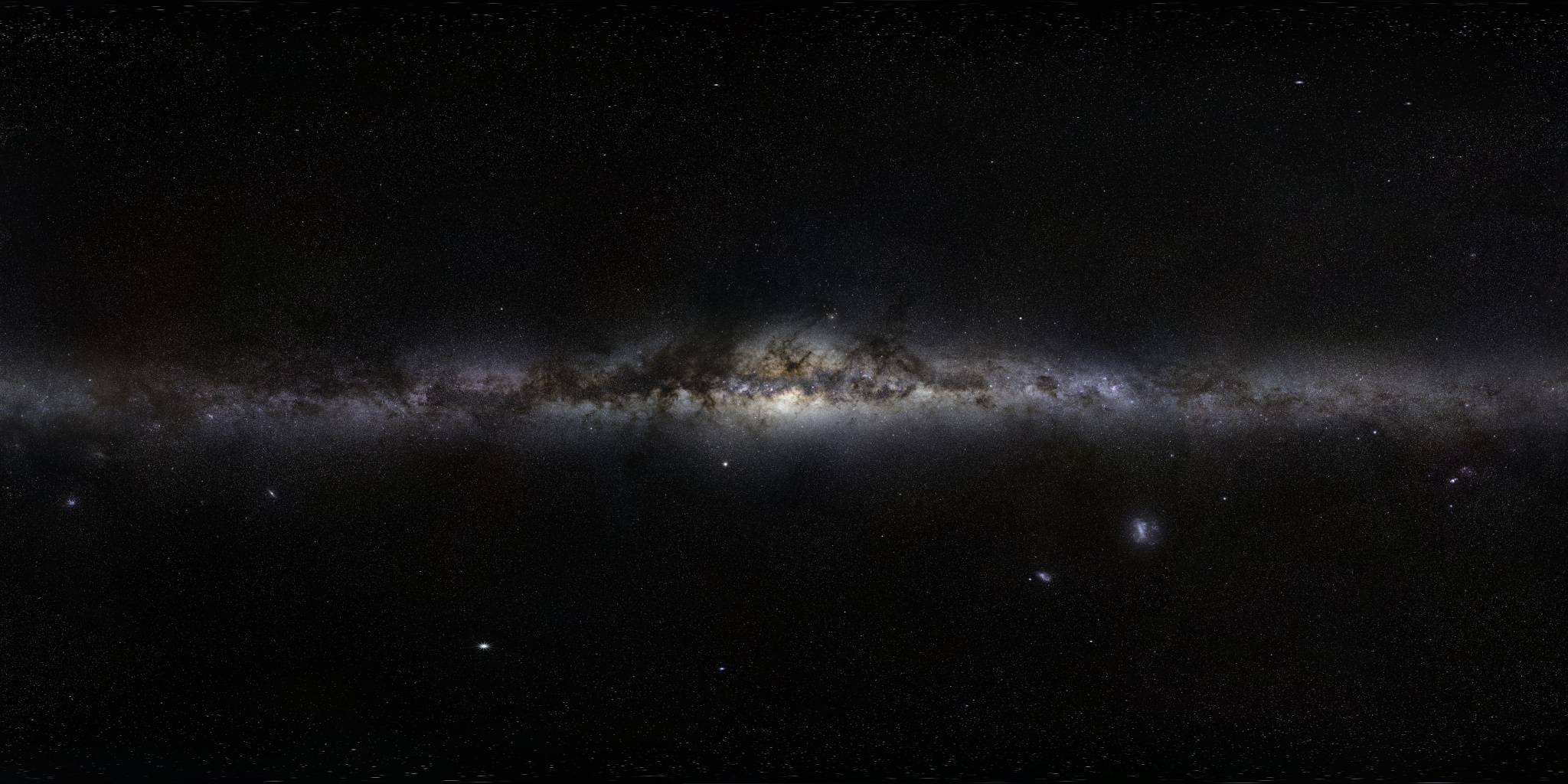
Fortunately, I don't need to embark on such an ambitious adventure; Serge Brunier has already accomplished the project. His result looks like this:

IMG_3000_rc_sml

(Image source: http://apod.nasa.gov/apod/ap090926.html)

Brunier's website includes a dynamic 360-degree view showing what it would look like if you were floating in space looking at the Milky Way. Using the keyboard arrow keys, you can look to the left, right, up, and down. In essence, Brunier packaged his amazing spherical composite in a 3D viewer.  You can spin around and look behind, where it is clear that the Milky Way actually looks like a surrounding ring -- the stars between us and the galaxy's edge are still concentrated in a band, since they are part of the overall disk.

We are indeed living on the edge -- but still inside -- of the Milky Way.

I'll close this blog entry now, because once you go to Brunier's dynamic 360-degree view, you'll not want to come back. (Yes, it's that cool.)

Wednesday, August 27, 2014

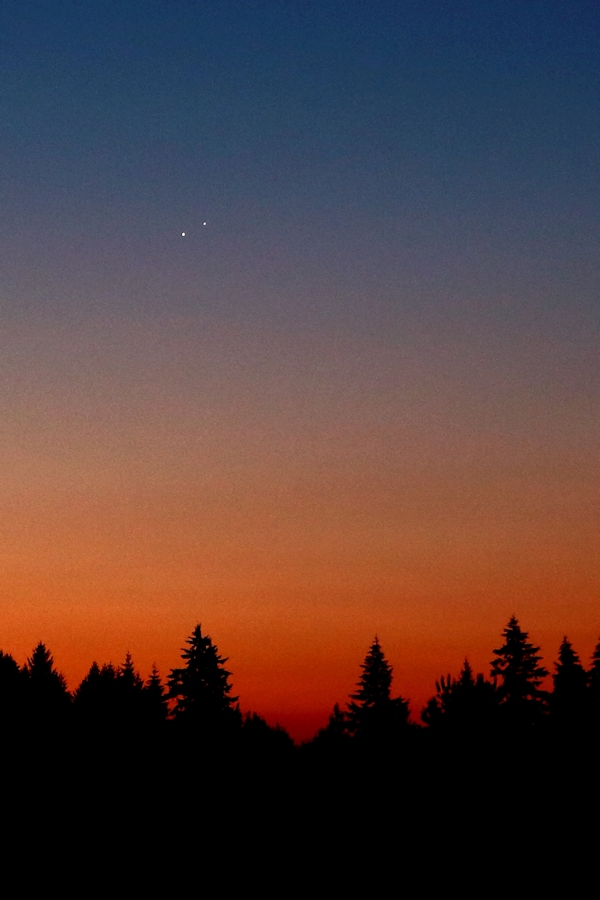
Five Planetary Bodies; One Little Finger

IMG_3000_rc_sml

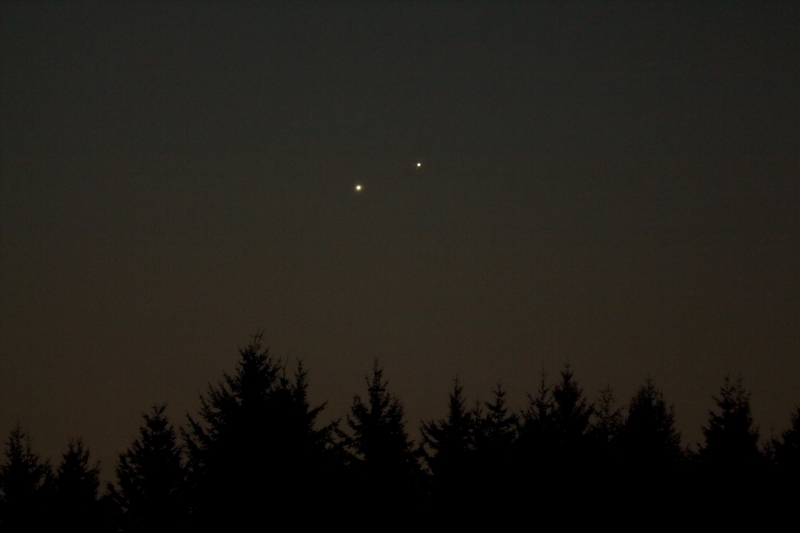
On August 18 at 5:58 AM, Venus and Jupiter put on a colorful show shortly before sunrise.  They were only 0.2° apart in the sky -- a conjunction so close that if you stretched out your hand, they could both hide behind the tip of your pinky finger.

But the real show started 48 minutes earlier that day -- at around 5:10 AM.  At that time, the sky was just starting to show the dull gray that precedes daylight, but was still dark enough to show stars.  You could make out the trees on the horizon, but little else.  Suddenly, two bright "stars" popped out from behind the trees.  Over the next few minutes, they steadily rose into the sky.  By 5:24, they were ready to pose for this picture:

IMG_3000_rc_sml

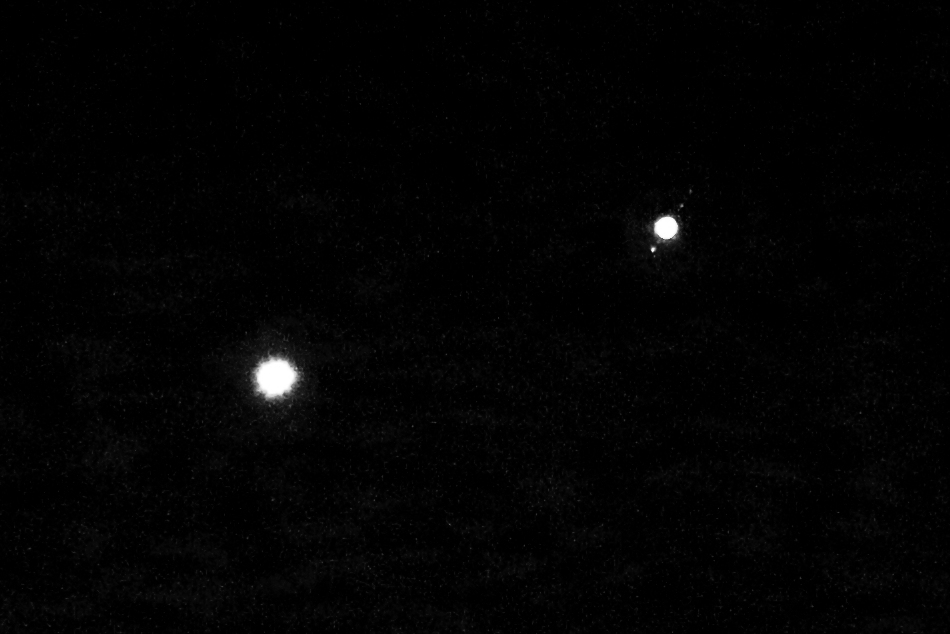
It was beautiful, even if not very colorful.  However, there was much more than met the unaided eye.  With binoculars, or in a photo using a 300mm telephoto lens and a little contrast adjustment, you can see that Venus and Jupiter were not alone; Jupiter had a line of attendants:

IMG_3000_rc_sml

Of course, these are moons of Jupiter. So, that morning there were five planetary bodies easily visible in the tiny swath of sky covered by the tip of one's pinky finger.  Awesome.

Monday, July 14, 2014

Fifteen Sunsets Per Day

IMG

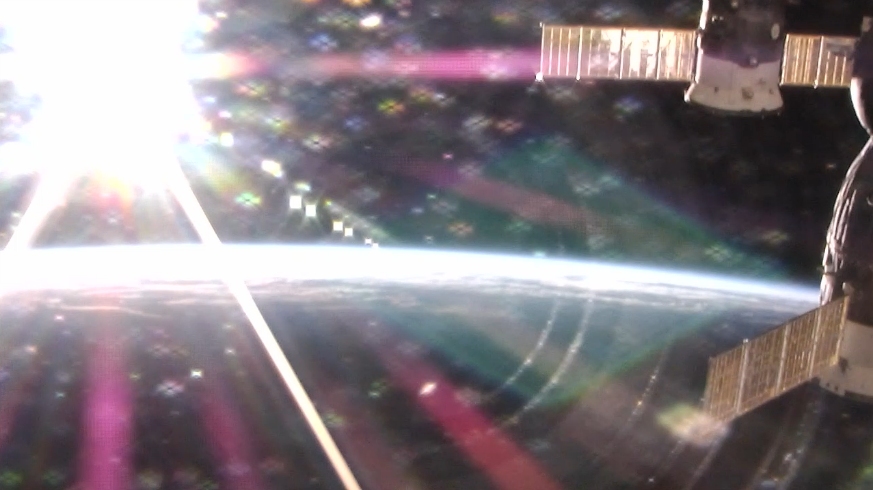
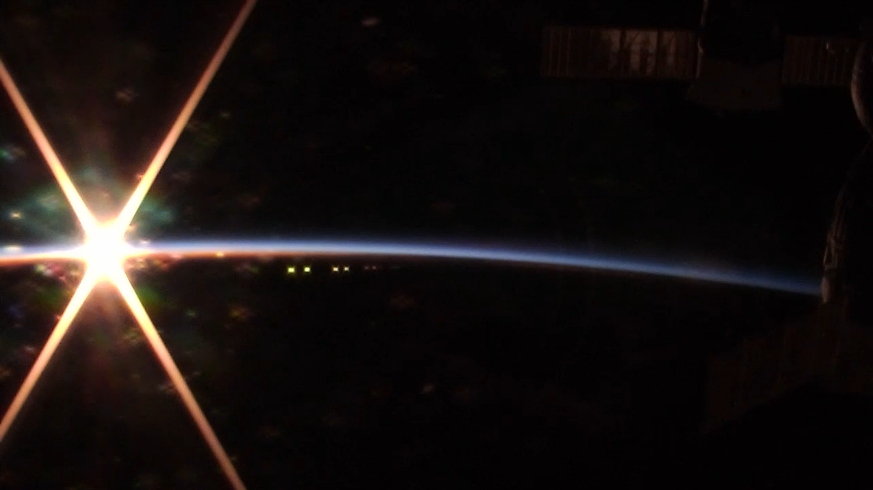
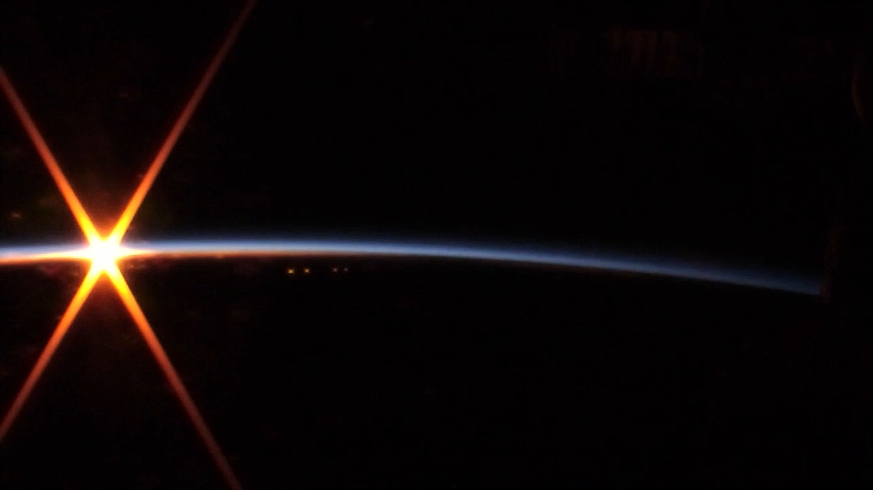
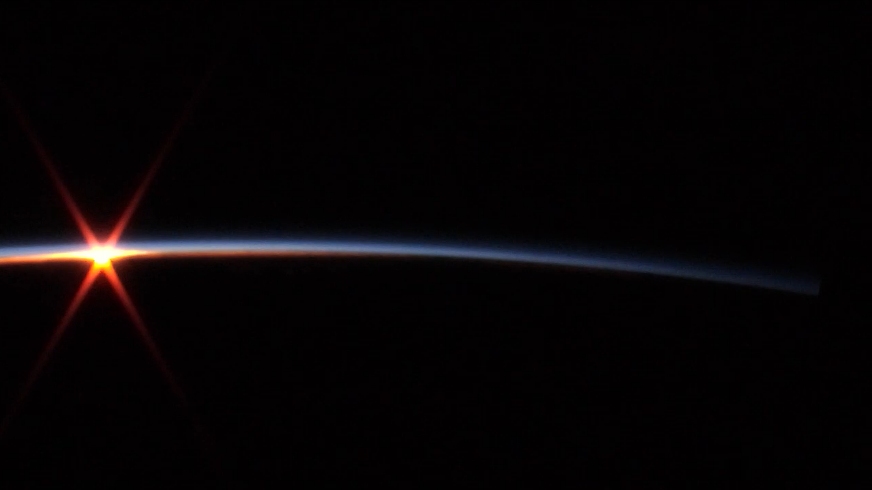
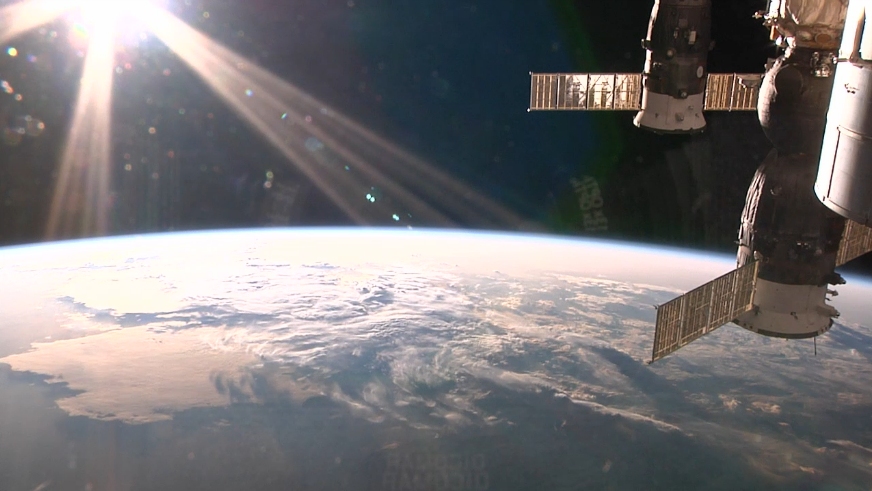
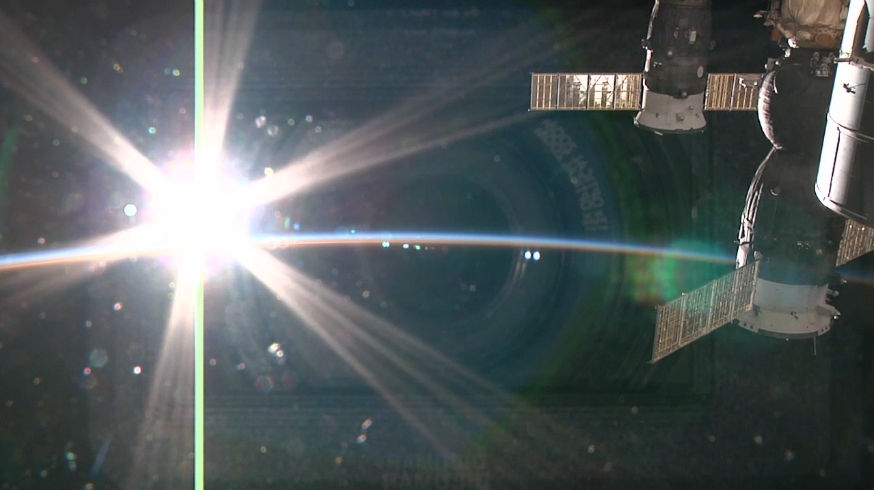
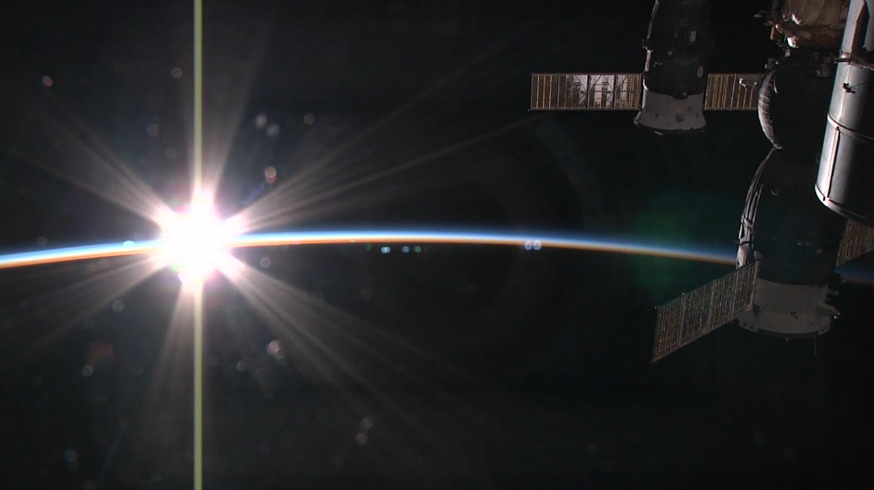
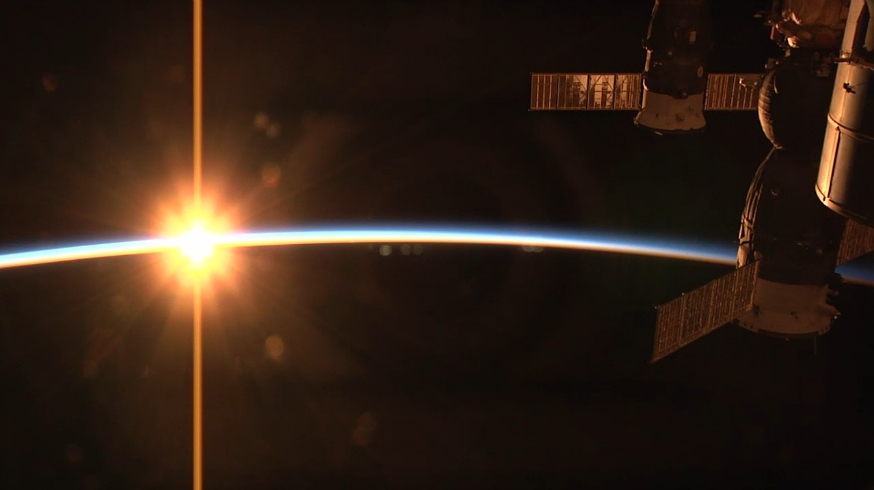
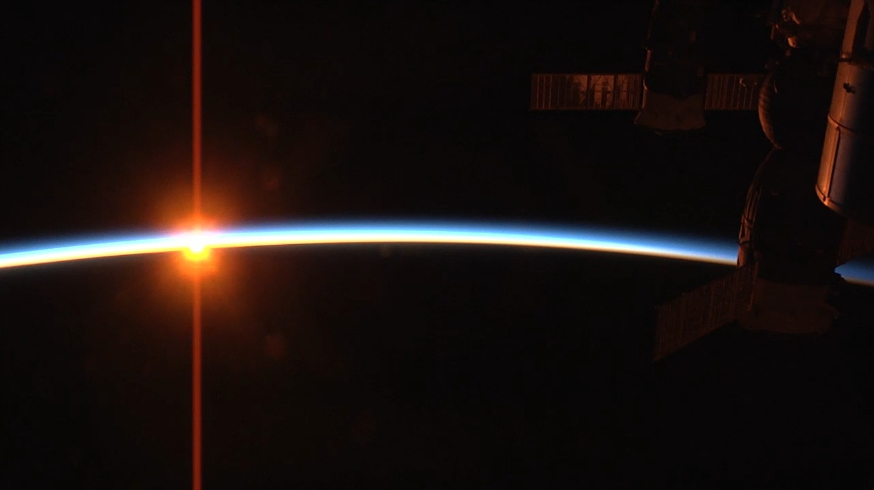
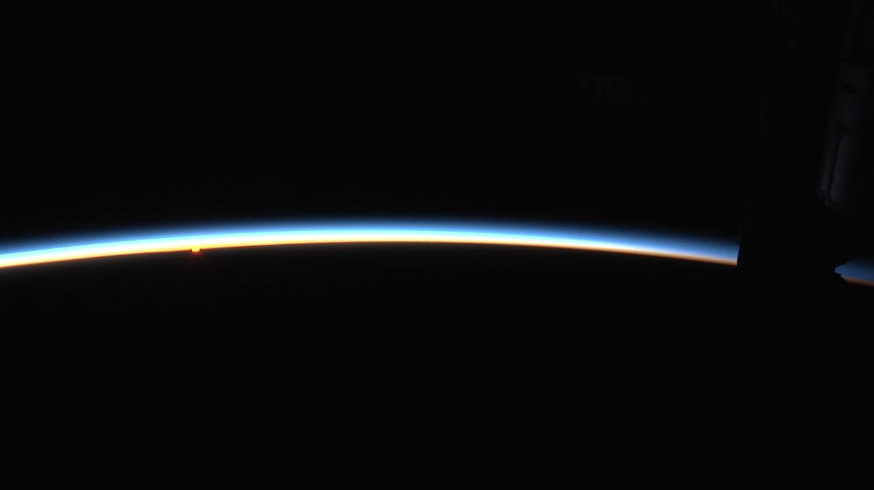
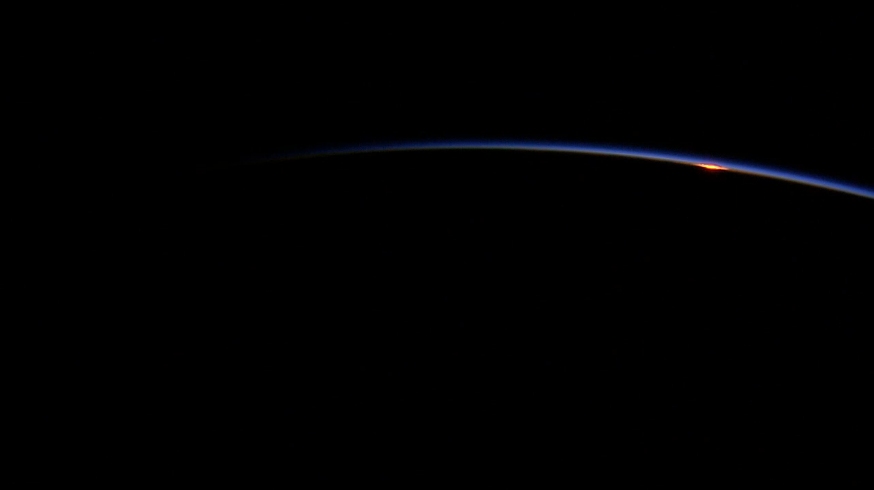
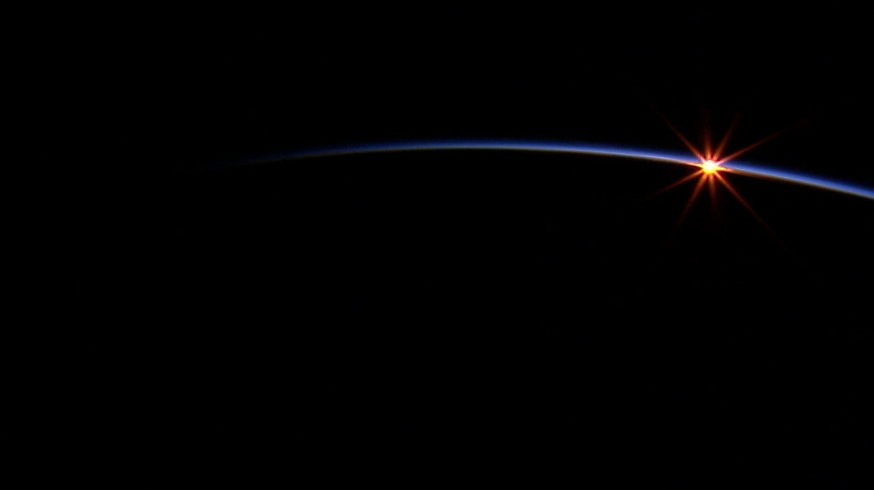
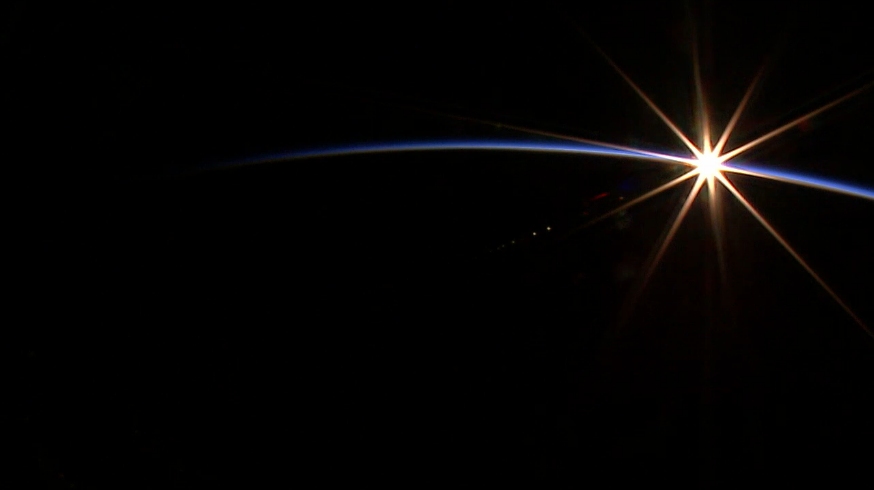
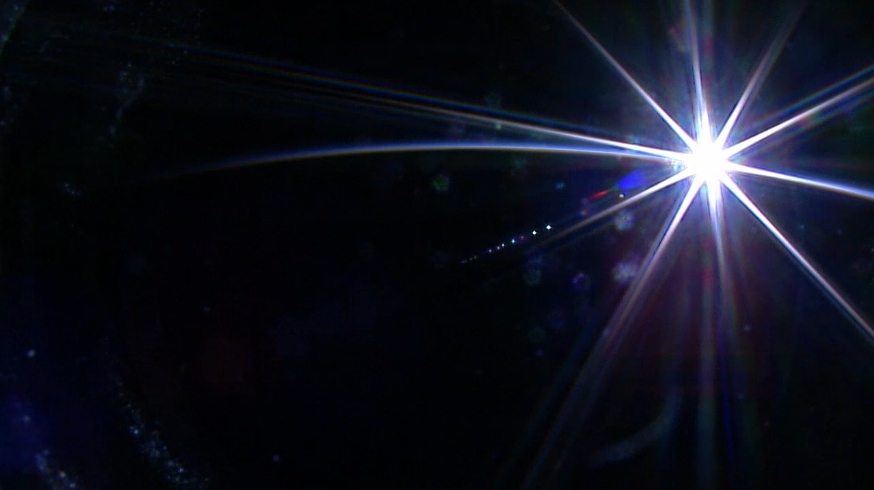
I like to photograph sunsets; many of my picture folders are populated with sunsets from different locations around the globe. Lately, I have been hitching rides on the International Space Station, where they get to see fifteen sunsets and sunrises every day. (I’ll explain later in this blog posting how I managed to take these photos without actually going through astronaut training.)

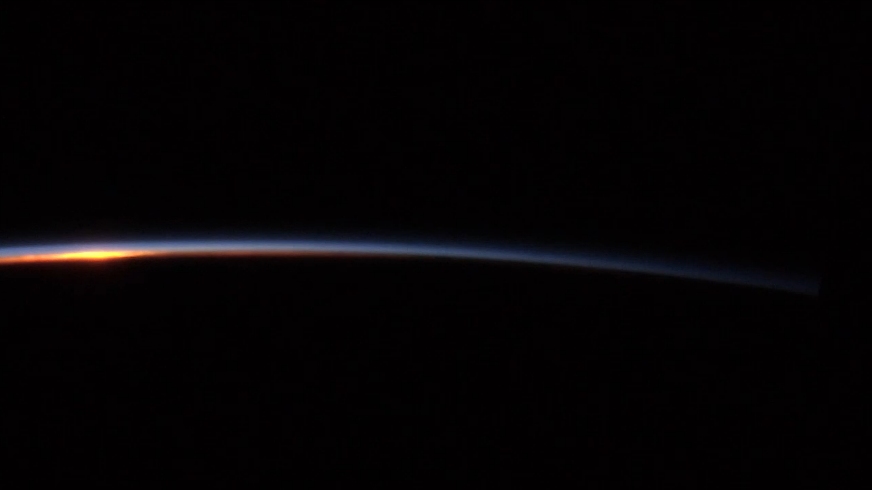
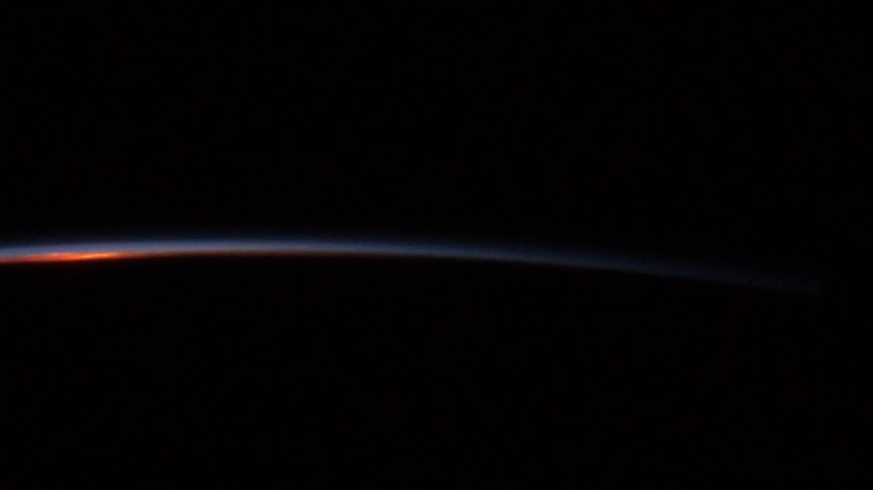
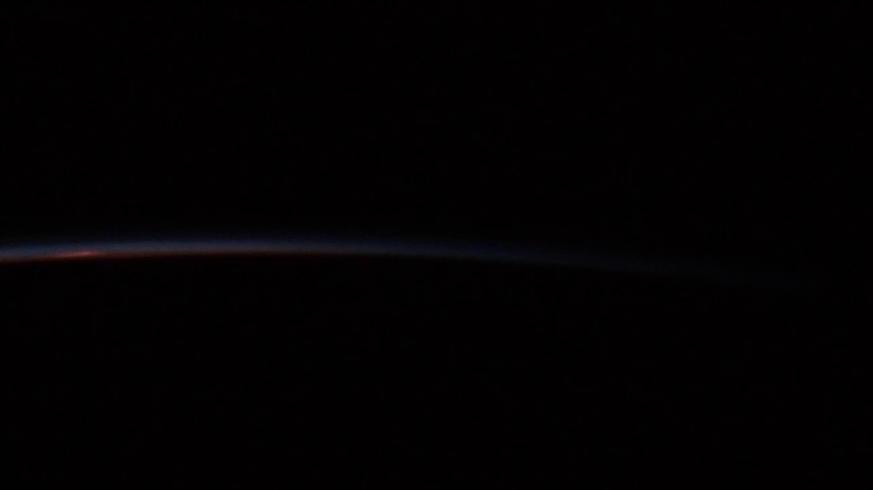
Here is a typical sunset sequence:

IMG

IMG

IMG

IMG

IMG

IMG

IMG

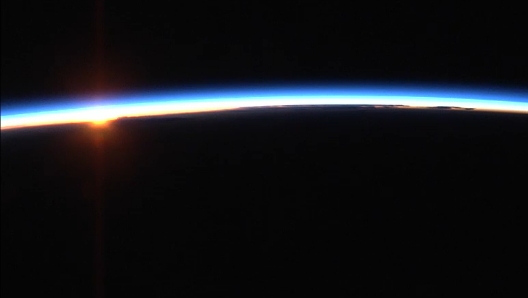
One would think that every sunset from space would look the same, but they are very different depending on the clouds at the horizon and the clarity of the air at that location and time. Sometimes, as the light of the sun goes through layers of atmosphere, it acts like a variable color filter. To illustrate, here is a sunset view with a wider angle. Notice the color of illumination on the ISS in the foreground. The light from the Sun starts out warm-ish white before touching the atmosphere. Then, it switches to blue-ish, then yellow-orange, then finally deep red before the light fades as the Sun slips behind the curve of the earth.

IMG

IMG

IMG

IMG

IMG

IMG

As many of you know, I also like sunrises. Here is one from space:

IMG

IMG

IMG

IMG

IMG

Sunrise can be particularly fun to watch, because you get to see the morning Sun glint off bodies of water big and small. For example, here the Sun reflects off the Pacific Ocean as we approach Africa from the southwest:

IMG

Shortly thereafter, the Sun reflects off Lake Ishiba Ng'andu in Zambia. In the foreground is Lake Bangweulu, right next to the smaller Lake Walilupe.

IMG

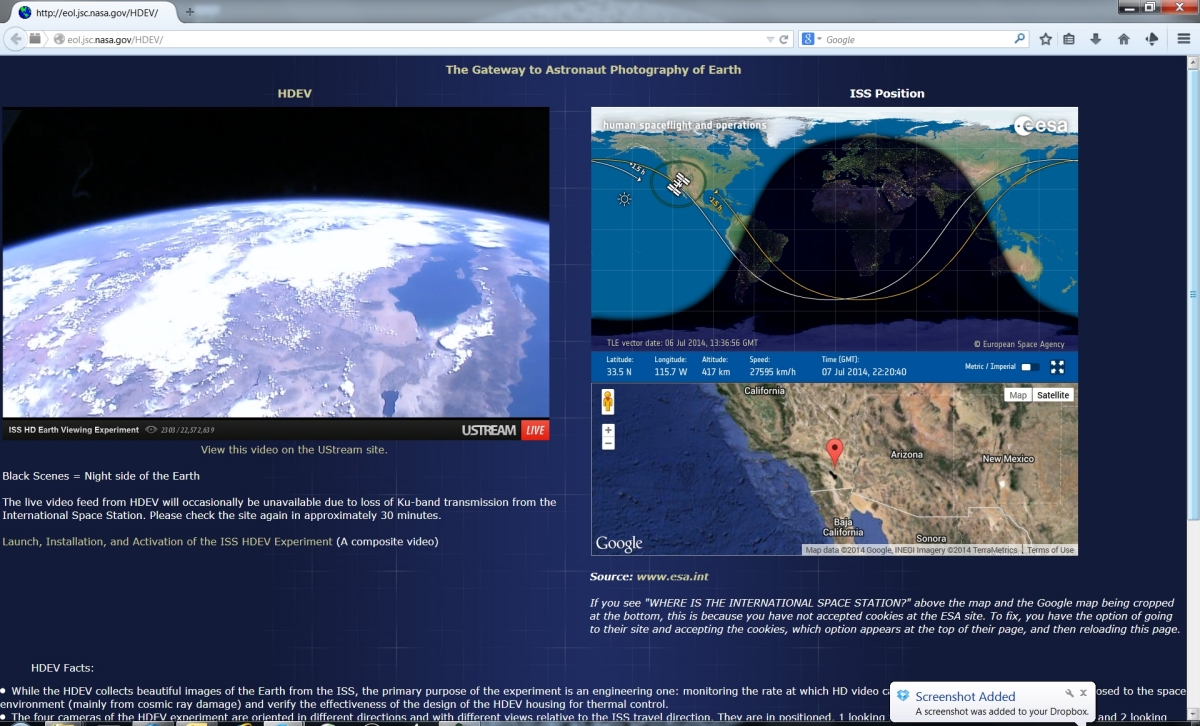
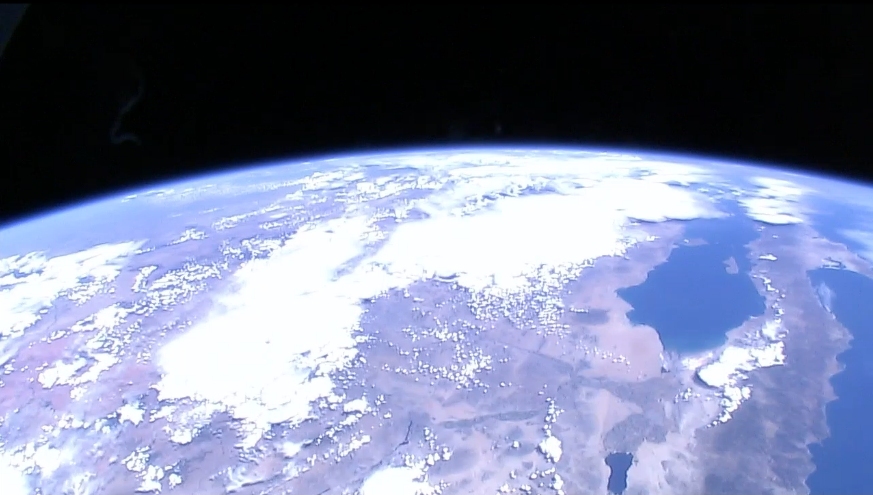
Earlier, I promised to tell you how I could shoot these pictures without actually leaving my house to perform astronaut training. In lieu of inviting actual visitors, the ISS-sponsoring nations have cooperated to provide a continuous HD live video feed: the ISS HD Earth Viewing Experiment. There is one camera is pointing forward, two rear-facing, and one looking downward. The view switches between these cameras on a regular basis.

Here is a flight console showing the video feed, the ISS position, and a Google satellite image as we flew southeast toward Baja California.  The Salton Sea is in the foreground:

IMG

IMG

I say "we flew" because that's what it feels like while watching the live video feed. In contrast to nature programs and documentaries, there are no talking heads, celebrity voiceovers, or cuts to an astronaut profile showing the small town where he/she grew up. It is just the silent realtime view out the window. I feel like I'm there, sans weightlessness.

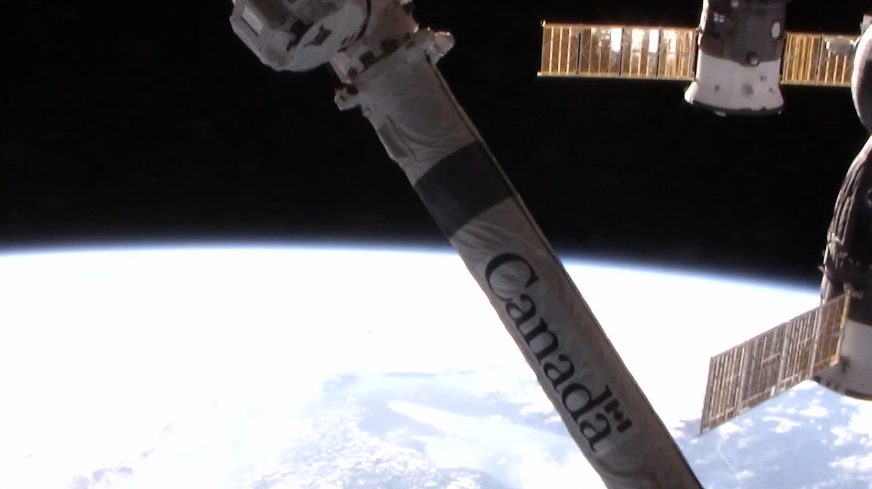
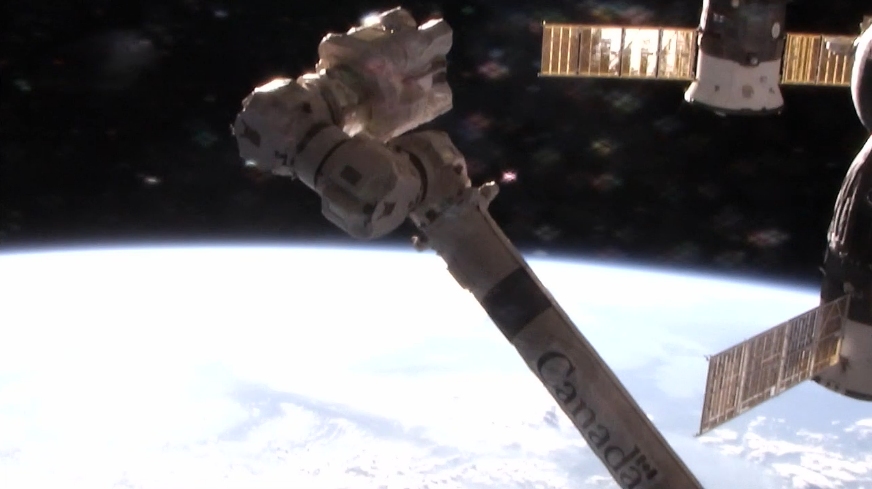
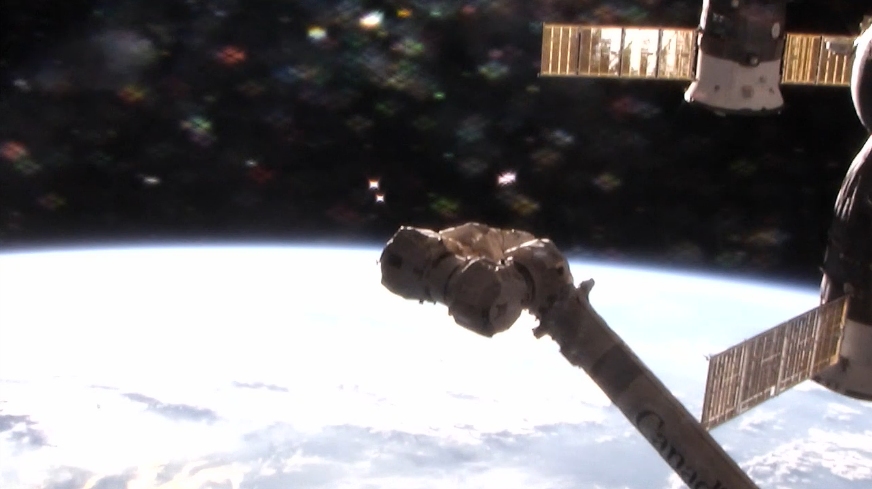
You never know what's going to show up outside your window. I was anticipating a sunset when out of nowhere, the Canadarm2 appeared (a.k.a. Space Station Remote Manipulator System, or SSRMS), smoothly and purposefully moving through the scene. (I guess the astronauts do have jobs to acccomplish, and are probably not gazing at the view like I am.)

IMG

IMG

IMG

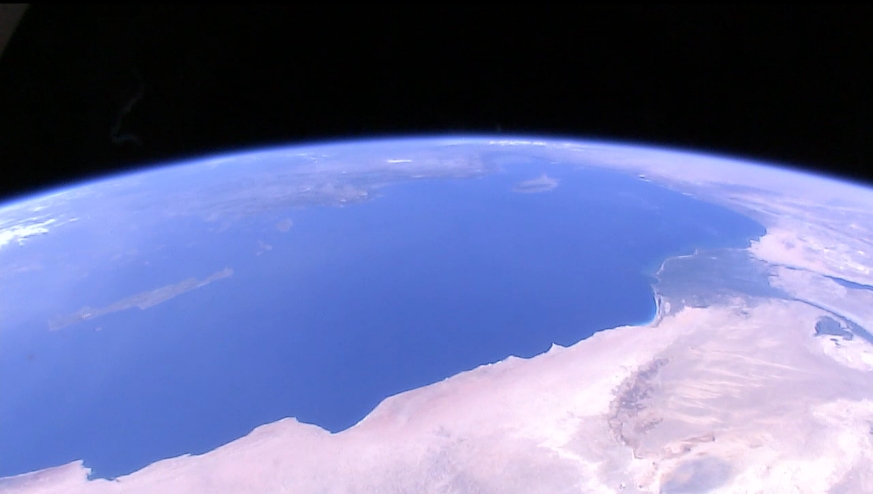
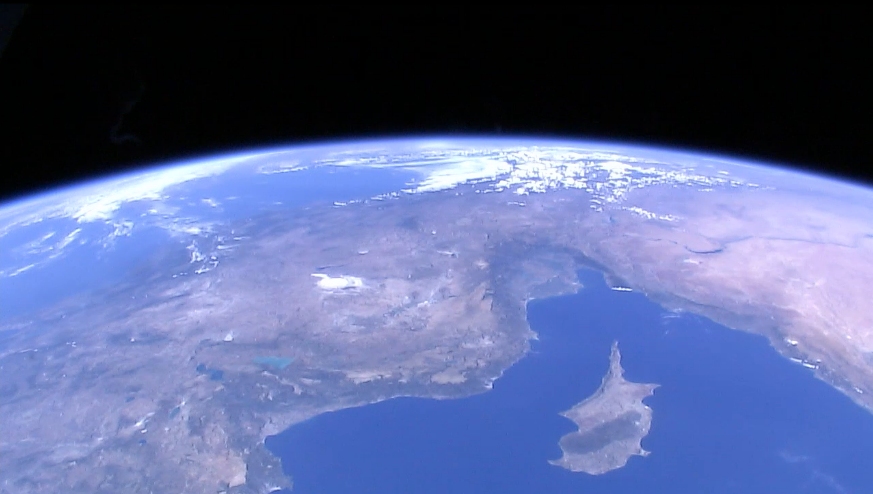
The ISS orbit carries it over nearly every location on the globe at one time or another. Although many regions are obscured by clouds as we fly over, here are a couple of nice sunlit views that showed up outside my ISS window. The first one is the Nile Delta in Egypt. Although you can't see them at this distance, the cities of Cairo, Alexandria, and Port Said are on the edges of the Delta. The second shot shows the island of Cyprus, which is also visible near the top of the first photo.

IMG

IMG

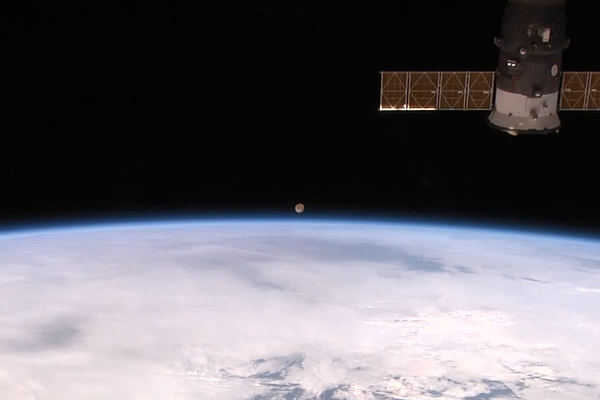
The camera shutter button is the F10 key on my computer keyboard -- it activates a screen capture function which saves the current image as a PNG file. It's handy to have a dedicated function key to "take pictures" since you never know what interesting view will show up. For example, here is an opportunistic shot of the moon setting behind the earth. (Did I mention that I also like to shoot moonsets?)

IMG

So go ahead; take your own ride on the ISS. While riding, your location will be shown here.  This may be a time-limited opportunity; the live video feed is currently an experiment; there is no guarantee it will continue indefinitely. But for now, it's a chance for us mere mortals to get glimpses of the world from space as the ISS circles the globe fifteen times per day.

Enjoy the trip!