My photo
This is my photographer’s blog, for your consideration. I post some of my favorite shots here, usually along with some comments about how the photo was taken or post-processed. (Occasionally I have the vain thought that someone might like to read about that.)

If you like what you see here, feel free to check out my Flickr site and YouTube channel.

Monday, September 14, 2009

Liquid HDR

IMG_3537_hdr_river_0_3_0_cf_sml

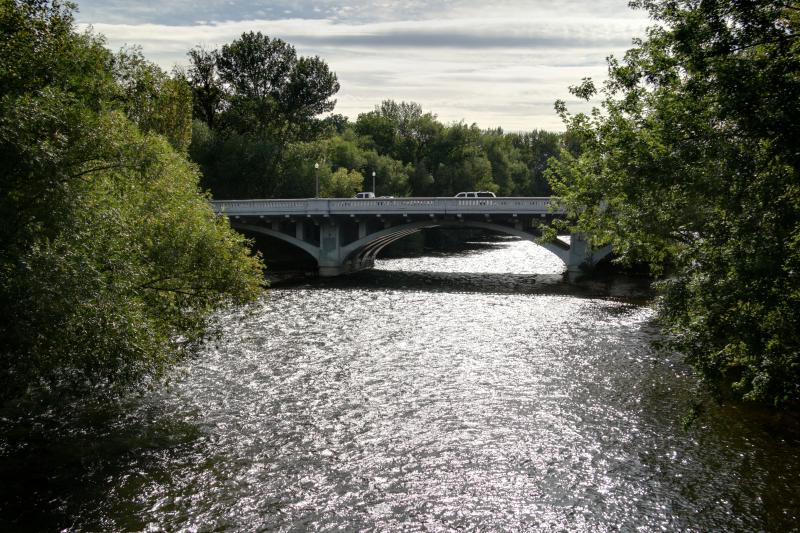
On a recent trip to Idaho, we took a walk that crossed the Boise River on a footbridge. The photo above is what I saw from the bridge: sunlight glinting off the water's wavelets, a vehicle bridge with cars, and bright picturesque clouds in the sky. Surrounding the scene was late-summer green foliage, gently moving in the breeze.

Here was the camera's best effort to capture the scene in one photo:

IMG_3537_sml

The sun reflections were blown out, yet the back-lit bridge was underexposed. The overexposed sky lost cloud detail, but the trees were darkened by their underexposure.

Of course, the first photo is a High Dynamic Range picture, which rescued the scene. I have discussed HDR in numerous postings in this blog, but there has always been a problem: motion. In one posting ("Dynamic World Thwarts Dynamic Range Photography"), I lament the need for multiple photos to compile an HDR shot: "Until cameras start getting built with High Dynamic Range sensors to capture contrasty motion scenes in one shot, much of the dynamic world will remain out of reach of HDR photography."

Last week, much to my chagrin, I realized that the "until" time has already arrived for many motion HDR shots -- without the need to buy new equipment. The HDR photo above is an example of that "new" technology, enabling me to capture an High Dynamic Range image from a single instant in time -- a necessary feature for any photo with liquid water, breeze-blown tree leaves, etc.

As you may know, an ordinary JPEG digital photo is composed of data with 24 bits per pixel; 8 for each primary color. So, each color channel must be expressed with an intensity number of 0-127. That significantly limits the dynamic range. Wouldn't it be nice if cameras could capture more dynamic range in each shot?

Well, DSLRs do that very thing. In my case, the Canon 400D captures 36 bits per pixel; 12 for each primary color (0-2047). Then, when it constructs the 24-bit JPEG image to be stored on the memory card, it throws away the "extra" bits after applying color balance, contrast and sharpness parameters. But the original image's data -- all 36 bits -- is still available in the RAW format file, adding one or two stops of dynamic range. Duh. (Why didn't I think of that before?)

That lets me construct a triad of three exposures by "developing" the RAW data into JPEGs that are underexposed, normal, and overexposed. Then HDR software like Photomatix takes it from there.

With this realization, I will be able decide to use HDR after the fact. And, I'm no longer troubled by motion in the scene.

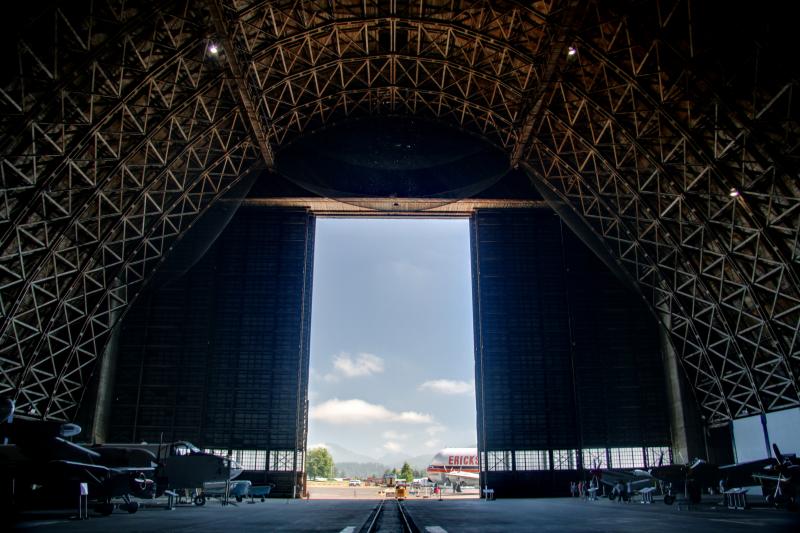
Of course, an extreme case like the Tillamook Air Museum's blimp hanger still needs multiple shots; six in this case, with a 9-stop dynamic range:
IMG_6852_hdr_10_0_0_cf_sml

But now I can reserve the time-consuming sequence shooting for the situations that truly need them.

Wednesday, September 9, 2009

Chasing the Space Shuttle

IMG_3729_sml

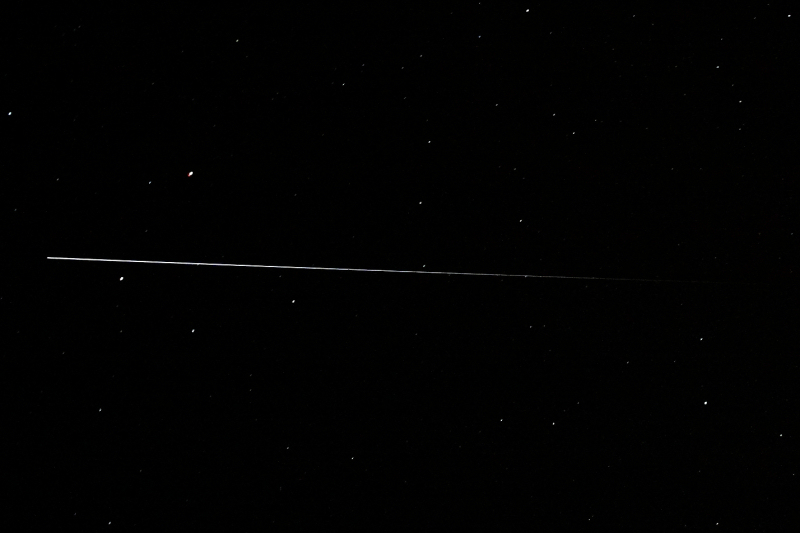
At 12:26p Tuesday, the space shuttle Discovery undocked from the International Space Station (ISS). At 9:20p, the pair presented a graceful duet of brighter-than-Venus dots silently gliding overhead. I guess the ISS didn't want the Shuttle to leave, since the space station appeared to be chasing it across the sky. Of course, the ISS will never catch up; the photograph proves it. The eleven-second trace for the Shuttle is 36% longer than the one for the ISS, vividly showing their relative speeds.

About 30 seconds later, both the ISS and Shuttle disappeared. Here is the trace from the ISS plunge into the darkness of Earth's shadow:

IMG_3731_zoom_sml

To see it larger, click on the image above. To see it full-size, click here.

The last time I saw the ISS and the Shuttle undocked, I was in downtown Cairo, peering between buildings, hoping my view was somewhat toward the southwest. This time was much better! :-)

Thursday, September 3, 2009

Moon-lit Moonless Night

IMG_3182_sp_sml

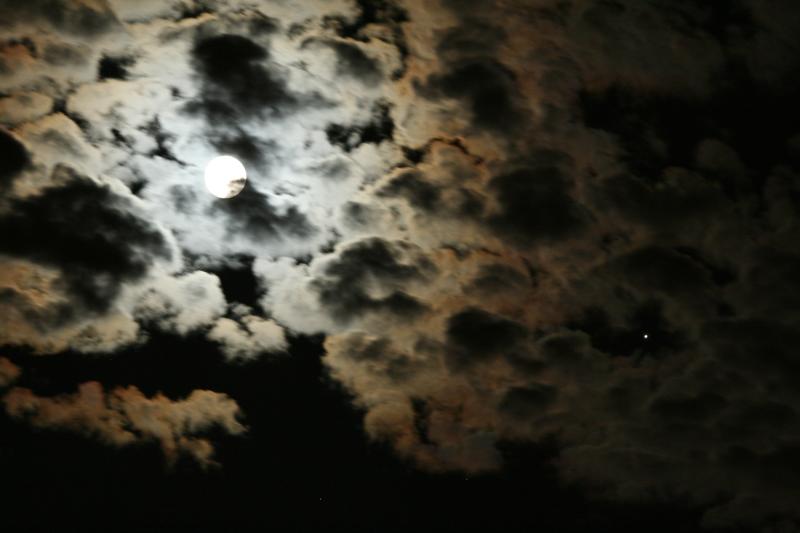
It only happens a few times a century. First it was Callisto, followed by Io. Then, Europa and Ganymede briefly "kissed" before meeting their fate. One-by-one the the four Galilean moons of Jupiter disappeared. The first two went around the back; the second set across the Jovian face. Between 9:43p and 11:28p last night, Jupiter appeared to be moonless.

In the photo above, nothing looks amiss. Our own moon bathes the clouds with light while Jupiter peeks out from an opening in the lower-right. But if Jupiter is magnified, it seems strangely naked:

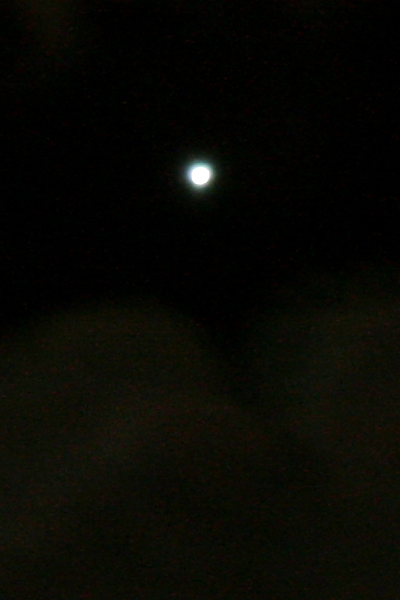
IMG_3222_cfsp_zoomed_jupiter

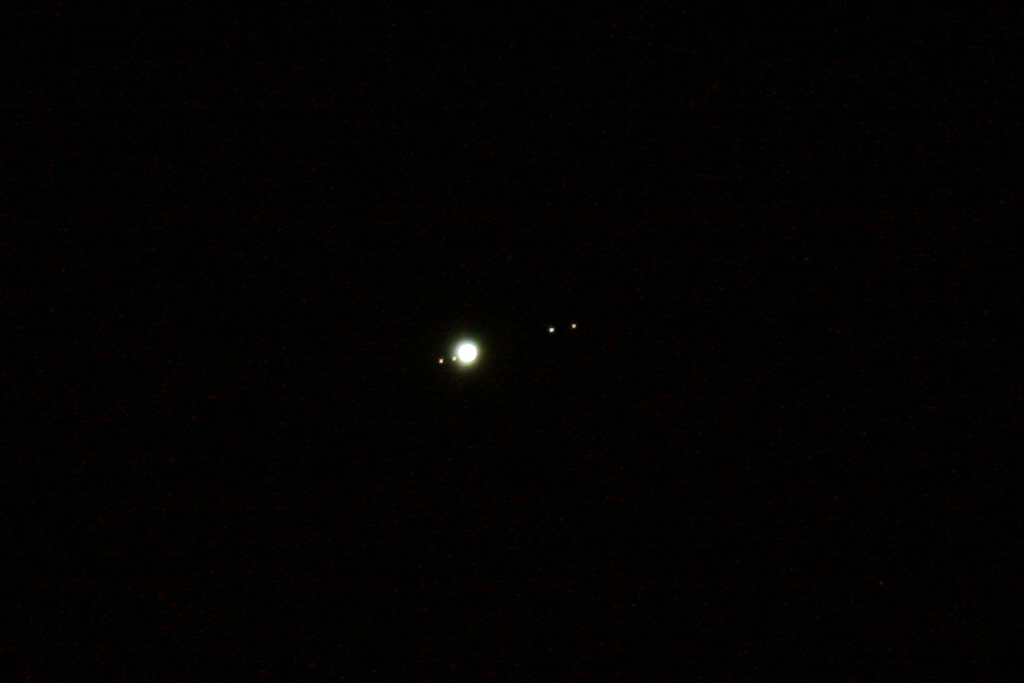
In comparison, here is how it looked in an earlier post, at the same zoom level:

IMG_5967_cp2

At that time, all four Galilean moons were quite visible, in contrast to the view yesterday.

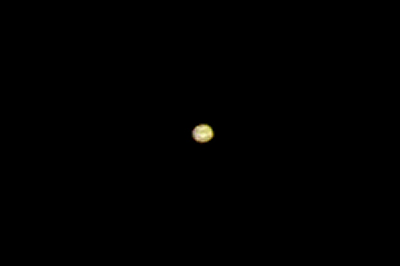
Note that the Jovian disk is overexposed to show the moons. In a differently exposed photo from last night, I was able to resolve some markings on the planet itself (more visible here thanks to contrast enhancement and a 2x digital zoom):

IMG_3235_cpcfrs_zoomed_jupiter_details

Of course, the resolution is not high enough to see the disks of Europa and Ganymede in front of the large planet -- or much of anything else for that matter -- but IMHO it's not bad for an ordinary telephoto lens and photographic tripod.

As a bonus last night, I also captured a fun shot of a baby dragon practicing his puffs. :-)

IMG_3260_cpcfsp_baby_dragon_sml

Tuesday, August 25, 2009

Conjunction Triad: Moon, Venus, Earth

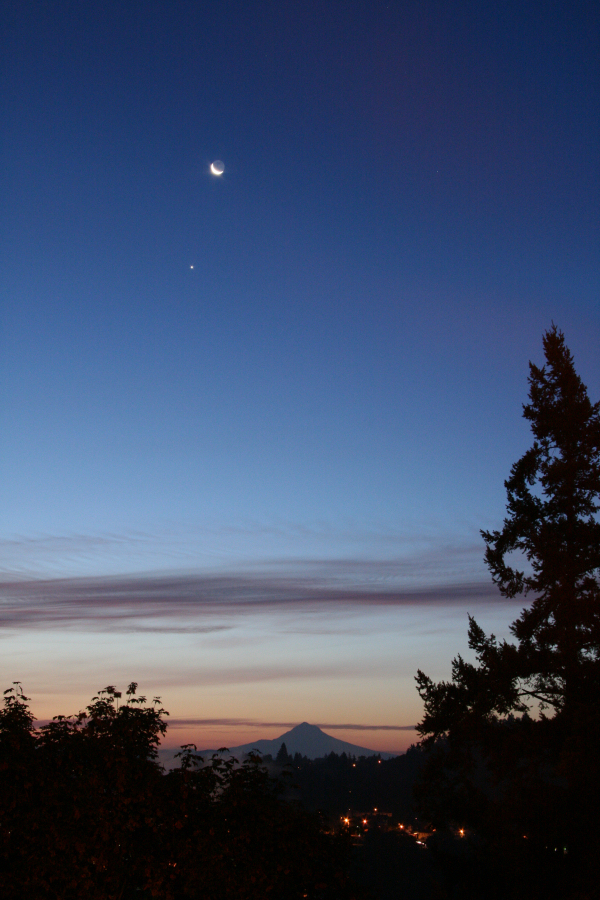
IMG_3091_sml

By getting up bring-n-early Monday the 17th, I was able to capture the conjunction of three beautiful objects in space: 1) Crescent Moon, 2) Venus, 3) Earth. Well, my close proximity to that last one -- my own planet -- makes it so that I could only show a relatively small piece. So I chose a picturesque section to represent Earth: Mount Hood, silhouetted by the coming sunrise.

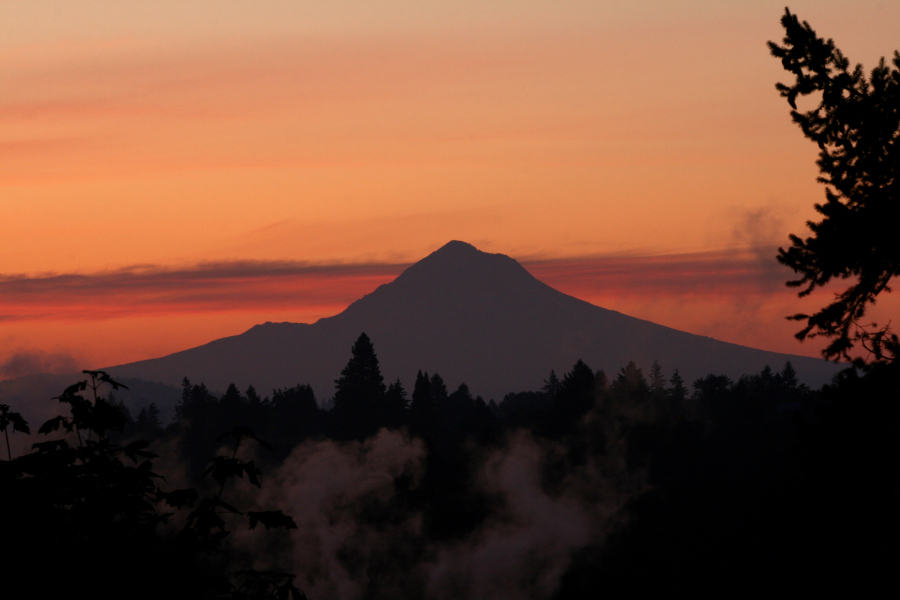
Although the triad is lovely, showing all of the members together required a low-detail wide shot. Here is the mountain by itself, in all its glory:

IMG_3148_cfsped_sml

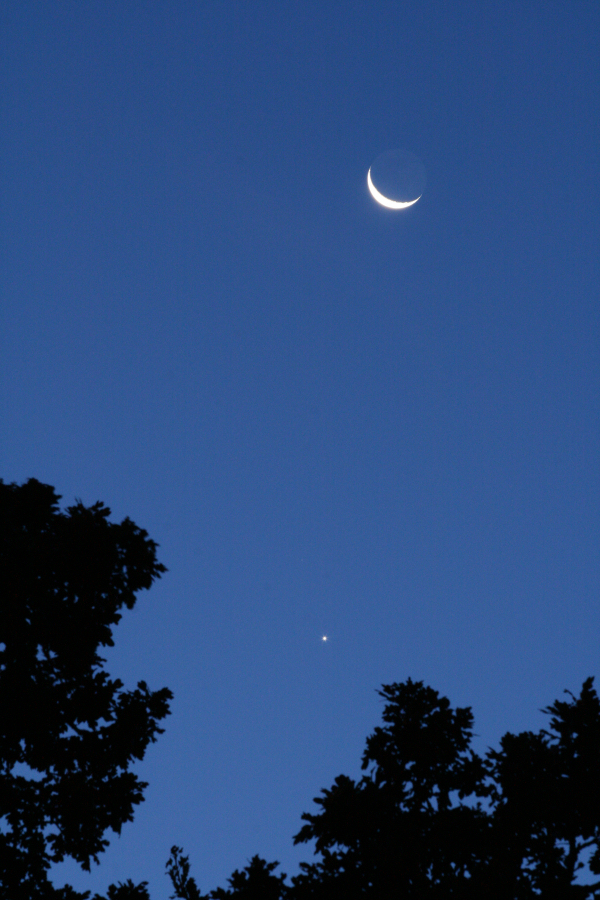
And, here is a close-up of the Moon and Venus:

IMG_3111_sml

An hour later, the last member of the triad -- Earth -- dominated the sky by turning it bright blue. ;-)

Tuesday, August 18, 2009

Immortal Hummingbird

IMG_1263_cp2_sml

This hummingbird visited Kathy and I while we were on vacation in Northern California, near the "Immortal Tree." (Click on the image for a bigger view.) Of course, the hummingbird did not care in the slightest about the tree nor the immortality it supposedly represented. The buzzing avian was only interested in the nectar of the colorful flowers:

IMG_1264b_1261_cp2sh

Immortality from the Hummingbird Fountain of Youth! :-)

Friday, May 29, 2009

Gigapixel Cascade

IMG_6578_composite_mt_hood_close_hdr_normal_zoom3_sml0

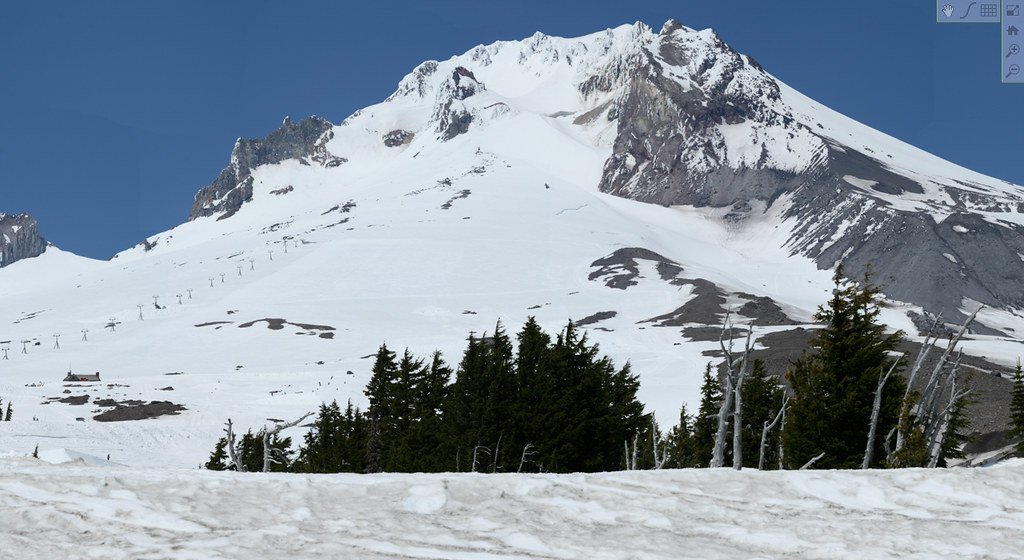
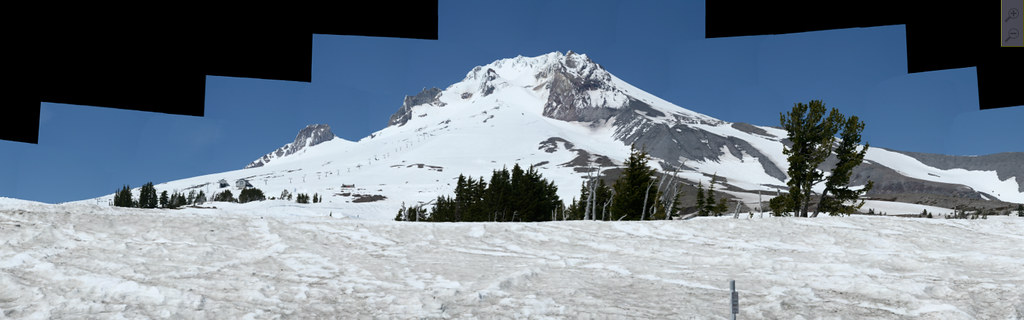
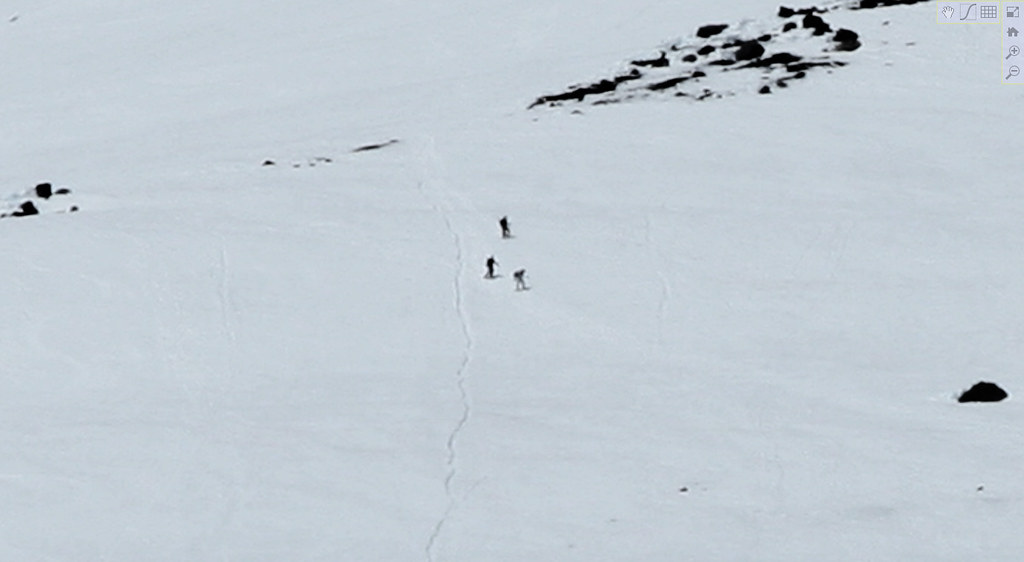
On Memorial Day, I shot my first gigapixel image -- 1.1 gigapixels, to be precise (89,790 x 12,650). You may recognize the view: Mount Hood from Timberline, at the tail end of the ski season. With my telephoto-equipped camera mounted on a tripod, I shot overlapping strips from left to right; top to bottom. 182 frames later, I had the ingredients for a composite photograph composed of over a billion pixels. (Ignore the missing sky segments; apparently the stitching program could not figure out how to assemble featureless colored rectangles into a continuous blank sky. I may be able to figure out a remedy in the future.)

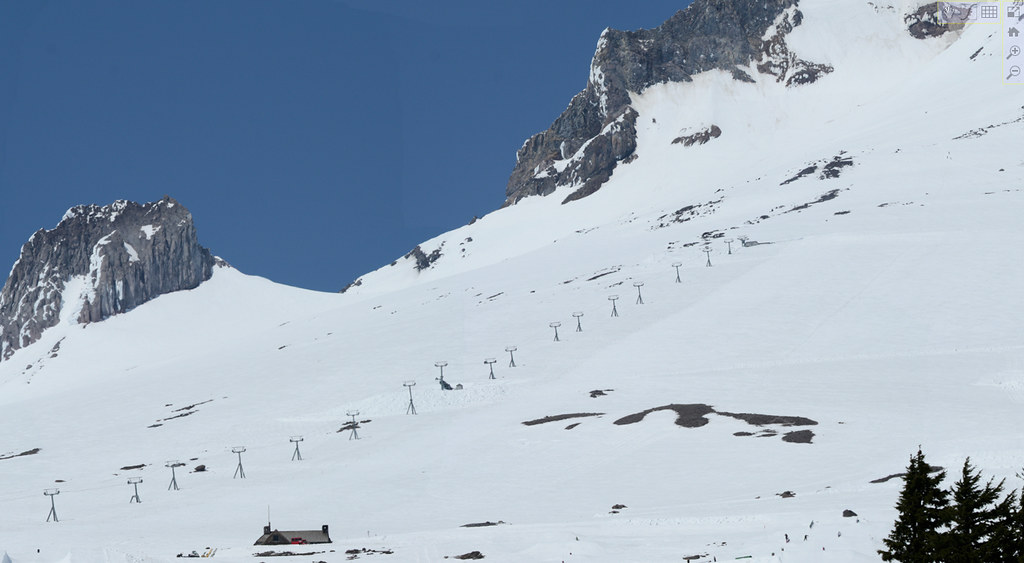
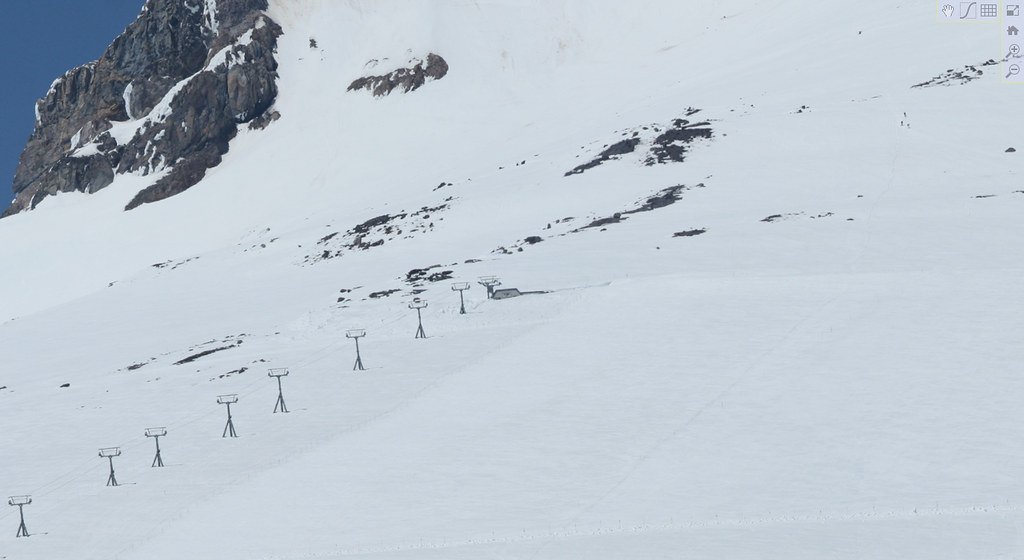
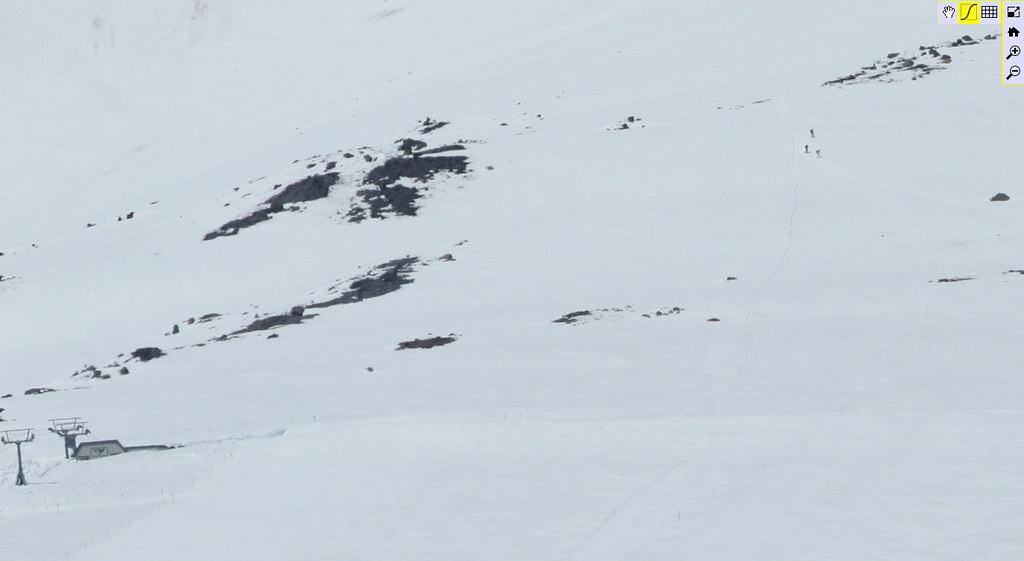
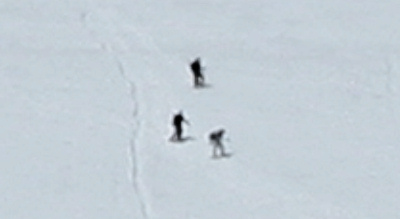
To properly see a gigapixel image, you need a high-res viewer like the Microsoft HD View plug-in for IE. The image sequence below demonstrates a zoom-in from a wide shot showing the Timberline Lodge, all the way in to a trio of snowshoers on the mountain slope:

IMG_6578_composite_mt_hood_close_hdr_normal_zoom1_sml

IMG_6578_composite_mt_hood_close_hdr_normal_zoom2_sml

IMG_6578_composite_mt_hood_close_hdr_normal_zoom3_sml

IMG_6578_composite_mt_hood_close_hdr_normal_zoom4_sml

IMG_6578_composite_mt_hood_close_hdr_normal_zoom5_sml

IMG_6578_composite_mt_hood_close_hdr_normal_zoom6_sml

IMG_6578_composite_mt_hood_close_hdr_normal_zoom7_sml

IMG_6578_composite_mt_hood_close_hdr_normal_zoom8_sml


To see this as a full-window zoom-out sequence, click here.

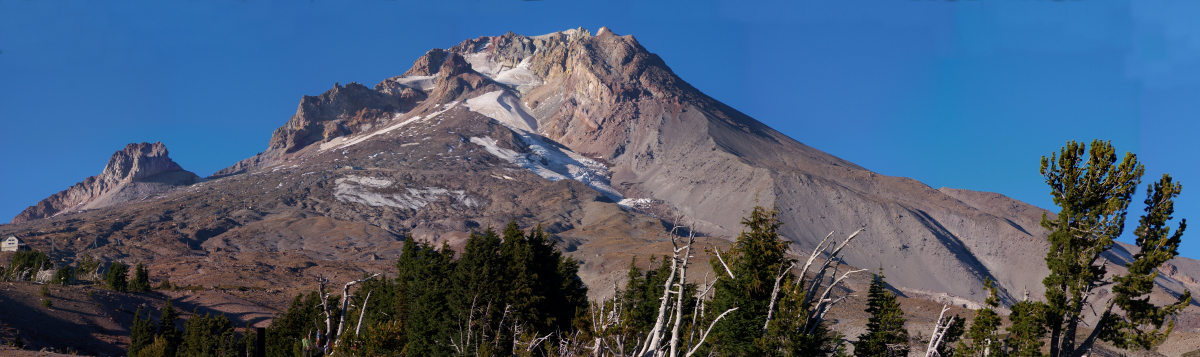
If you have been to my office, the photographic angle for Mount Hood may look vaguely familiar. That's because you have seen it before, on my office wall. In the summer of 2005, I shot a 42-frame, 89.5 megapixel (17,358 x 5,158) composite of Mount Hood from the exact same location. Of course the snow was mostly gone, revealing colorful rocks underneath.

03_pano_final_downsized_sml

At the time, I was only using a 4-megapixel point-and-shoot digital camera. But IMHO, the composite results were fairly impressive.

To see it properly, you need a viewer. Fortunately, it's in a file format that can be displayed by gigapan.org -- a website dedicated to sharing large-pixel-count photos. To see the 2005 Summer Mount Hood shot in all its zoomable glory, click here.

Unfortunately, I can't yet upload the gigapixel-sized 2009 Spring Mount Hood shot to gigapan.org, since it's not in a file format they accept. I used AutoStitch for the 2005 shot, which outputs to JPEG format. However, the 2009 shot was way too big for AutoStitch -- it seems to run out of memory somewhere around the 150 megapixel range. I was able to achieve gigapixel compositing thanks to David, who pointed me to Microsoft's Research's ICE program (Image Composite Editor). It's free, and it works well for very large images (and small ones too)! Except for one thing. Once the pixel counts get very large, the number of supported file types drops down to only three: 1) TIF, 2) Microsoft's HD View, 3) Microsoft's Silverlight Deep Zoom. None of those are accepted by gigapan.org. So, I can only do the viewing locally on a computer unless I find a hosting service that accepts one of those formats. Or, a new automatic stitching program that outputs something else for large pixel counts.

But no matter what, I have officially joined the Gigapixel World! :-)

Saturday, May 2, 2009

Stereo Cascades

IMG_5189_sml

IMG_5189+5191_stereo_mt_hood_01_sml

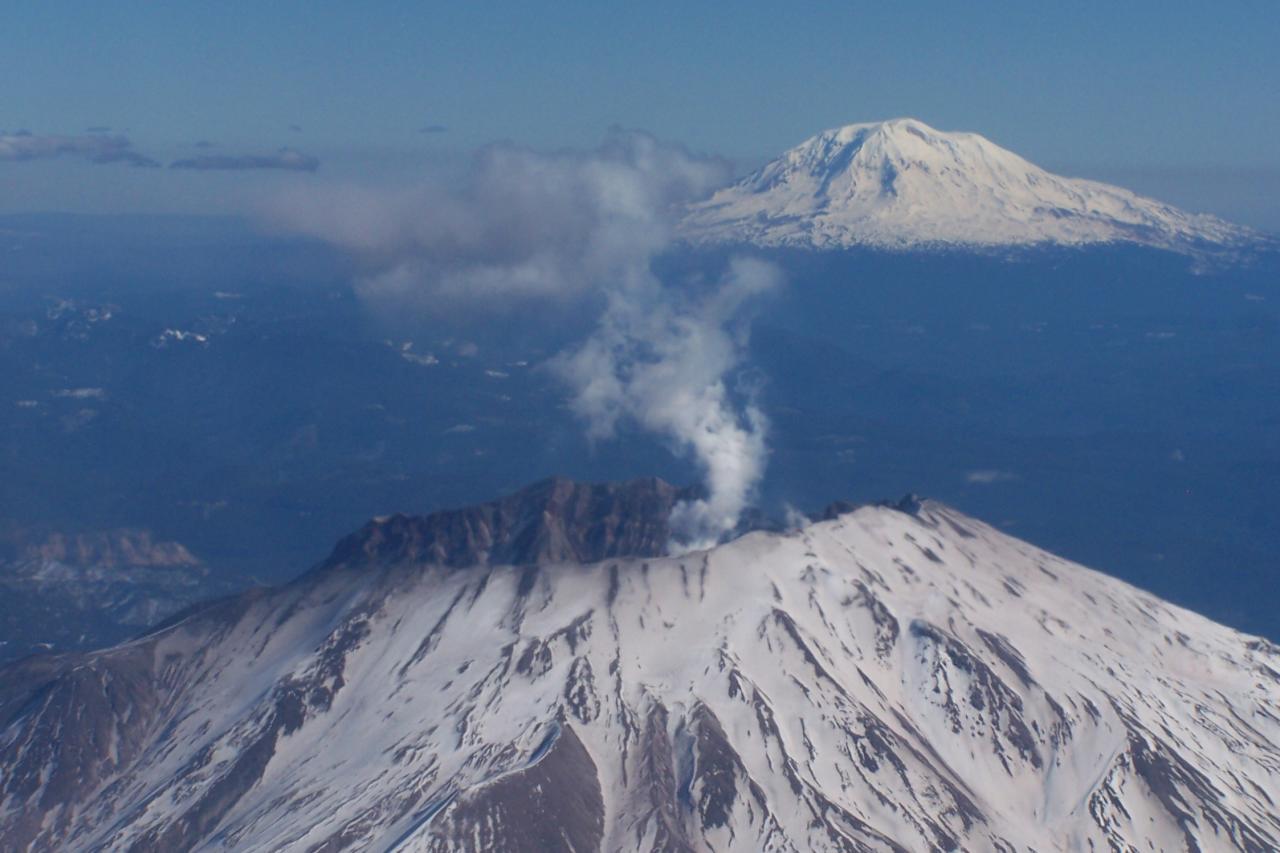
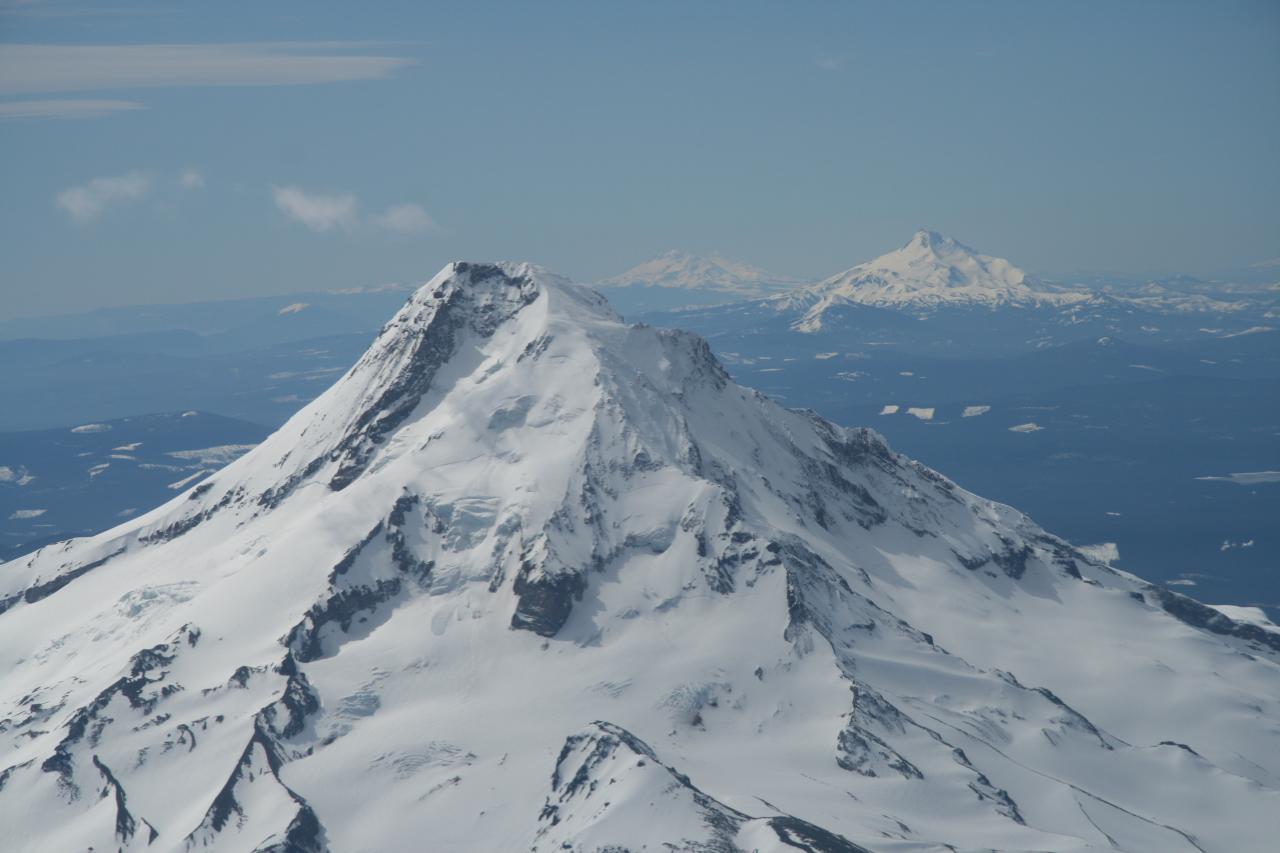
On a recent business trip to Mobile, Alabama, I was treated to a series of vistas that begged to be rendered in more than two dimensions. On the way east, my plane passed near Mount Hood, with Mount Saint Helens, Mount Rainier, etc. in the north background. On the way west, we viewed the other side of Mount Hood, with Mount Washington, etc. in the south background.

Accordingly, I took a series of quadruplet shots -- four photos taken in quick succession, forming several 3D stereo pairs. (The four shots are needed since you don't know until later what stereo separation will look best.)

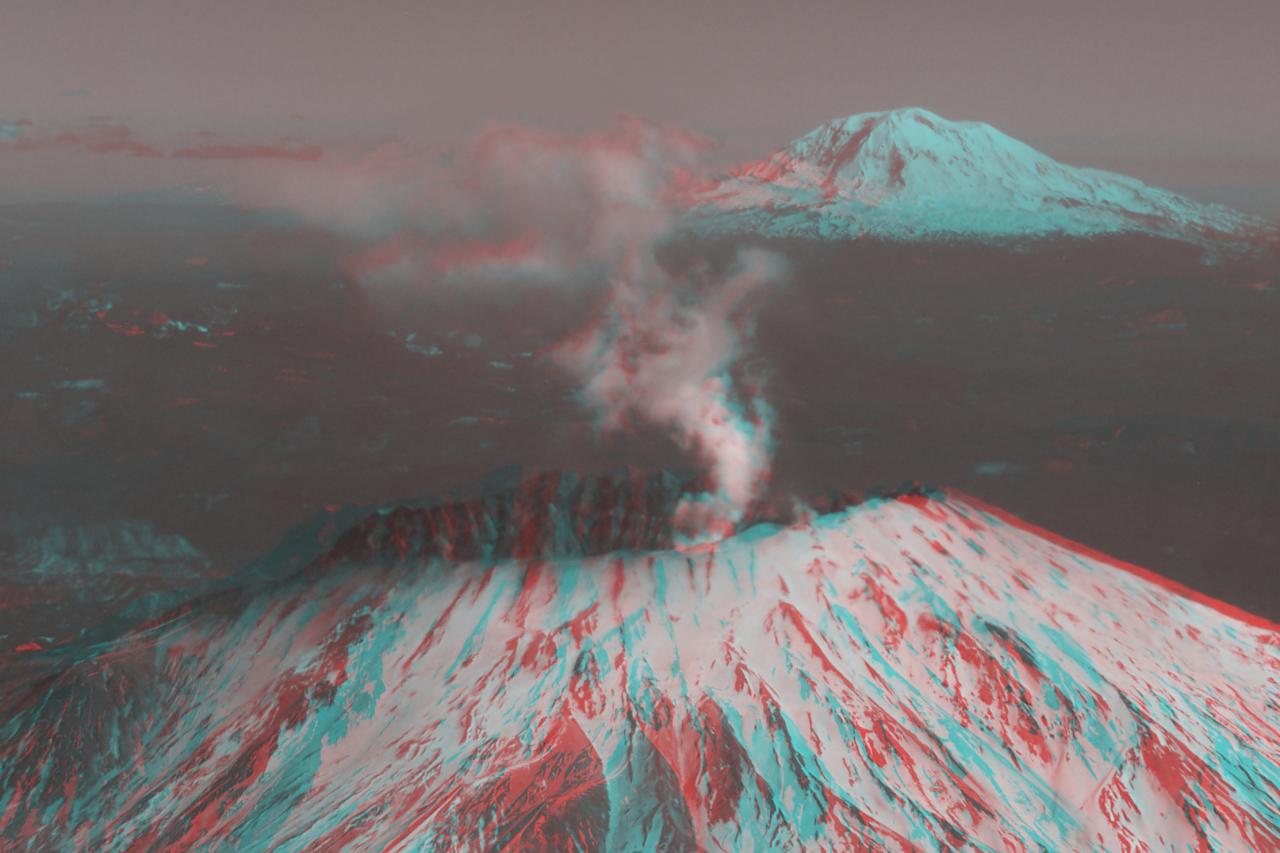
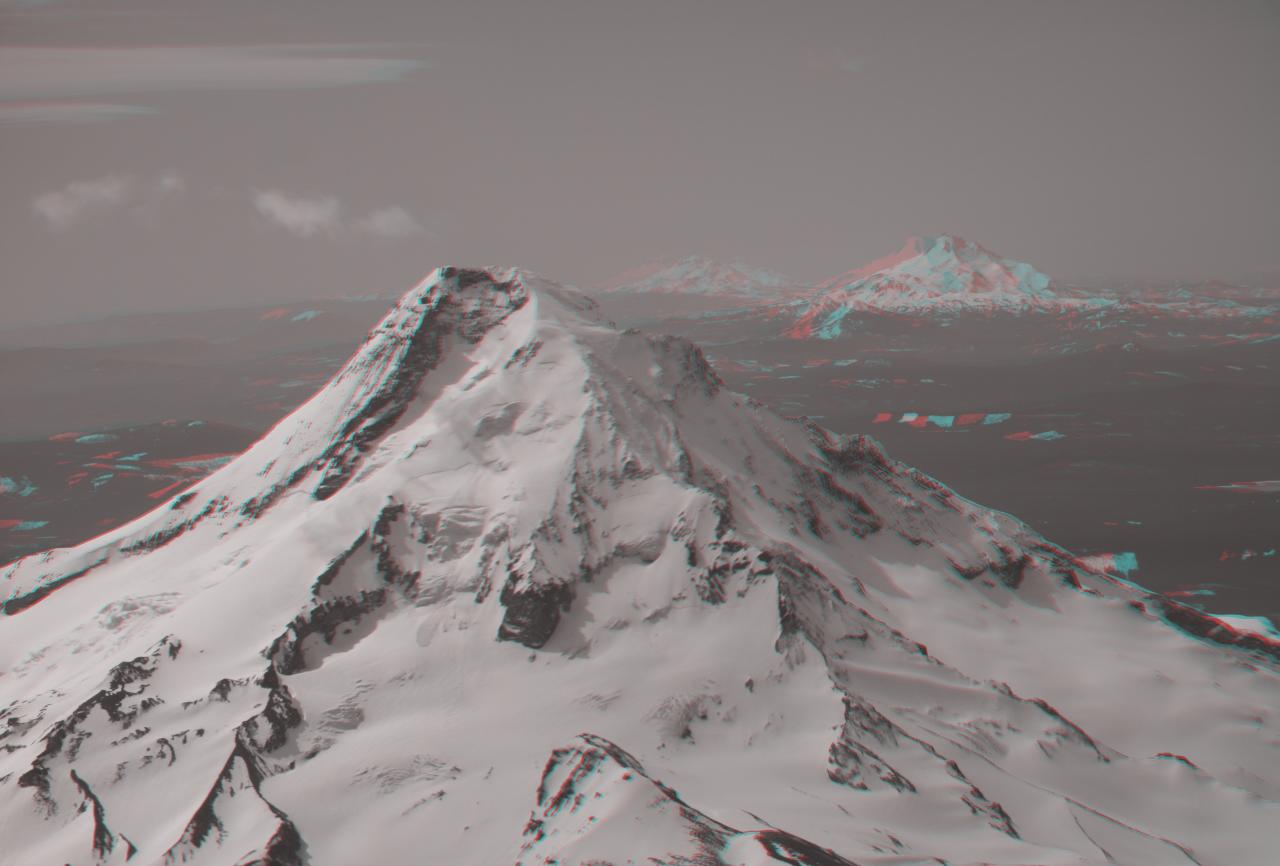
To see the results, click on the images above. The first set shows the scenes in regular, flat 2D. The second set, when viewed with red-blue 3D glasses, shows the mountains in full stereo depth.

Of course, all this is just academic if you can't actually see the photos because you don't have red-blue 3D glasses. I have some sourcing information at the end of his blog entry, if you need it.

You may recognize the fact that technically, these are hyperstereo photographs since the separation between shots is more than the normal eye separation. The plane traveled about 350 feet between each exposure. When combined into a stereo pair, this allows the viewer to perceive distance separation in a scene that normally looks flat since the subjects are so far away.

One of the 3D pictures was not taken on the Mobile trip. In fact, it wasn't taken as a stereo pair at all. On my birthday in 2005, I was on the way back from a Cairo business trip. My seat was mid-plane, and I wondered about the collective gasps proceeding from the front of the plane, moving toward the back. I glanced out my window, and suddenly it became clear. We were flying just to the west of Mount Saint Helens, and it was sporting a picturesque plume of steam. My first thought was, "What a great birthday present, to see this!"

100_4573_4574_cp_sml

My second thought, a nanosecond later, was to photograph the scene. Grabbing my old point-and-shoot digital camera, I shot a series of photos as fast as the little electrons would move through the circuitry. Which was not very fast, given the older generation of digital camera. So, I wasn't even thinking in terms of 3D pairs. But later, I wondered if I could salvage a stereo view from the outtakes. The result was this (click on the image for a larger view):

100_4573+4574_stereo_mt_st_helens_01_edcp_sml

Although the stereo separation is a bit more than is normally comfortable, it's an interesting view to see the actual roundness of the crater rim, with the steam plume at the center point.

There is one more thing you might find interesting. As we flew past Mount Hood toward the west, I zoomed up on the top, with Mount Washington in the background (click on the images for bigger versions):

IMG_5207_sml

IMG_5207+5208_stereo_mt_hood_02_sml

As the vista unfolded, I shot fifteen photos in fairly quick succession. Later, I used that sequence to create a 3D video of the flyby. (Internet Explorer users: You will probably find the YouTube window below to be cut off on the right. If so, go here instead, and click on "HD" on the bottom of the YouTube window.)


For what it's worth! :-)

------------------

As promised, here is some sourcing information for 3D glasses. You can get two cardboard pairs for $1.00 here:

http://www.berezin.com/3d/

Specifically, the product to get (red-cyan) is:

http://www.berezin.com/shop/544C

With the shipping cost of $3.39, you might be tempted to get one of the fancier $6.95 ProView pairs, with rigid acrylic lenses -- but don't bother. My experience is that the fancy red lenses are not the right shade for computer screens. So, you're better off with the cheap cardboard variety. If you are in a hurry, rumor has it that some comic book stores sell red-blue glasses as well, but I have not verified that personally.