My photo
This is my photographer’s blog, for your consideration. I post some of my favorite shots here, usually along with some comments about how the photo was taken or post-processed. (Occasionally I have the vain thought that someone might like to read about that.)

If you like what you see here, feel free to check out my Flickr site and YouTube channel.

Friday, April 6, 2012

Venus Says Goodbye to Sisters

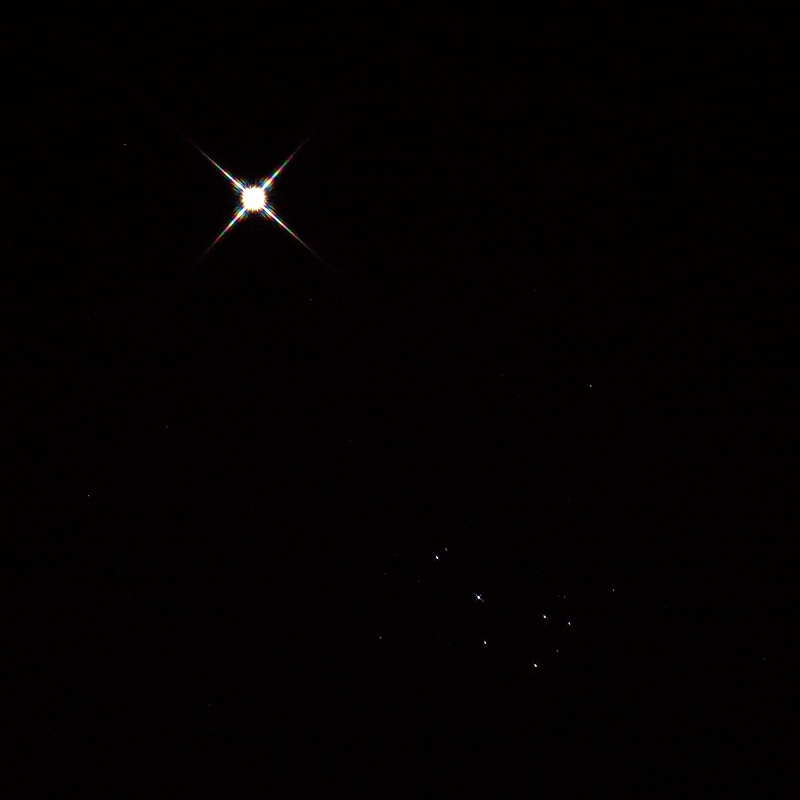
IMG_5855_rcsp_sml

The Oregon clouds finally cleared and I was able to capture Venus and the Pleiades in the same shot. Of course, photographers who were graced with clear skies earlier this week obtained much better photos, since Venus glided right through the famous star group also called the "Seven Sisters."

Oh well; it was still a gorgeous view tonight, even as Lady Venus said goodbye to the Sisters. :-)

Saturday, March 24, 2012

March of the Snowflakes

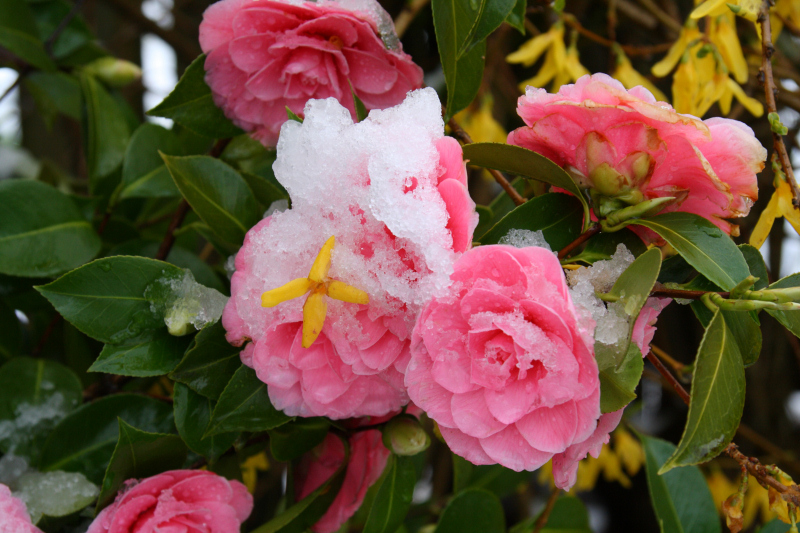
IMG_5640_sml

Last Thursday, we had a surprise March snowstorm in the "banana belt" of Tualatin. Certainly, these winter camellia blossoms did not expect it.

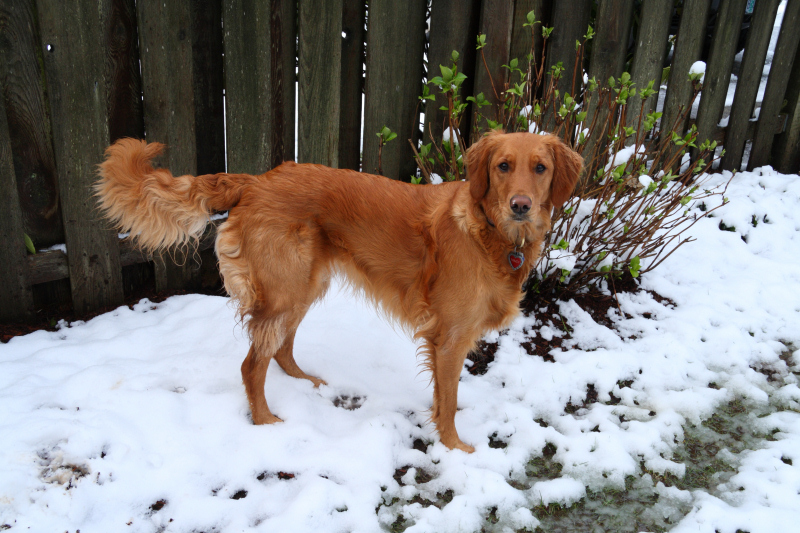
Maisy, on the other hand, took it well in stride:

IMG_5654_sml

Two days later, it was a balmy spring day. The only tangible memory of snow was photographs, an occasional not-yet-fully-melted snowman, and some trees damaged by the heavy wet snow which combined gravitational forces with spring blossoms.

All in all, March is living up to its reputation as a month of unsettled weather. And, it only has a few days left to go "out like a lamb." :-)

Saturday, March 17, 2012

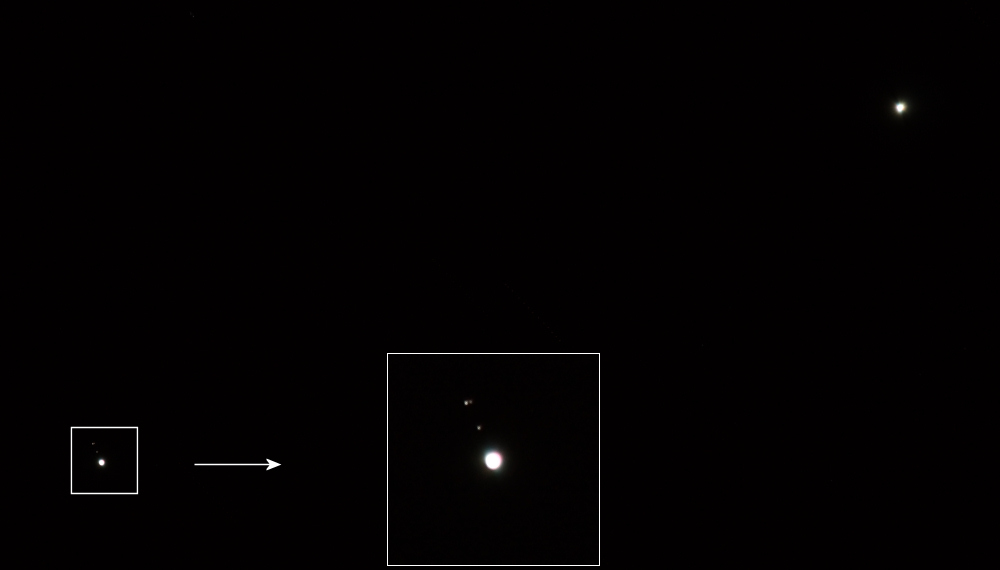
Jupiter and Venus, Shoulder-to-Shoulder

IMG_5595_stack_planets_01_cped2_sml

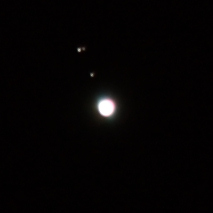
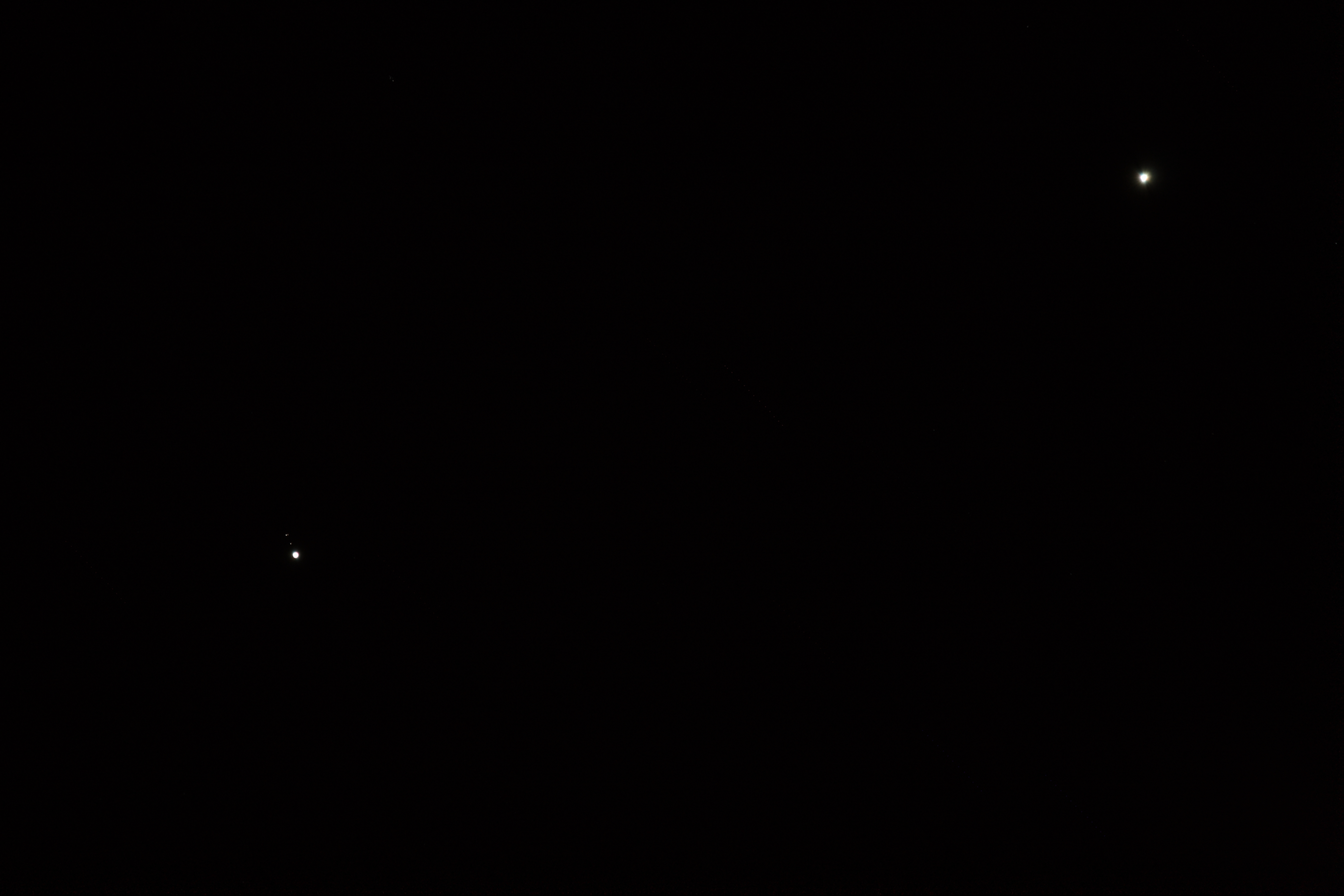
Two bright dots in the sky, very close to each other. Perhaps you saw the Jupiter and Venus Show after sunset last week (Tuesday for this shot). Maybe you even trained your binoculars on the conjunction, and observed that both planets could fit into the same field of view. If your binoculars were on a tripod, or you had one of the fancy new Image Stabilized models, you would have seen three or four tiny pinpricks of light next to Jupiter. Of course, those were moons of Jupiter.

IMG_5595_stack_planets_01_closeup

What was fun about this scene was seeing five planetary bodies in the same view (click on the image for a bigger view; click here for full-resolution):

IMG_5595_stack_planets_01_cp_sml

FWIW, the 13-frame stack was shot at 0.5 seconds, f/5.6, 300mm (480mm equivalent), ISO 800. Stacking was done using Registax v5 with three alignment points.

In this 2010 posting, I showed a scene with Jupiter and its moons, our Moon, and Uranus off to the side. That one was admittedly more picturesque. But today's blog entry is about the two brightest planets getting so close in the sky that they were posing for a side-by-side photo. On Thursday, March 15 the planets were even closer, but the Oregon cloudscape denied me the privilege of seeing it. In May, the two planets are scheduled for another shoulder-to-shoulder photo-op; maybe then. :-)

Update, 26-Sep-2014: Click here for my posting two years later when Venus and Jupiter finally posed close enough for a shot that nicely shows the two planets with Jupiter's moons.

Thursday, February 23, 2012

Collinear Planets

IMG_5339_rcsprs

Jupiter and Venus are now the brightest objects in the sky. Until, that is, the crescent Moon makes an appearance, as happened this evening. The thing that made the scene expecially photogenic was the collinear arrangement -- three planetary bodies arrayed in a straight line. It was so gorgeous I couldn't resist a quick pre-dinner astrophotography session. The shot was one second at f/4, using ISO 400.

About a minute later, Luna snuggled under her blanket of horizon clouds and disappeared.

Tuesday, January 31, 2012

Hunting for the Nebula

IMG_5241_rcsp_sml

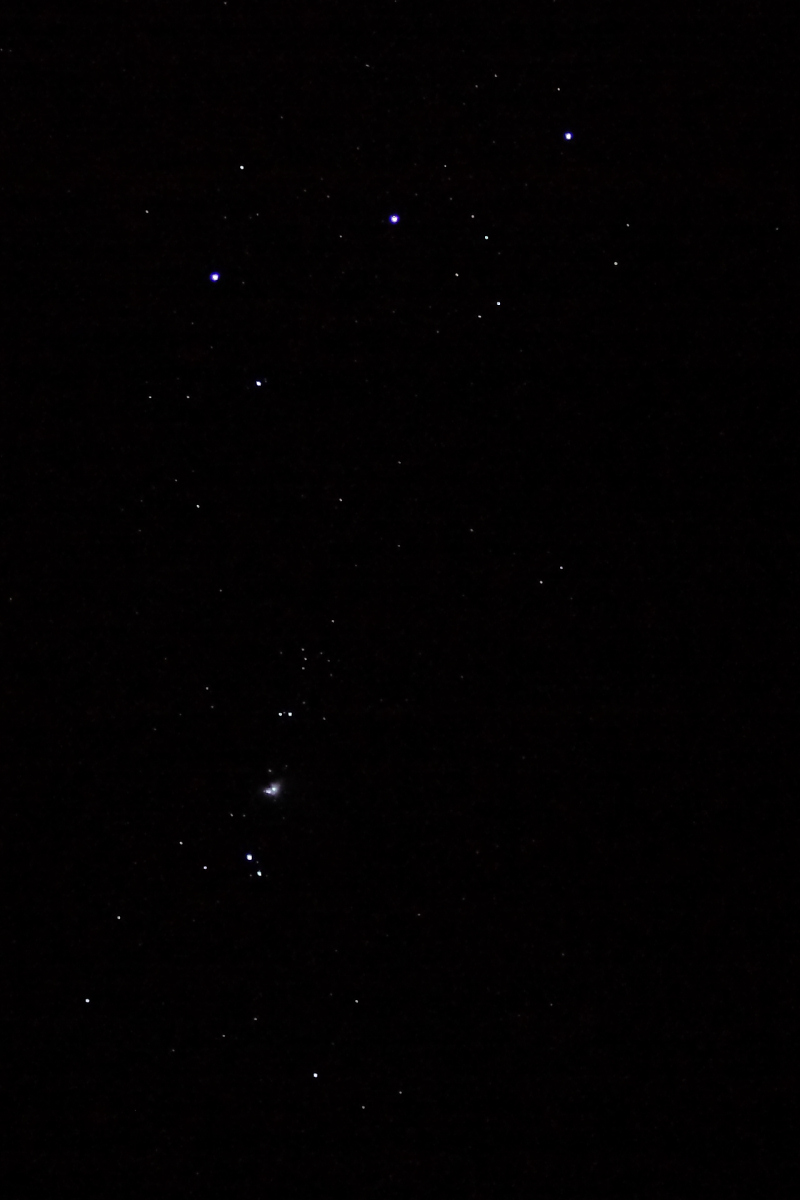
Here is the bottom half of the familiar winter constellation of Orion -- "The Hunter." This arrangement of stars is home to one of the most famous celestial objects outside the planets: the Orion Nebula. It's hard to see when you are just gazing up at the Orion constellation. But if you know where to look (the middle "star" of Orion's sword), you can see a faint fuzzy patch.

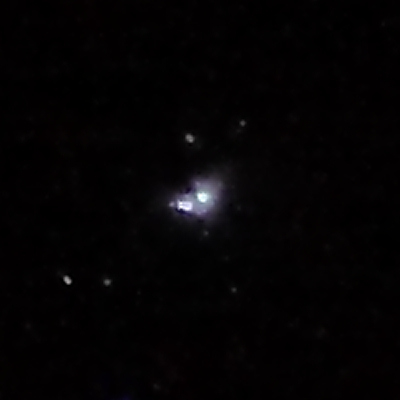
Thanks to modern digital camera sensors, it's possible to gather enough light in two seconds at f/4 with ISO 1600 that the nebula now pops out of the constellation's mugshot above. Here is a close-up:

IMG_5241_rcsp_zoom

Of course, fancy star-tracking equipment can generate much nicer views of the Orion Nebula. But I'm happy that I was able to capture what I did, using a regular DSLR, a zoom lens set at 70mm, and a sturdy tripod.

It also helped to have a super-dark moonless sky at Black Butte in Central Oregon, where Kathy and I spent last weekend. :-)

Thursday, November 10, 2011

Two Celestial Bodies; One Ring

IMG_3760_hdr_halo_spcp_sml

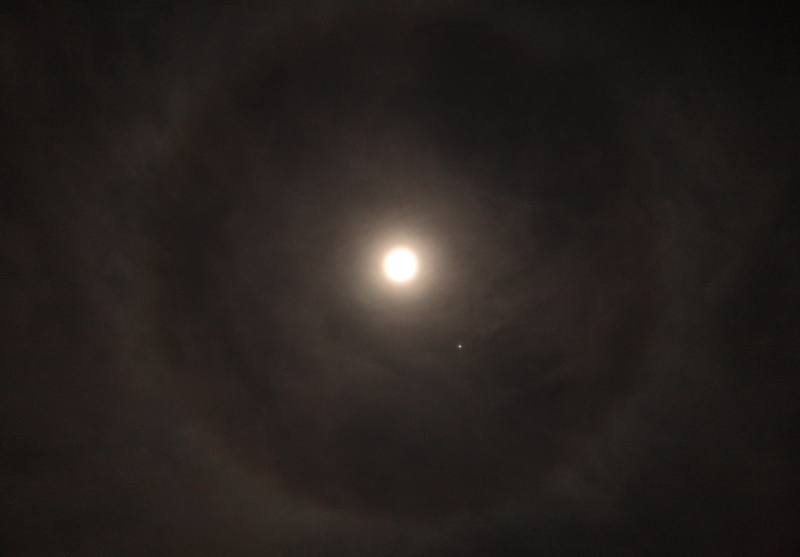
Here is something you don't see every day: a Moon ring encompassing the planet Jupiter. (Click on the image for a bigger view.) Moon rings, also called "winter halos," are a refraction of the moon's light in cloud-hosted ice particles. Last night, Jupiter was serendipitously close to the Moon in the sky, well inside the latter's winter halo.

Speaking of rings and Jupiter, the solar system's largest planet actually does have a faint ring, akin to the vast rings of Saturn. It was discovered in 1979 from Voyager space probe images.

Unfortunately, we cannot see Jupiter's ring from earth, so we will have to be content with the Jovian planet sharing our Moon's icy halo in the sky.

Tuesday, August 9, 2011

Galactic Forest Fire

IMG_3085_rcsp_sml

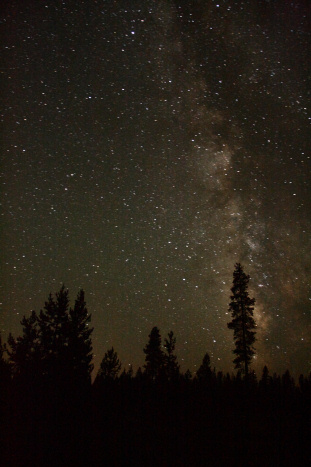
A few miles away from Sunriver, the Central Oregon sky gets very dark at night -- at least it did last Wednesday after the crescent Moon had set. A one-minute exposure at ISO 1600 and f/4 captured the scene. Overhead, stars of the Milky Way blazed a path of light arching upward, reminiscent of fire engulfing the nearby tree. But instead of flames and smoke, the "fire" was the cold glare of a trillion distant stars in our galaxy. Its center is partially hidden by massive dust clouds between our Milky Way suburb and the galaxy's crowded "downtown."

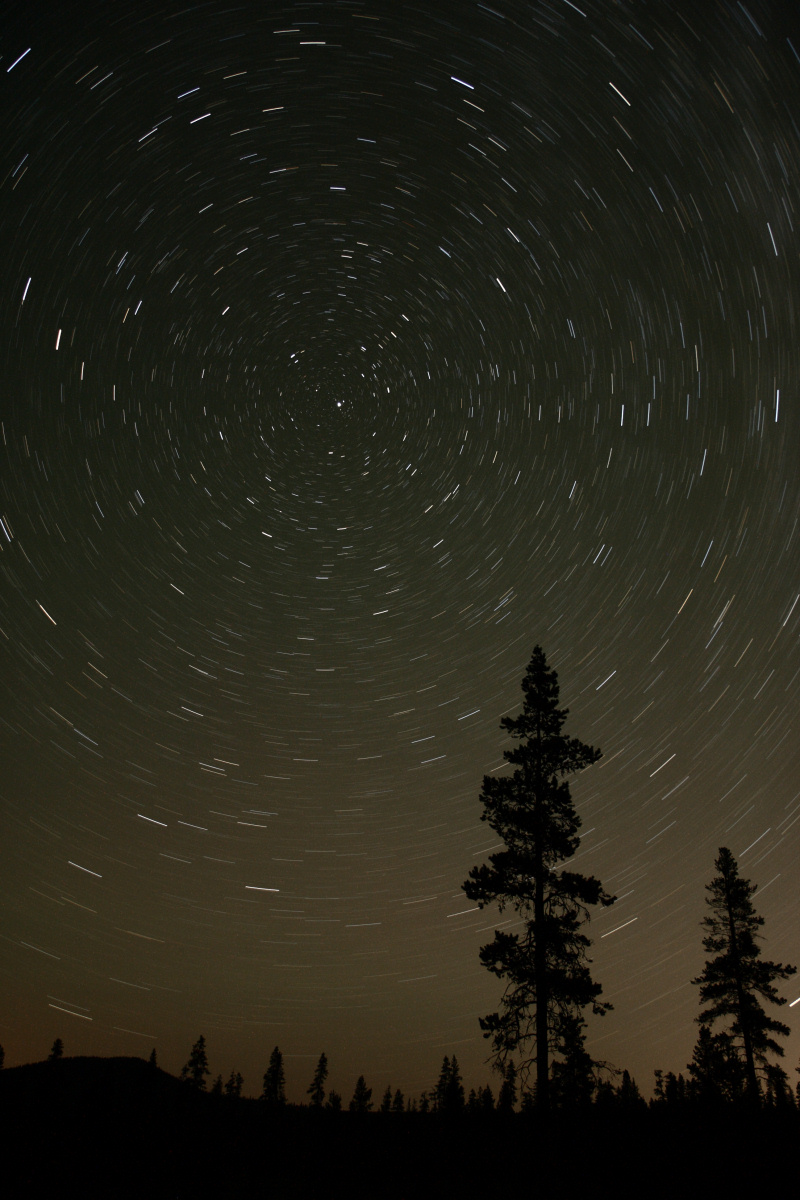
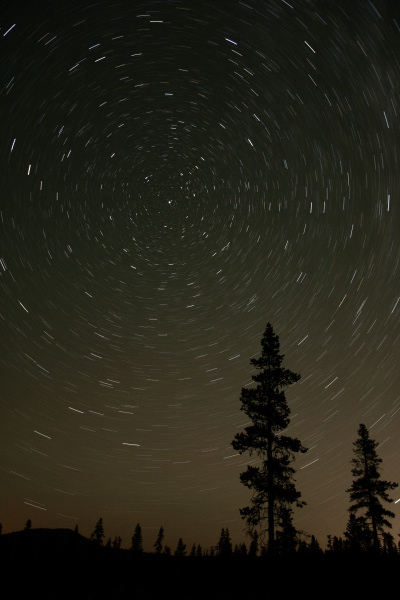
In another direction that same evening, the stars performed a dance above this tree (click for a bigger version of the sixteen-minute, ISO 200, f/4 image):
IMG_3091_rcsp_sml

In perfect circles, their dance took them around the North Star and its attendants:
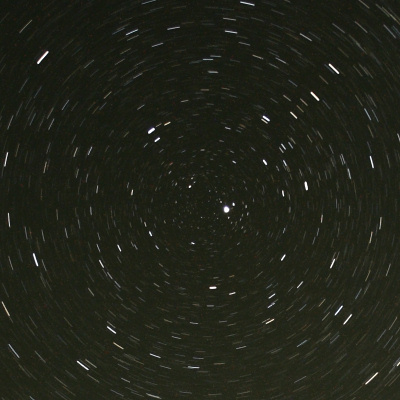
IMG_3091_rcsp_zoom1_sp_sml

Well, almost perfect. You'll notice that they were slightly off-center from the apparent focus of their dance, since the North Star is not exactly in line with Earth's axis. However, it's close enough for most uses of the word "North."

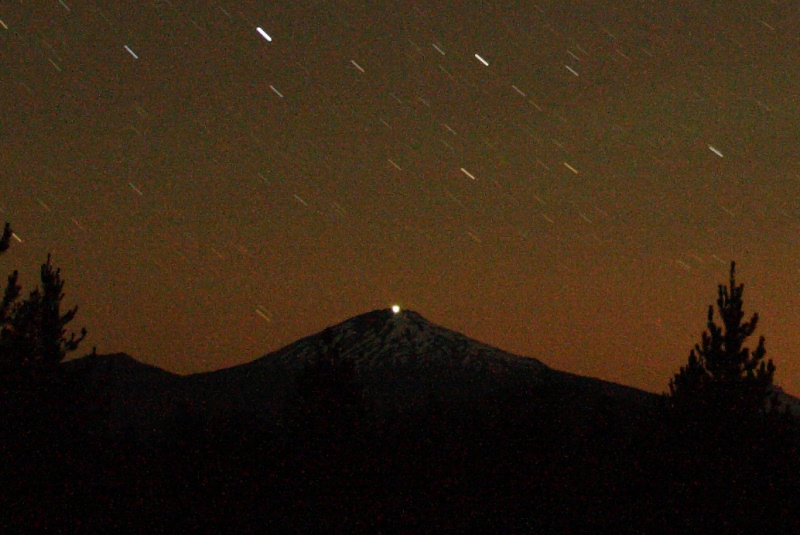
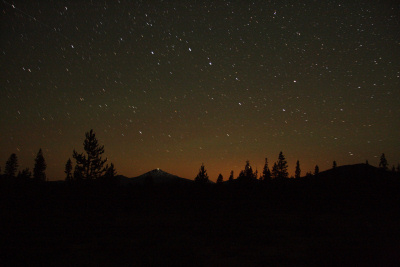
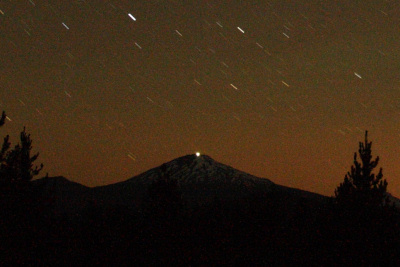
Near the North Star, the Big Dipper presided over Mount Bachelor, both of them framed by the faint reddish glow remaining from the sunset hours before:
IMG_3093_rcsp_sml

A closer look at the "star" just above the mountain shows it was not a celestial object. Apparently, we humans felt compelled to decorate the beautiful peak with its own nighttime beacon:
IMG_3093_rcsp_zoom2_sml

The snow adorning the mountain was quite visible during the day, but at night the starlit scene required a two-minute time exposure at ISO 1600, f/4 (click for a bigger image).

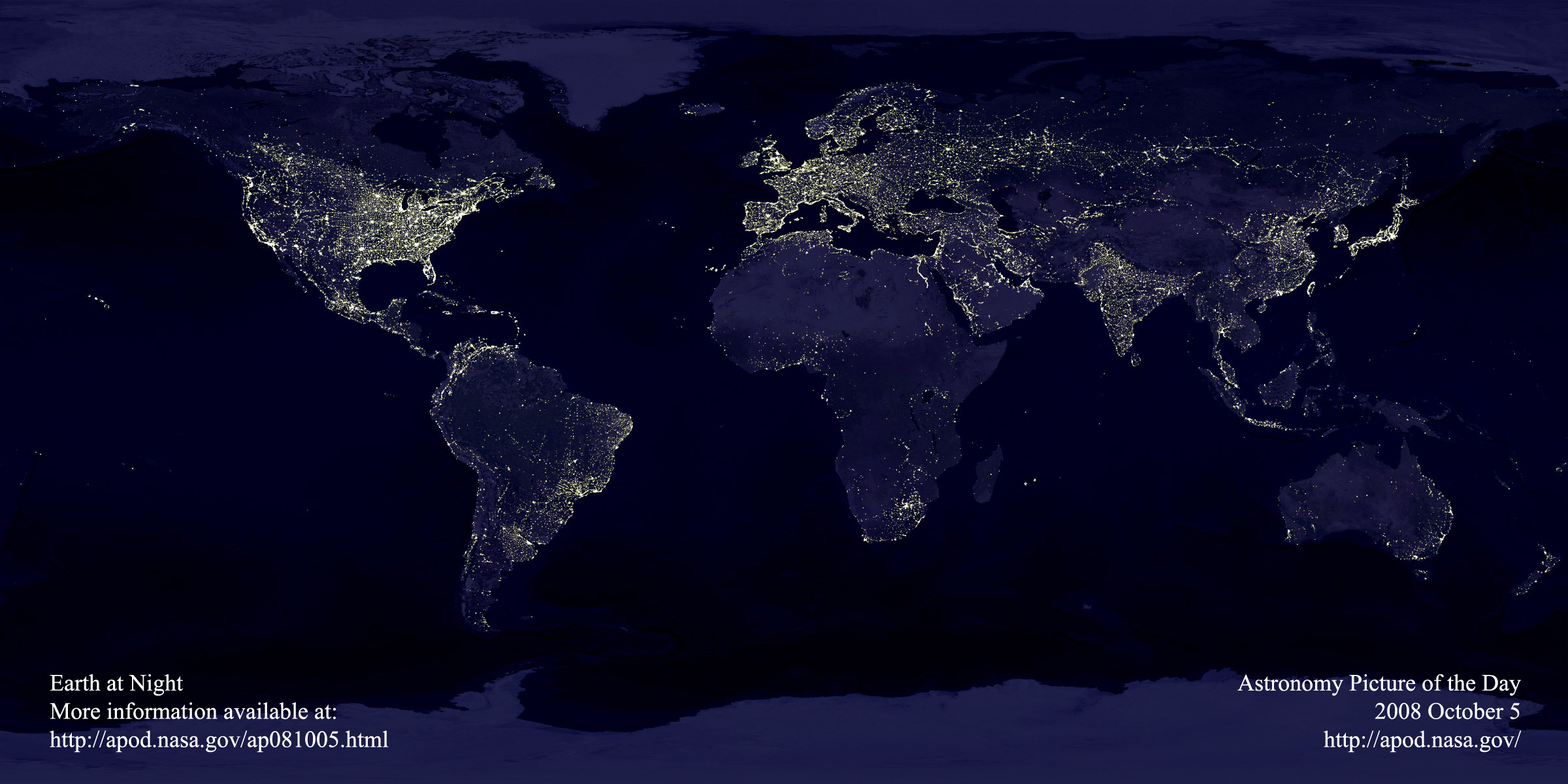
None of these shots would have been possible in a location with city lights sprayed up into the air. Unfortunately, dark skies are getting harder to find in the United States, especially on the East Coast. This night-time satellite view shows the situation quite vividly. I'm glad we live in a place like Oregon, where there are still many places to "see" darkness! :-)