My photo
This is my photographer’s blog, for your consideration. I post some of my favorite shots here, usually along with some comments about how the photo was taken or post-processed. (Occasionally I have the vain thought that someone might like to read about that.)

If you like what you see here, feel free to check out my Flickr site and YouTube channel.

Friday, August 27, 2010

Interrupted Sunset

IMG_2068_rc_sml

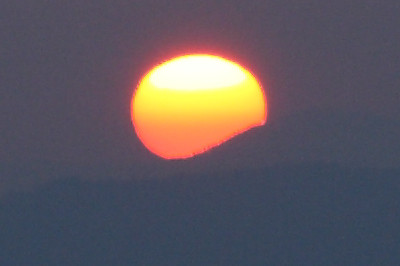
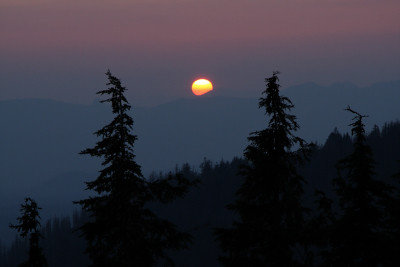
While camping at Crater Lake with my family early this month, I was shooting a picturesque sunset. All of a sudden, something took a bite out of the Sun. Out of the distant haze, there appeared a hill that was invisible until the Sun started sliding behind it

When we got home and I examined the detailed 1:1 view, I noticed that the hill had cilia-like "hairs." Of course, these were the trees on the hill's perimeter:

IMG_2068_rc_zoomed

For some reason, the surprise interruption to a "normal" sunset progression struck my fancy -- and I had the crazy notion that some of you might like it too. :-)

Tuesday, April 20, 2010

Tax Day Conjunction

IMG_9432_rc_sml

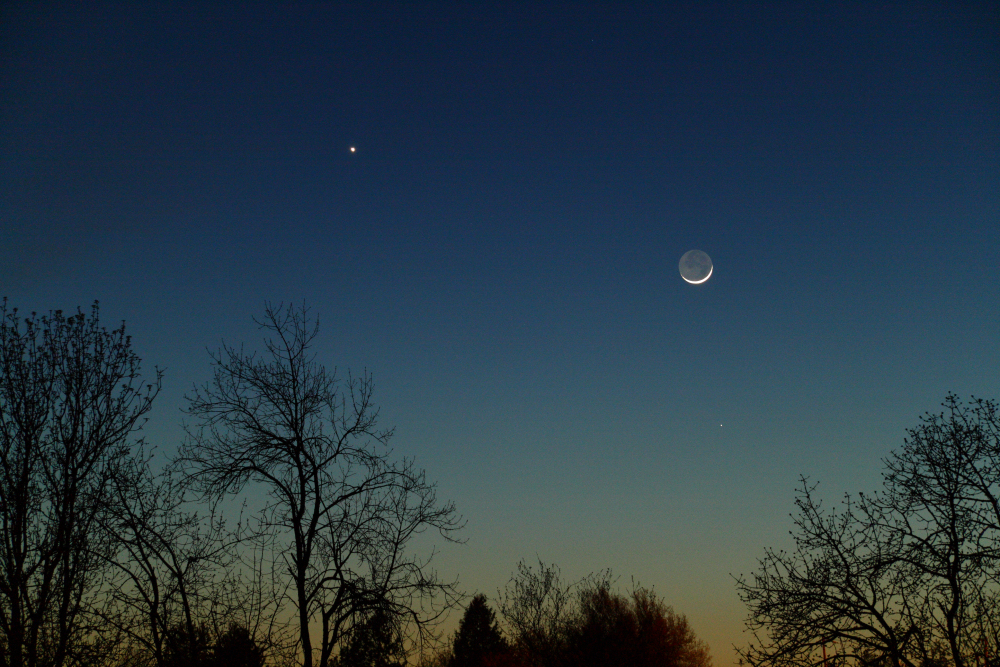
On April 15th -- Tax Day -- the planets Venus and Mercury were visited by a very young crescent Moon. Only 3% of the Moon's visible area was sunlit, providing the picturesque view above. Although technically in a shadow, the rest of the Moon was still nicely illuminated by earthshine.

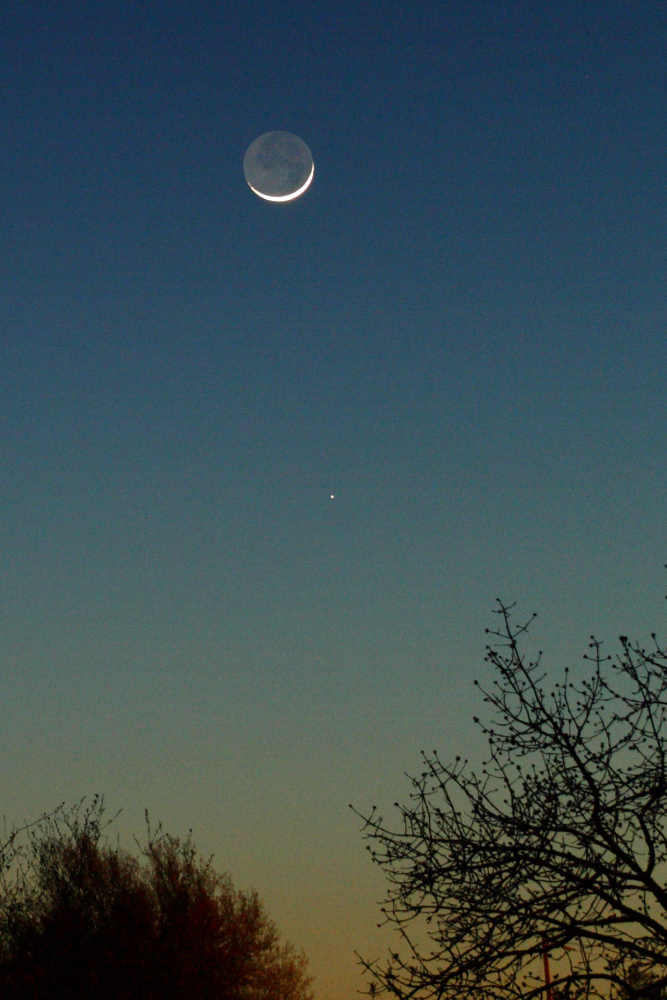
Underneath the Moon is the relatively tiny dot representing the innermost planet Mercury -- normally so close to the Sun that we can't see it. Here is a zoomed-up view that shows both earthshine and Mercury more clearly:

IMG_9432_rc_cp_sml

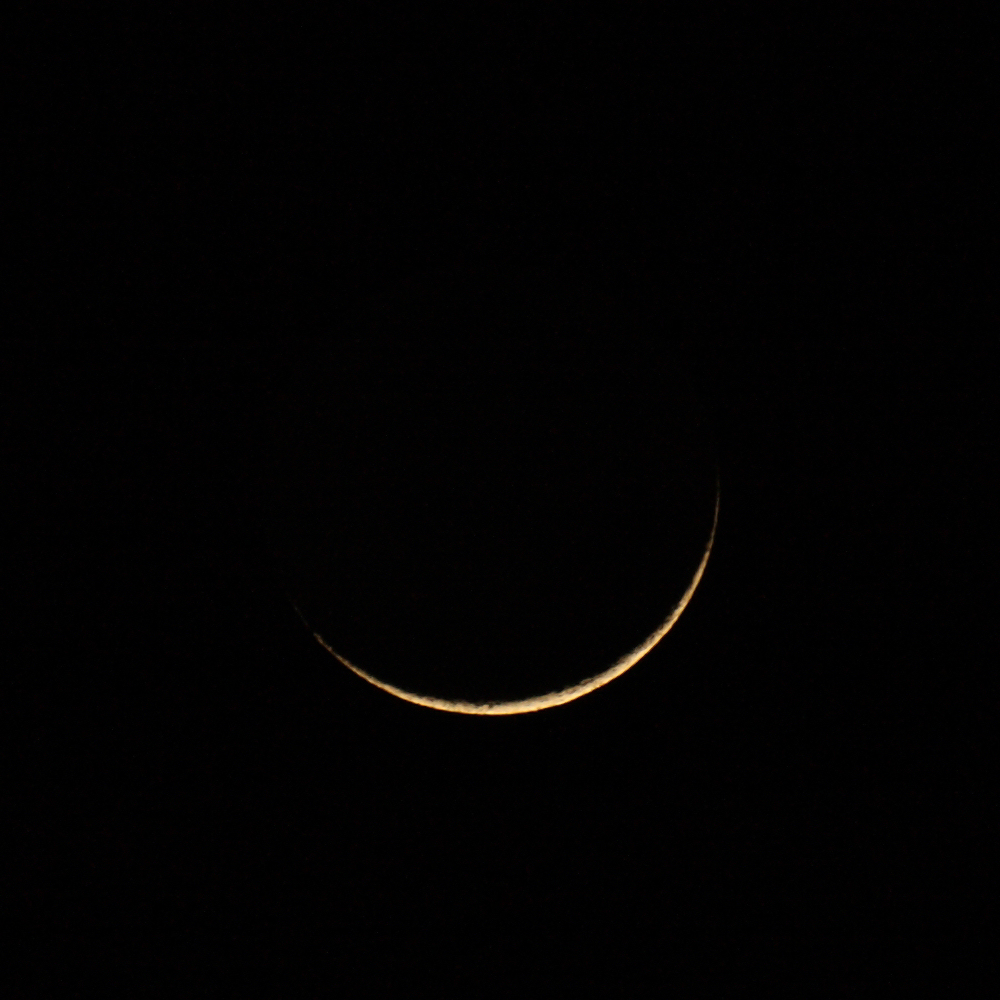
By the way, a "3% Moon" is very thin. Here is a close-up view of the Moon that evening, exposed for the crescent:

IMG_9453_rcsp_sml

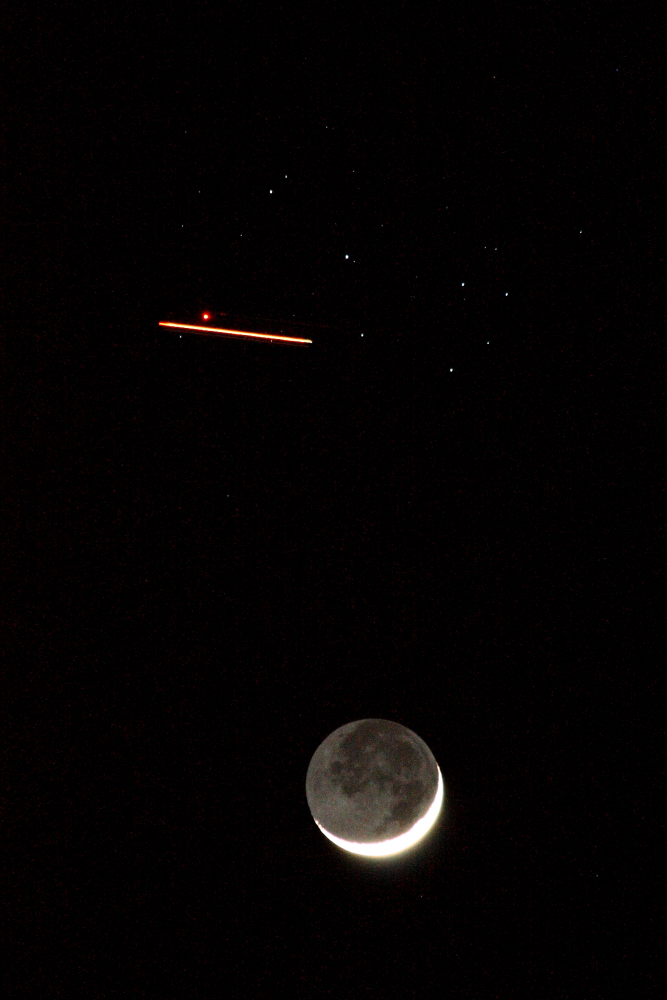
The next day, the planets were too far apart to make an interesting group picture. However, the still-young crescent Moon (7% this time) wandered near the Pleiades -- a cluster of seven bright stars often mistaken for the Little Dipper. While I was taking the shot, another traveling light joined the picture -- an airliner on its way to PDX.

IMG_9592b_rc_sml

It's great to see the sky again -- two days in a row! -- now that the Oregon rainy season is drawing to a close. :-)

Tuesday, March 9, 2010

Space Station Revealed (Somewhat)

IMG_2500_cprscf2_sml

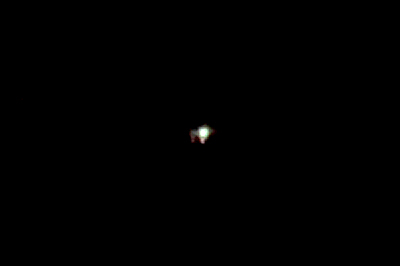
In Galileo and the Space Station, I wrote a whimsical blog entry about what Galileo would see if he pointed one of his early telescopes at the International Space Station (ISS) as it sailed overhead -- a mysterious moving sky object brighter than Venus. To review, this is what he would have seen:

IMG_6468_rscfcp2

But one of Galileo's later telescopes, providing a bit more magnification, would have shown something like the opening photo above, taken last Friday. (I achieved "a bit more magnification" by using David's camera with my telephoto lens. David's DSLR has a higher resolution than mine.)

It's really strange to think that there were five men inside as the ISS silently traversed the sky that night. Perhaps one of them was looking down on the lights of Portland as I took the photo. (FWIW, they were: Jeffrey Williams, Oleg Kotov, T.J. Creamer, Maxim Suraev and Soichi Noguchi.)

I will never get to be one of the few humans that travel into space. Well, unless someone gives me $200,000 for a ticket on Scaled Composites' SpaceShipTwo, which is anticipated to start space tourism flights in 2011. However, my kids or grandkids may get to travel into space. SpaceShipTwo flights are expected to come down to $20,000 as the volume increases, and there are several other space tourism competitors that could drive the price down significantly more. Someday, we may see something like this: "Grand Prize for the best essay: a trip into space!"

So who knows? I may get to see the day where a family member crosses the Kármán Line. :-)

Monday, February 22, 2010

Astrophotography With a Camera and Telescope

IMG_8498_rc_sml

In a pair of postings awhile back (Jupiter and His Minions and Astrophotography With a Camera and Tripod, I said, One of these days, I'll mate my camera to a telescope, and then I'll be a "real" amateur astrophotographer.

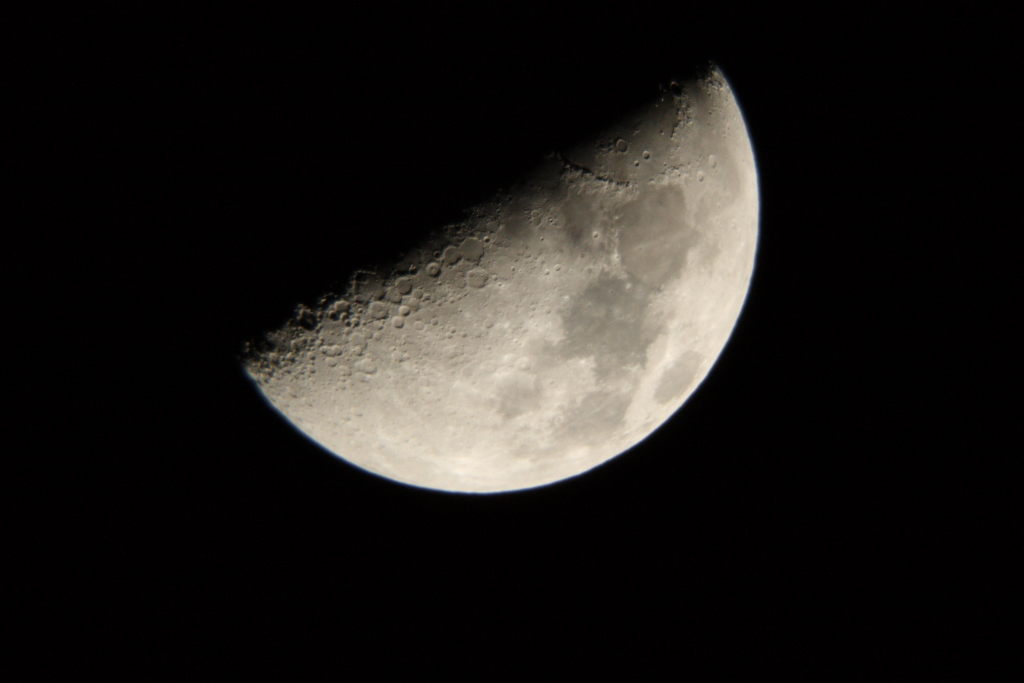
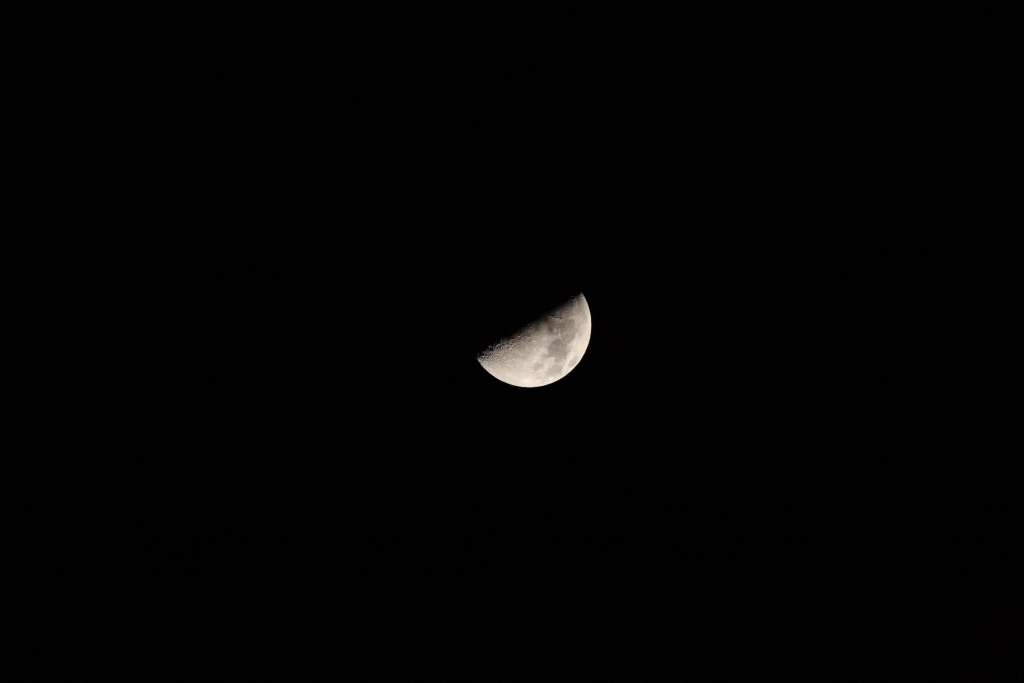
Well, I guess that day has finally arrived. The photo above is a full-frame view of the Moon, shot through my telescope.

In contrast, here is the equivalent full-frame shot taken at maximum zoom with my longest telephoto lens:

IMG_8509_rcsp_sml

But the difference is most noticeable when we zoom in on some detail:

IMG_8509_zoom3

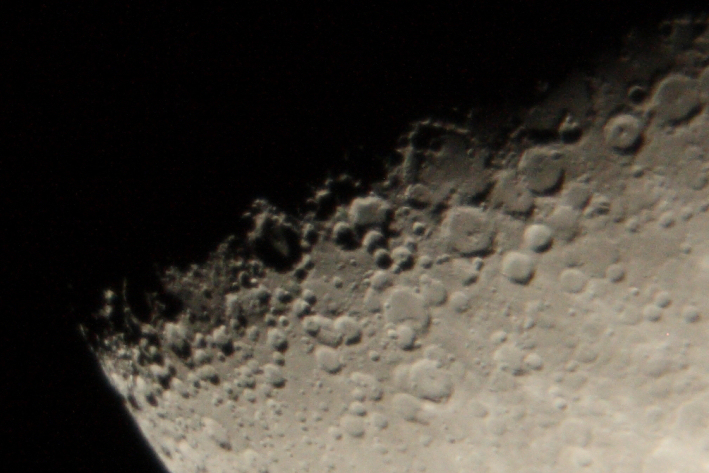
The telephoto "detail" is not very usable, as you can see. In contrast, the telescopic shot's detail looks like this:

IMG_8496_rc_zoom3_rs

Of course, a "true" amateur astrophotographer will get results that are much sharper. And indeed, my later shots will improve, once I get an official camera mount and can then do image stacking. (This "Proof of Concept" was taken by pointing my camera into the telescope's viewfinder, hand-held.)

In any case, I'm happy with the results of this casual Proof of Concept! I see much potential for future astrophotos. :-)

Tuesday, November 17, 2009

More Liquid HDR

IMG_5118_hdr_hsa_5_4_10_cfcpsp_sml

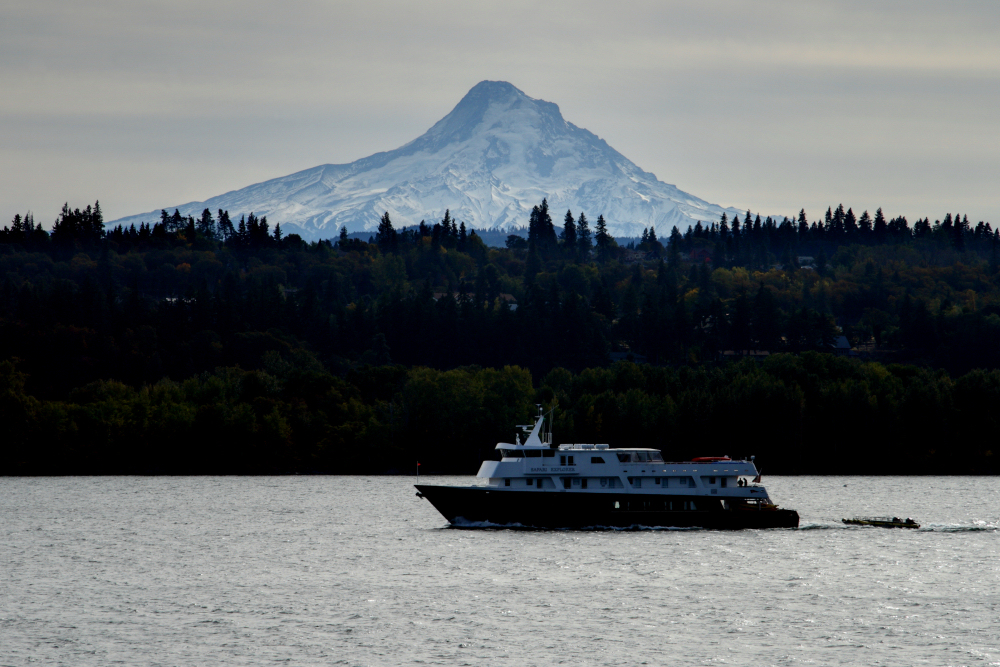
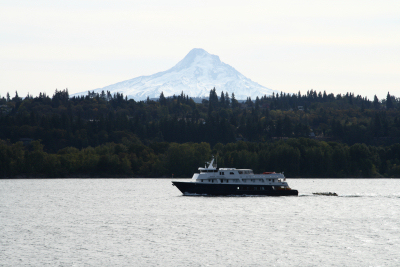
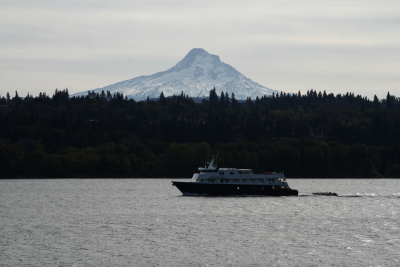
Waves on water. Moving boat against a static background. Back-lit hillside with almost-backlit mountain. Bright high cloud layer. Impossible shot. Until now. (Click on the image for closer examination.)

Using my recently-discovered RAW-format HDR technique, I "developed" three exposure levels from one photograph containing the dynamic range of 36 bits per pixel instead of JPEG's 24 bits:

IMG_5118_u_sml

IMG_5118_o_sml

IMG_5118_n_sml

Photomatix helped me blend the three exposure levels into a shot that balances the highlights and shadows similar to the way my eyes did as I gazed at Mount Hood across the river from the Washington side of the Columbia Gorge. Here it is again, for comparison with the three component shots:

IMG_5118_hdr_hsa_5_4_10_cfcpsp_sml

I know, I sound like a broken record about HDR -- but it's one of those tools I now consider to be essential. Also, shooting 36-bit RAW, every shot is automatically bracketed for post-production exposure optimization and potential HDR processing.

Who says an old dog can't learn new tricks? :-)

Tuesday, November 10, 2009

Moon Plus Moons

IMG_5745_hdr_bi_-10_0_40_cfsp_sml

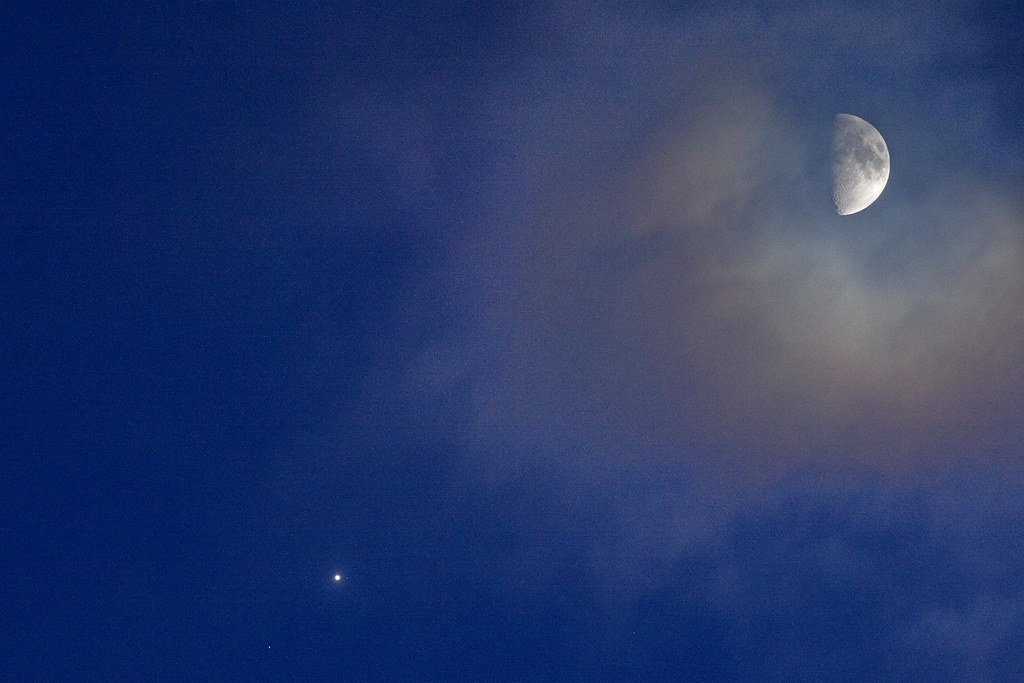
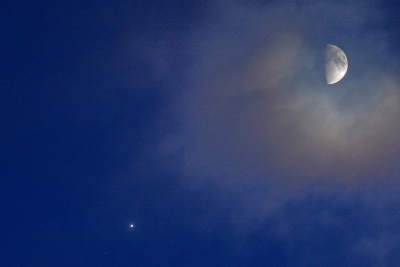
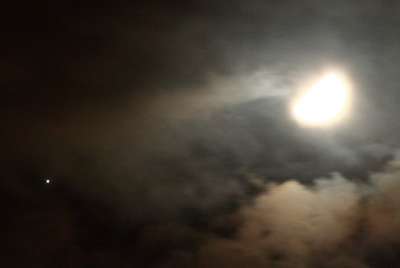
This is a very difficult shot to get, but you can't tell that from just looking at this downsized version. You can see the Moon, of course -- and Jupiter nearby. Although planetary conjunctions are not exactly uncommon, it is fairly rare to catch the Moon behind a dark translucent cloud in the same photo as a planet which is not behind a cloud. And, it's even more rare for that planet to be Jupiter. I have been trying for a long time to get our Moon in the same shot as the moons of Jupiter. The only way to capture that combination is for our Moon to get behind a cloud that is dark enough to allow a long-ish exposure for the moons of Jupiter. Last month, it almost worked.

I say "almost" because the moon chose to hide a little too soon -- the sky was not dark yet. So, while Jupiter's moons are somewhat visible, it's nothing to write home about:
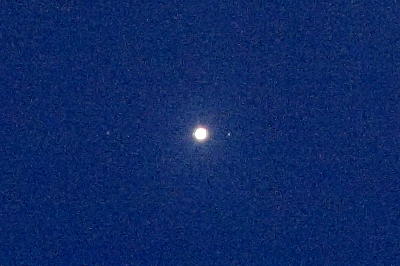
IMG_5745_hdr_bi_-10_0_40_cfsp_zoom1

Later that night, I obtained a much better dark-sky view of Jupiter's moons through an opening in the clouds:
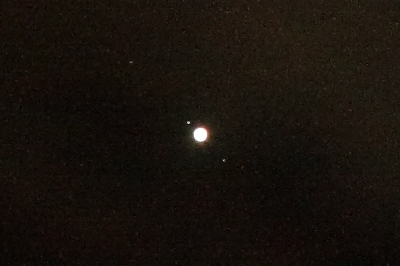
IMG_5756a_spcp_zoom1

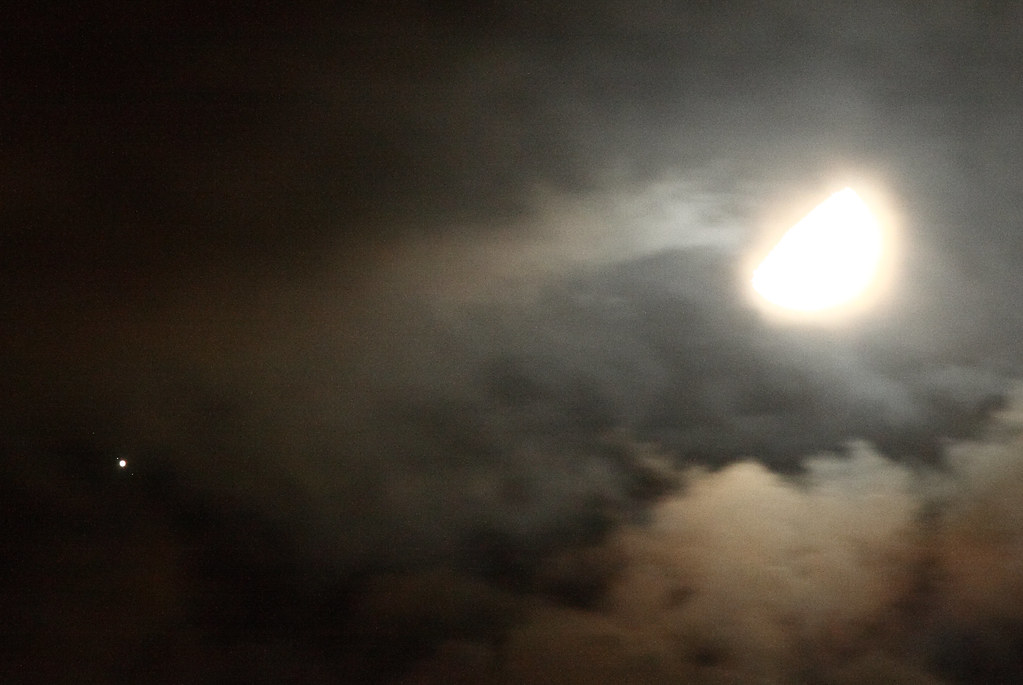
Unfortunately, the Moon was not bashful enough to find a sufficiently dark cloud for the shot.
IMG_5756a_spcp_sml

If you click on the image and view the shot full-screen, you can see the Jovian moons nicely in the same picture as our Moon. But someday I hope to capture the Moon as clearly as in the first shot, while the Jovian system is visible without zooming in.

But now it's winter in Oregon. Even if there is a favorable planetary conjunction of some kind, it's highly probable that they will be hiding behind thick rainclouds. Oh well. :-)

Monday, November 9, 2009

Pre-Sunrise Rainbow

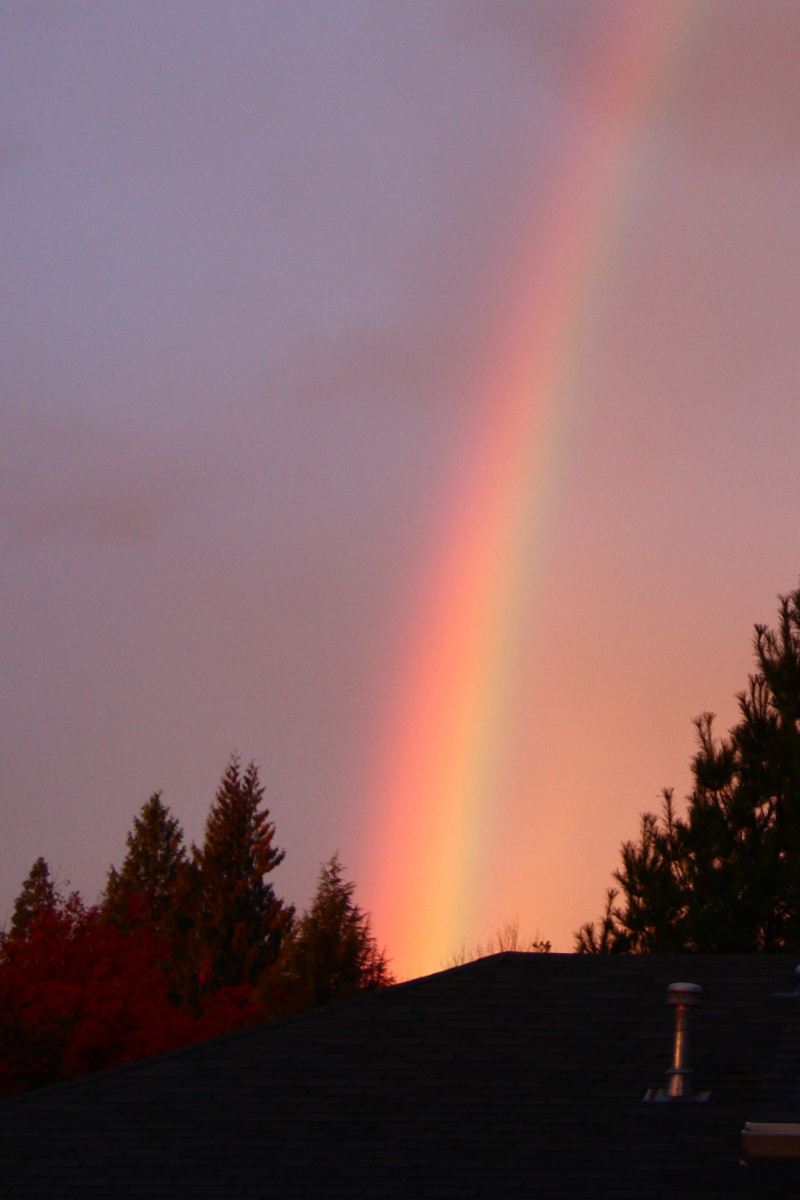
IMG_6170_cp2_rc_sml

Here is something you don't see every day: A pre-sunrise rainbow. The landscape was still fairly dark, bathed in the dim golden light of the not-yet-visible Sun. But the moist atmosphere above had full sunlight. Rain droplets -- which later fell on our Oregonian heads -- acted as little prisms to create a beautiful column of color.